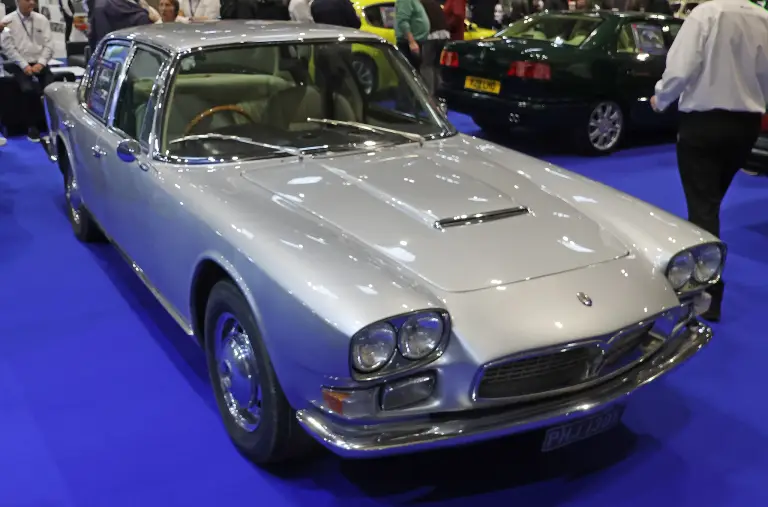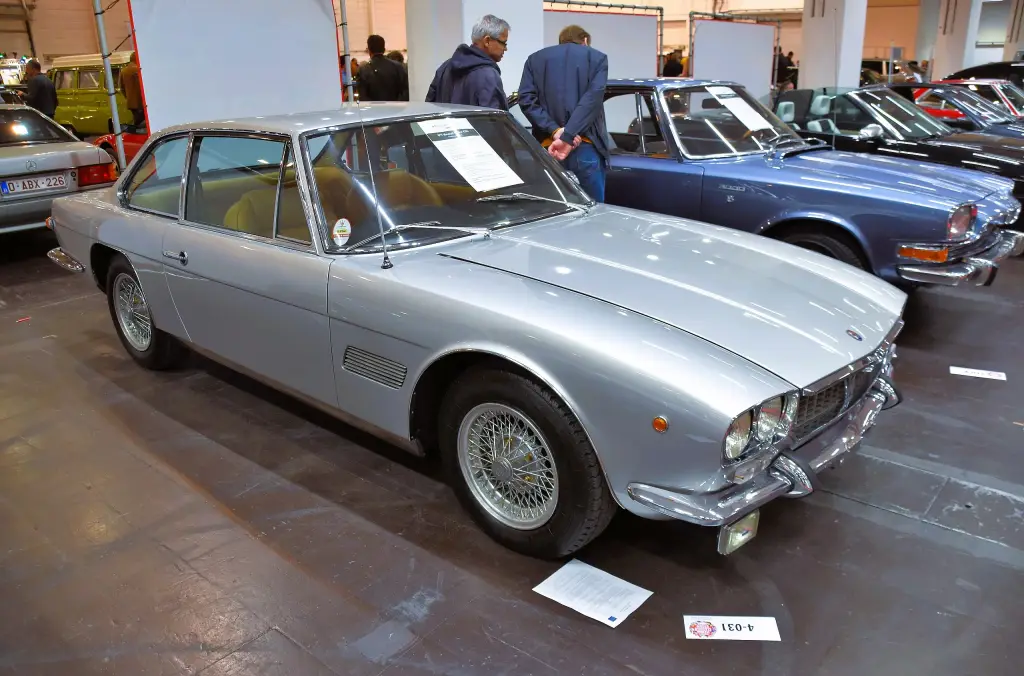
The Maserati Mexico, internally Tipo AM112, is a four-seater grand touring coupé produced between 1966 and 1972. It was based on the second series of the original AM107 Maserati Quattroporte and used the same 4.2- and 4.7-litre V8 engines. It was the first production Maserati fitted with servo-assisted ventilated disc brakes on all four wheels.
Maserati Mexico at a glance
| Maker | Maserati, Modena |
|---|---|
| Project code | Tipo AM112 |
| Production | 1966–1972 |
| Design origin | Vignale 2+2 prototype by Virginio Vairo, 1965 |
| Chassis | Quattroporte first generation, wheelbase shortened by 11 cm |
| 4.7-litre V8 | 290 hp, four Weber 38 DCNL5 carburettors |
| 4.2-litre V8 | available from 1969 |
| Top speed | 240–250 km/h |
| Brakes | servo-assisted ventilated discs all round |
| Wheels | Borrani wire on 4.7, steel discs on 4.2 |
| Built | 485, of which 175 with the 4.7 and 305 with the 4.2 |
Based on one source: the English Wikipedia article on the Mexico.
History of the Maserati Mexico
The Mexico’s design derived from a 2+2 prototype by Virginio Vairo shown on the Vignale stand at the October 1965 Turin Salon, built on a 4.9-litre 5000 GT chassis that had been damaged and rebodied. Because the car was sold after the show to the Mexican president Adolfo López Mateos, the model became known as the Mexico; by coincidence, John Surtees won the Mexican Grand Prix on a Cooper-Maserati T81 the following year. Vignale’s prototype was so well received that Maserati immediately planned a production version.
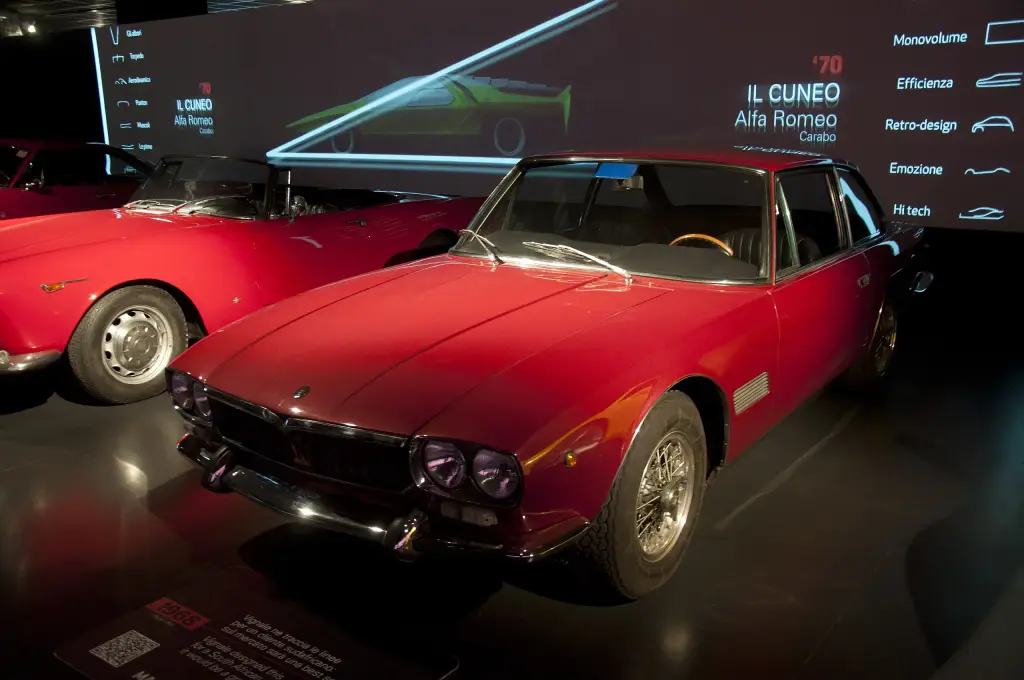
The production Mexico debuted in August 1966 at the Concorso internazionale di eleganza per auto in Rimini, with its international premiere at the Paris Motor Show in October. It was built on the chassis of the first-generation Quattroporte with the wheelbase shortened by 11 cm. Originally powered by a 4.7-litre 90-degree V8 fed by four twin-choke Weber 38 DCNL5 carburettors and rated at 290 hp, the car reached 240 to 250 km/h. In 1969, contrary to Maserati tradition, the Mexico also became available with a smaller 4.2-litre V8.
Equipment and coachwork
Apart from the smaller engine option the Mexico changed little during its production life. Its luxurious interior had leather seating for four adults, electric windows, a wooden dashboard, iodine headlights and air conditioning as standard, while automatic transmission, power steering and a radio were optional. The 4.7-litre version was fitted with 650×15-inch Borrani chrome wire wheels and the 4.2-litre version with steel disc wheels, and cars left the factory on Pirelli Cinturato 205VR15 (CN72) tyres.
The Frua one-off
In May 1967, commissioned by the German dealer Auto Koenig for a client named Herr Rupertzhoven, Maserati built a one-off Mexico similar to Vignale’s original prototype but by Frua. It looked like a four-seat Mistral and was built on the same tubular chassis as the 3500 GT with a 2,600 mm wheelbase, fitted with the Mistral’s 3.7-litre Lucas fuel-injected six-cylinder engine, finished in Oro Longchamps with a black leather interior and using a Quattroporte dashboard. In total 485 Mexicos were produced, 175 with the 4.7-litre engine and 305 with the 4.2-litre.
Design and features
- Quattroporte base: the first-generation saloon chassis shortened by 11 cm.
- V8 coupé: a 4.7-litre engine with 290 hp, and a 4.2-litre option from 1969.
- Ventilated disc brakes: the first production Maserati with servo-assisted ventilated discs all round.
- Luxury equipment: leather for four, electric windows, wooden dash and air conditioning as standard.
- Mexican connection: named after the car’s first owner, President Adolfo López Mateos.
Maserati Mexico versions
- Mexico 4.7 (1966–1972): the original car, 175 built, on Borrani wire wheels.
- Mexico 4.2 (1969–1972): the smaller engine option, 305 built, on steel disc wheels.
- Frua one-off (1967): a single car with the 3.7-litre six of the Mistral.
The Mexico was based on the Maserati Quattroporte and sat between the Maserati Sebring and the Maserati Indy in the four-seat range. More cars are in the Maserati collection.
Sources
- Maserati Mexico, English Wikipedia: history, engines, equipment, production