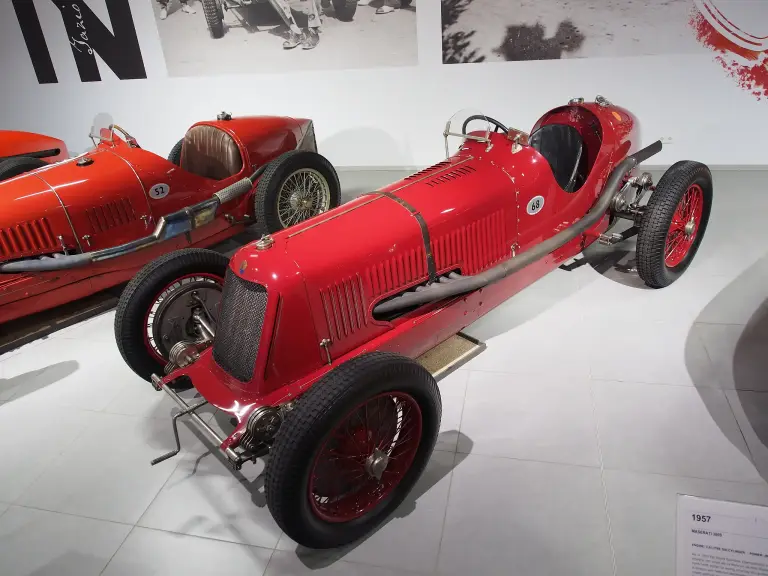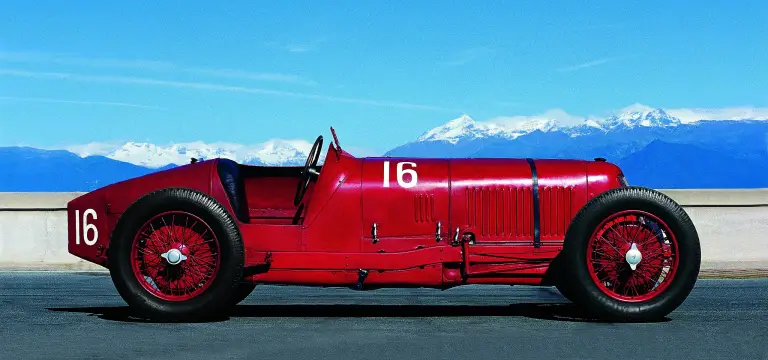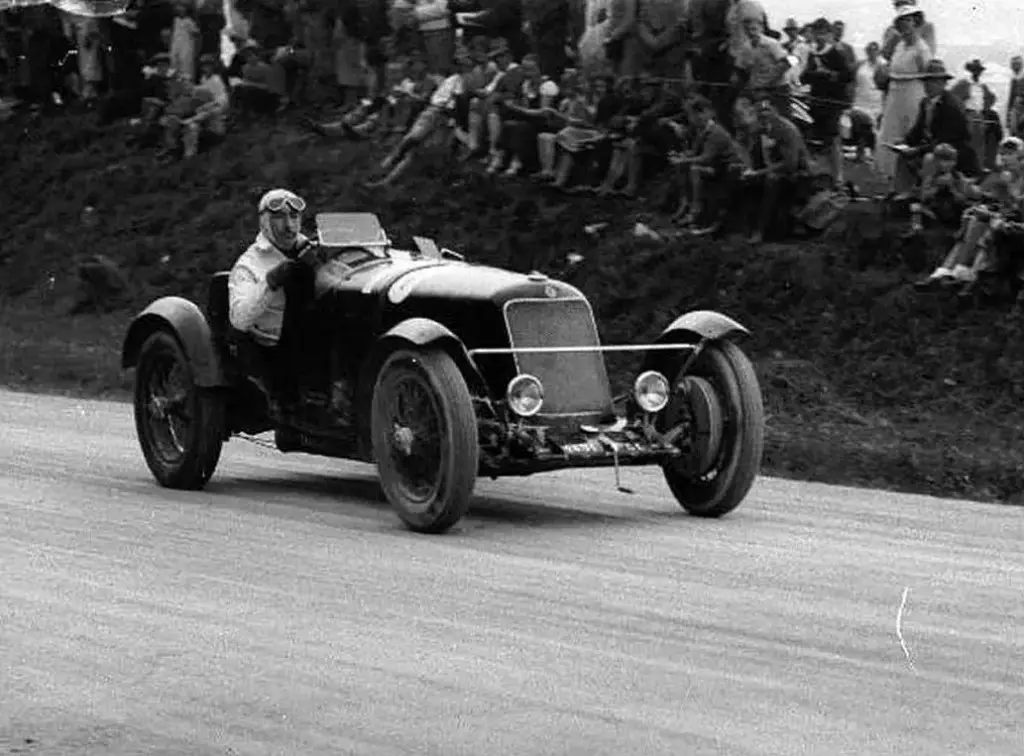
The Maserati 4CS 1500 was a two-seater competition car built by Maserati from 1932 to 1936. With its longer wheelbase it was a development of the 4CTR/4CS 1100. Six examples were made, and the motorcycle rider Omobono Tenni won the 1936 Mille Miglia in its class with one of them.
Maserati 4CS 1500 at a glance
| Maker | Maserati, Modena |
|---|---|
| Production | 1932–1936 |
| Descended from | 4CTR/4CS 1100 |
| Engine | 1,497.7 cc inline-four, 69 mm × 100 mm |
| Valves | two per cylinder, twin overhead camshafts |
| Supercharger | Roots type |
| Compression | 6:1 |
| Power | 115 CV at 5,000 rpm |
| Top speed | 170 km/h |
| Brakes | drums, mechanical until 1935, then hydraulic |
| Gearbox | four speeds plus reverse |
| Built | 6 |
There is no English Wikipedia article on this car; the page is written from the Italian one, the only source.
History of the Maserati 4CS 1500
The 4CS 1500, with its longer wheelbase, was developed from the 4CTR/4CS 1100. In 1935 it received an update with a revised exhaust system and hydraulic brakes: the exhaust pipes were now raised and ran along the sides, and the car used less fuel than the 1100, about 20 litres per 100 km. The car was lighter than its predecessor.
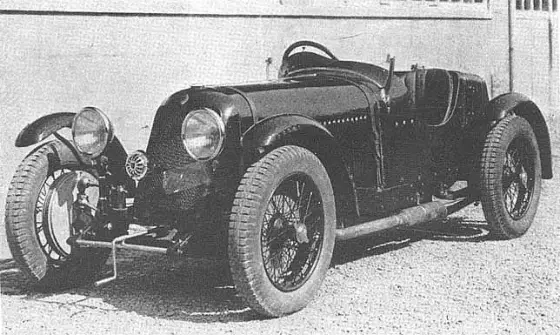
The engine was a vertical inline-four of 1,497.7 cc with a 69 mm bore and 100 mm stroke, fed by a Roots-type supercharger at a compression ratio of 6:1. It had two valves per cylinder and twin overhead camshafts, and produced 115 CV at 5,000 rpm. Ignition was by a single Bosch or Scintilla magneto, cooling was by water circulation with a centrifugal pump and lubrication was forced, with delivery and recovery pumps. The brakes were drums with mechanical operation, changed to hydraulic in 1935; suspension was by leaf springs with friction dampers, the steering was worm and sector, and the transmission had four speeds plus reverse. The two-seat body was in aluminium on a chassis of two side members with steel cross members, and the car reached 170 km/h.
Owners and racing
Six examples were built, with bodies by Menarini or by Campari & Somiotto. Two cars were bought by Giovanni Lurani and one by Ulrich Maag of Germany. The best result came in 1936, when Omobono Tenni, a motorcycle racer, won the Mille Miglia in its category with a 4CS 1500.
Design and features
- Longer wheelbase: a more stable development of the 4CTR/4CS 1100.
- 1.5-litre supercharged four: 115 CV at 5,000 rpm and a 170 km/h top speed.
- 1935 update: raised side exhausts, hydraulic brakes and lower fuel consumption.
- Racing pedigree: a class win in the 1936 Mille Miglia with Omobono Tenni.
Maserati 4CS 1500 versions
- 4CS 1500 (1932–1934): mechanical drum brakes and the original exhaust layout.
- 4CS 1500 (1935–1936): side exhausts and hydraulic brakes.
- Coachbuilt bodies: by Menarini or Campari & Somiotto.
The 4CS was the two-seater sister of the Maserati 4CM single-seater and grew out of the earlier 4CTR/4CS 1100. The later six-cylinder 6CM continued the small-racing-car line. More cars are in the Maserati collection.
Sources
- Maserati Tipo 4CS 1500, Italian Wikipedia: history, engine, dimensions, owners