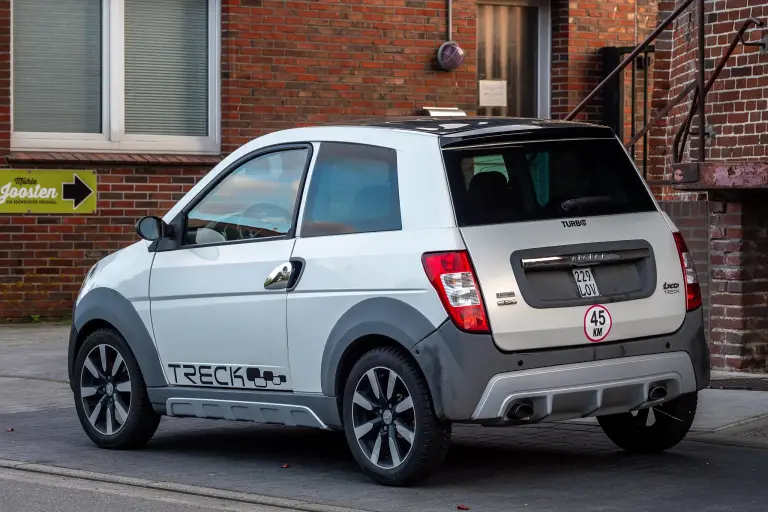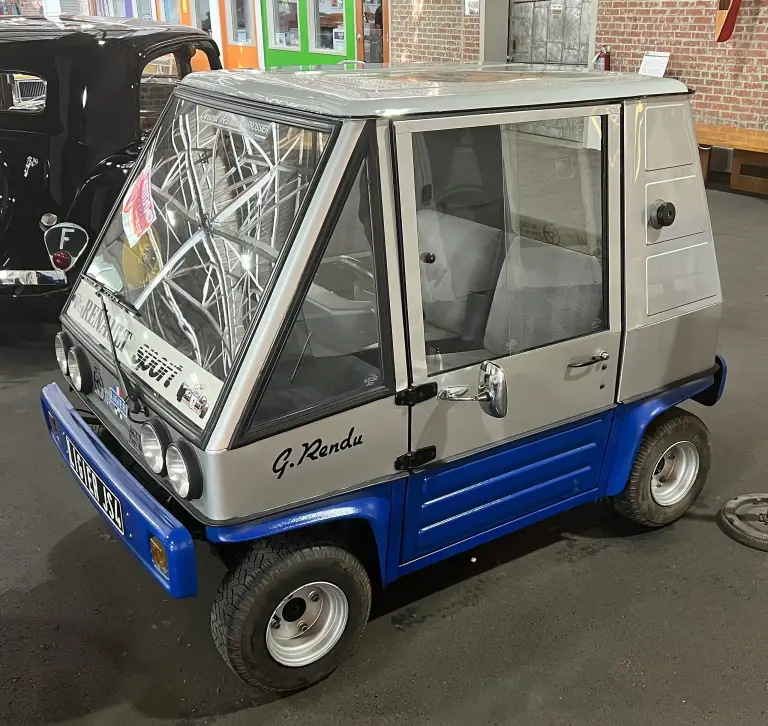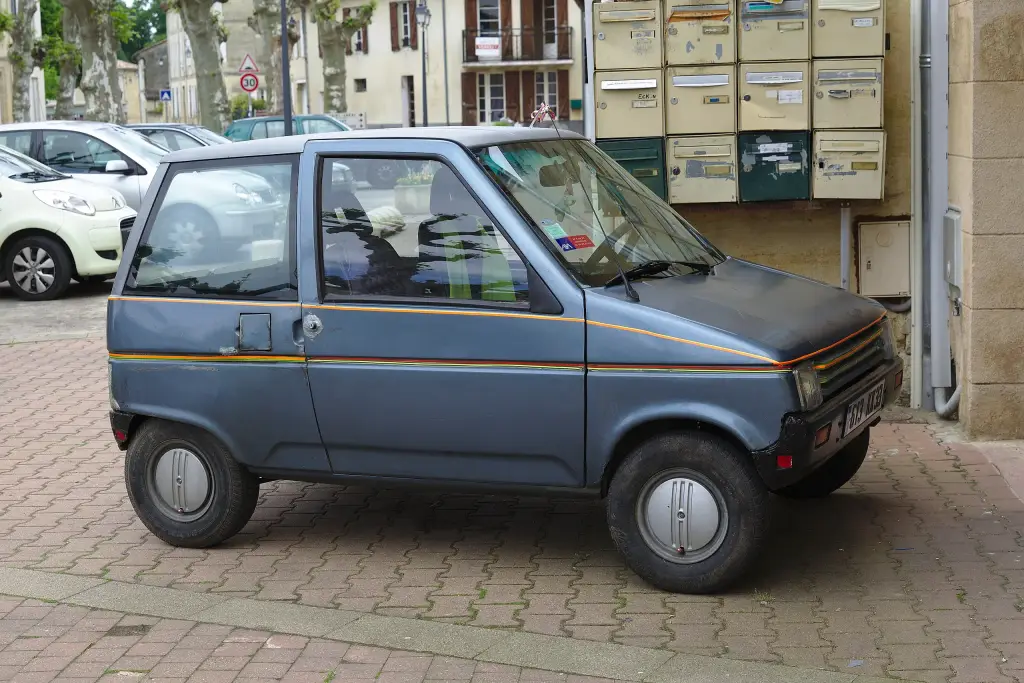
The Ligier Optima is a four-wheeled, two-seater microcar that Ligier manufactured from 1987 to about 1995. It was introduced as the Ligier Série 7 and renamed Optima in 1989, and a four-seat version, the Optima 4, was offered from 1993 to 1995.
Ligier Optima at a glance
| Production | 1987 to about 1995 |
|---|---|
| Sold as | Série 7 until 1989, then Optima |
| Replaced | Ligier Série 5 |
| Layout | four wheels, two seats |
| Engine | 265 cc air-cooled single-cylinder diesel |
| Power | about 4 kW (5.4 hp) |
| Top speed | 45 km/h |
| Twin version | two-cylinder Ruggerini diesel, quadricycle licence |
| Van version | Optimax |
| Four-seat version | Optima 4, from 1993 |
| Final update | Prima, 1993 |
This page is based on English Wikipedia only, so the figures could not be cross-checked against a second source.
History of the Ligier Optima
The Série 7
Introduced in 1987, the Série 7 was decidedly more car-like in appearance than the earlier JS4-derived Série 5. The increase in length made it more practical, with a considerably larger cargo area. It was introduced with a 325 cc single-cylinder diesel engine, soon replaced by an air-cooled 265 cc unit built by Fuji Robin in Japan. Power was 5 hp and top speed no more than 45 km/h, to stay within the limits for sans-permis vehicles; the later engine develops a claimed 4 kW, reflecting adjustments in French law after the adoption of SI units.
The Twin
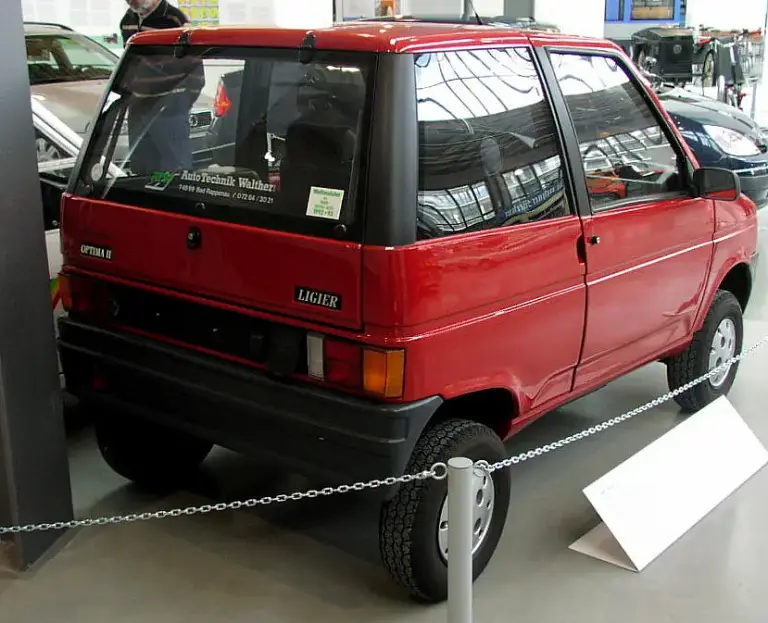
There was also a Série 7 Twin, or 650 Twin, which required a special quadricycle licence and was taxed at 1CV, the lowest rating possible. It had a two-cylinder diesel built by Italy’s Ruggerini Motori. To meet local requirements, the German importer AutoTechnik Walther offered a 49 cc version with a Sachs two-stroke engine of 3 kW (4 hp), sold as the Ligier ATW 50L and later the ATW-Plus 50L.
The Optima
The car received a thorough facelift in November 1989, with orange front turn signals that wrap around the corners, and the name changed to Ligier Optima. Initially only the 265 cc diesel was offered, but later there was also an Optima and Optimax Twin; the two-cylinder versions received front disc brakes. A van with a boxier rear end, along the lines of the Renault Express or Citroën C15, was sold as the Optimax. AutoTechnik Walther continued to offer a 49 cc version with a German Sachs engine for permitless operation.
Electric and later versions
ATW also developed a version with an electric motor, installed at its Bad Rappenau facilities. It used 10-inch wheels and drum brakes all round, which period testers found insufficient for a car 2.5 times the weight of the original and able to reach over 100 km/h in Power mode; with a few options the price could easily reach DM 40,000 in 1993, the same as a base Audi 100. After a minor facelift in 1992 the model was sometimes called Optima II. In 1993 it was updated again with a larger grille opening with mesh inside and renamed Prima, while the commercial model stayed Optimax. The Optima Twin was replaced by the stretched Optima 4, which seated four thanks to a longer wheelbase, had separately removable rear seats and was sold only fully equipped with tinted windows and front and rear seat belts; its engine was a three-cylinder Perkins diesel of 9.6 kW (13 hp) at 3,600 rpm, with front disc brakes.
Design and features
- Car-like body: a longer, more practical shape than the boxy JS4-derived cars.
- 265 cc diesel: an air-cooled Fuji Robin single that kept the car inside the sans-permis limits.
- Twin and commercial versions: a two-cylinder Ruggerini diesel and the Optimax van.
- German conversions: 49 cc Sachs-engined and electric versions built by importer ATW.
- Optima 4: a long-wheelbase four-seater with a Perkins three-cylinder diesel.
Ligier Optima versions
- Série 7 (1987–1989): the original car with a 325 cc then 265 cc diesel.
- Série 7 Twin / 650 Twin: two-cylinder Ruggerini diesel for quadricycle licence holders.
- ATW 50L / ATW-Plus 50L: German-market 49 cc Sachs version.
- Optima (1989–1993): the facelifted car with wrap-around orange indicators.
- Optimax: the van version with a boxy rear body.
- Optima II and Prima: the 1992 facelift and the 1993 update with a mesh grille.
- Optima 4 (1993–1995): a four-seat long-wheelbase version.
The Optima followed the JS4 line of licence-free cars and was replaced in turn by the IXO. Ligier’s sporting past is covered by the JS2. More cars are in the Ligier collection.
Sources
- Ligier Optima, English Wikipedia: models, engines, versions, prices