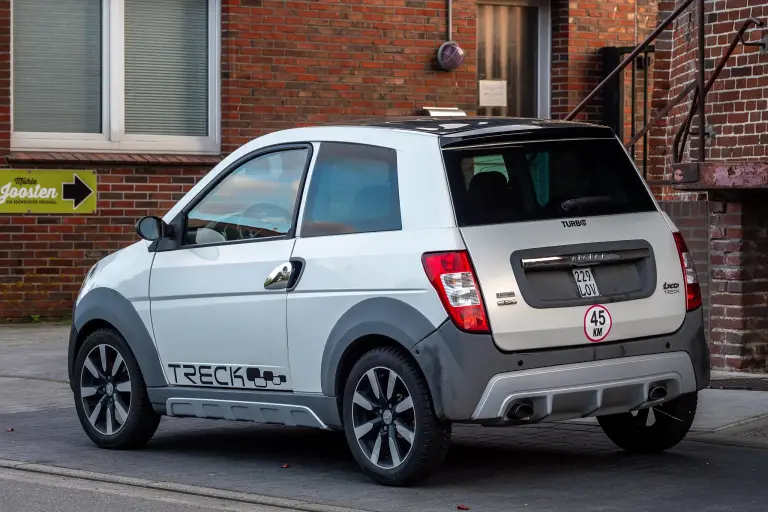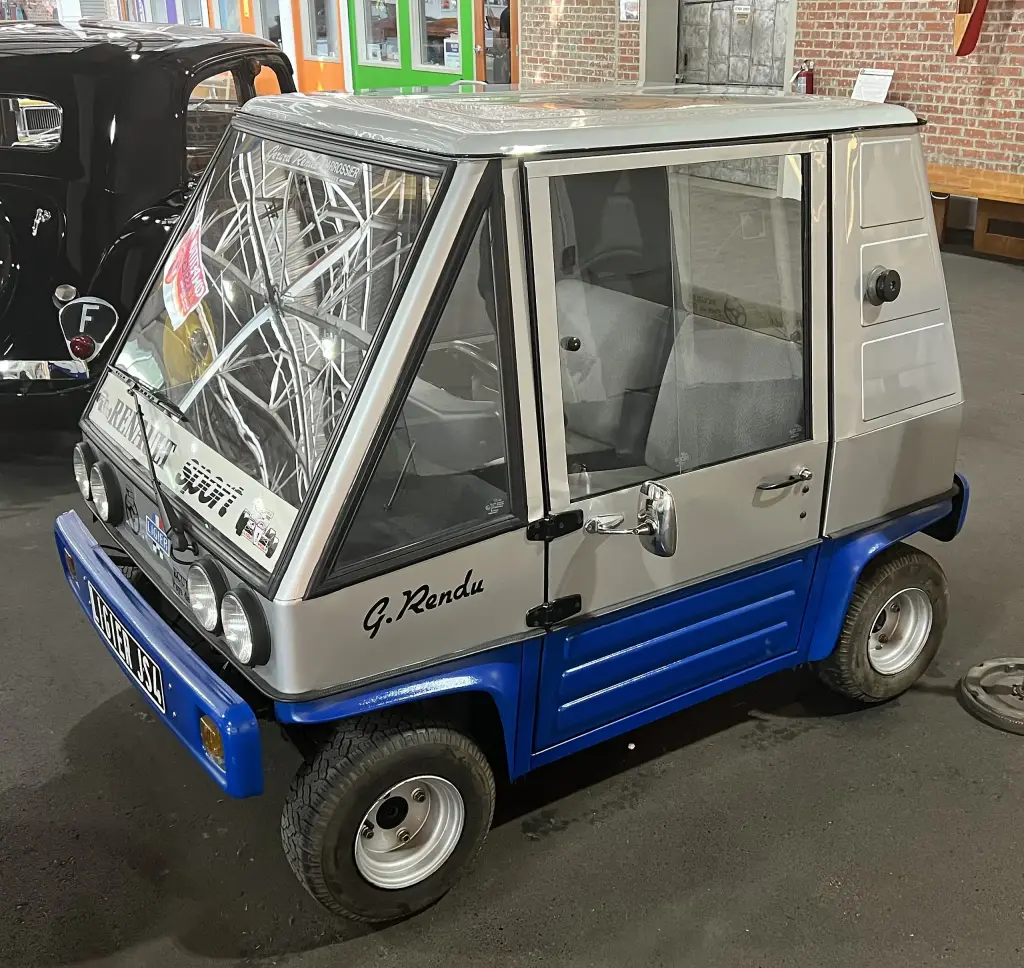
The Ligier JS4 is a four-wheeled, two-seater microcar that Ligier manufactured from 1980 to 1983, through the street vehicle branch of the French Formula One team Équipe Ligier. It was a “voiture sans permis”, a light vehicle that did not require a driving licence and was popular with the elderly, the young and those who had lost their driving privileges.
Ligier JS4 at a glance
| Production | 1980–1983 |
|---|---|
| Type | voiture sans permis, four wheels, two seats |
| First shown | 25 July 1980 |
| Body | steel monocoque |
| Engine | single-cylinder, rear-mounted, 3.2 hp (2.4 kW) |
| Transmission | continuously variable, rear-wheel drive |
| Suspension | independent on all four wheels |
| Brakes | drums all round |
| Steering | rack and pinion |
| Sales in 1981 | 6,941 |
| Versions | Standard, Luxe, Grand Luxe |
| Successor | Ligier JS6 for 1984 |
This page is based on English Wikipedia only, so the figures could not be cross-checked against a second source.
History of the Ligier JS4
Origins
The JS4 marked a change in Ligier’s priorities, as the company had recently ended manufacture of the JS2 sports car. After abandoning sports car production Ligier briefly submanufactured tractor cabins for Renault V.I. from 1978, and the JS4 was designed using one of these cabins.
Design
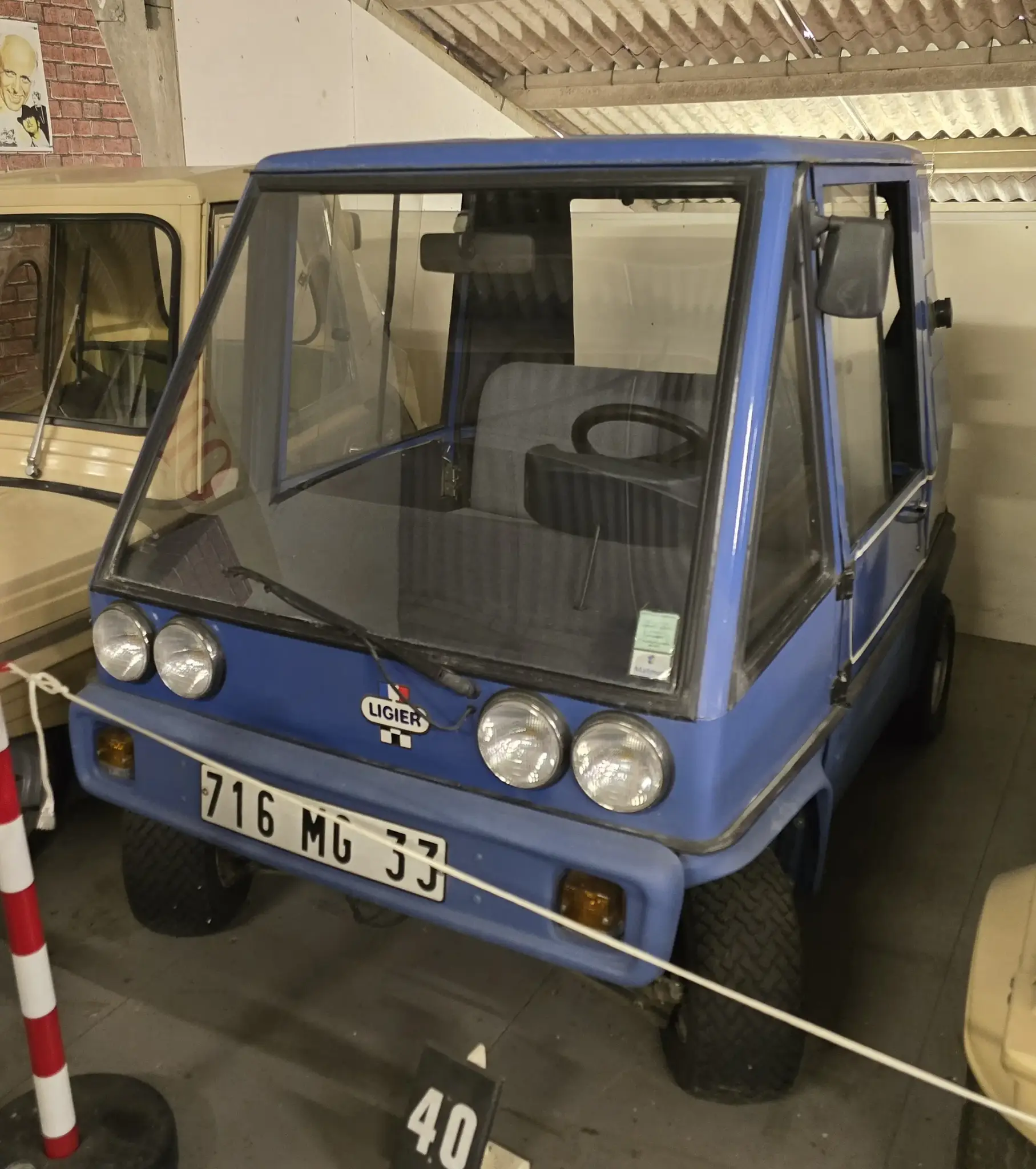
The car was a steel monocoque with a short wheelbase and a comparatively wide track. It had a square, upright appearance, with large flat glass surfaces and a glazed rear door, and unusually fat tyres. It received independent suspension on all four wheels, drum brakes all round and rack-and-pinion steering. The single-cylinder engine is mounted at the rear below the luggage compartment, produces 3.2 hp (2.4 kW) and drives the rear wheels through a continuously variable transmission.
Sales and quality
With its pleasant appearance and Formula One heritage the JS4 proved a strong seller: 6,941 were sold in 1981, its first full year of production, a very good number for a voiturette. The Ligier Formula One team used an example painted in team colours as a pit vehicle, and that car is now in the Lane Motor Museum in Nashville, Tennessee. In late 1981 the range was divided into the JS4 Standard, Luxe and Grand Luxe. Soon, however, quality issues appeared: the steel body was strong but heavy, led to drive axle failures and exposed a weak transmission, and it rusted, which was not a problem for the mostly plastic-bodied competition.
Development
In 1982 the more expensive JS8 appeared, mostly the same as the JS4 but with a 125 cc BCB engine of 7.5 hp (5.5 kW) that required an A4 permit for tricycles and quadricycles, unlike the JS4 and later JS6, which needed no permit at all because they had less than 5 hp and a top speed under 45 km/h. For 1984 the 50 cc JS4 was replaced by the similar JS6, with a more rounded front, squared-off headlights and a faux grille in black plastic; its Motobécane engine gave way to a 49 cc Derbi unit reaching the maximum 5 hp, and a 327 cc Ducati-VM diesel with the same power was also offered.
Derivatives
Ligier also developed a longer truck version with a 350 kg payload, the JS10, first shown at the end of 1983. It had a 430 cc diesel engine with 8 hp and a top speed of about 75 km/h, and its length grew to 2.65 m; it was considered by the PTT to replace its fleet of Piaggio Ape three-wheelers, and a militarised version was planned. The JS8 and JS10 design later became the 330 and 430 versions, and after a final facelift in late 1986 the car was known as the Ligier Série 5, built for about a year before the Série 7 replaced it.
Design and features
- No licence needed: under 5 hp and under 45 km/h, so it could be driven without a permit.
- Truck-cab origins: the body was designed around a Renault V.I. tractor cabin.
- Steel monocoque: strong but heavy, and prone to rust.
- CVT transmission: a continuously variable drive to the rear wheels.
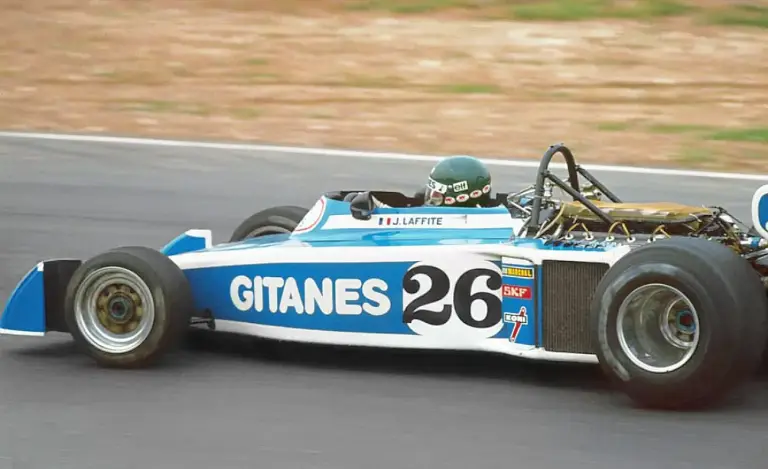
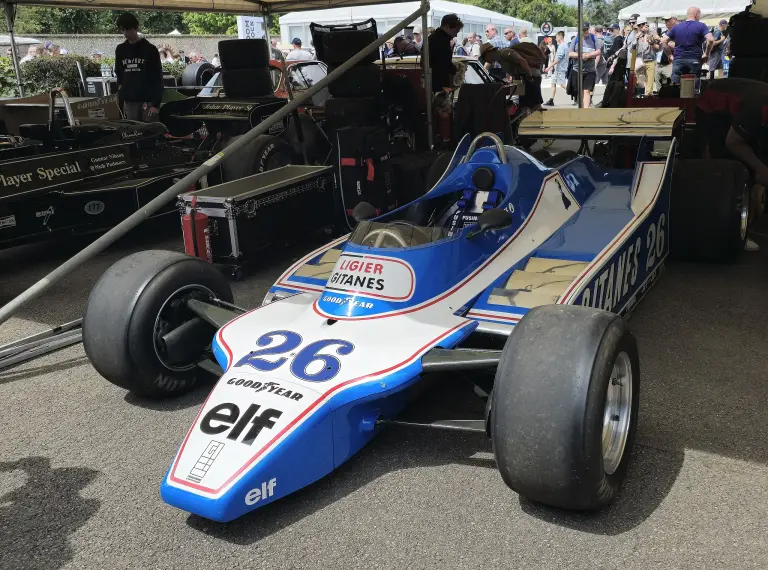
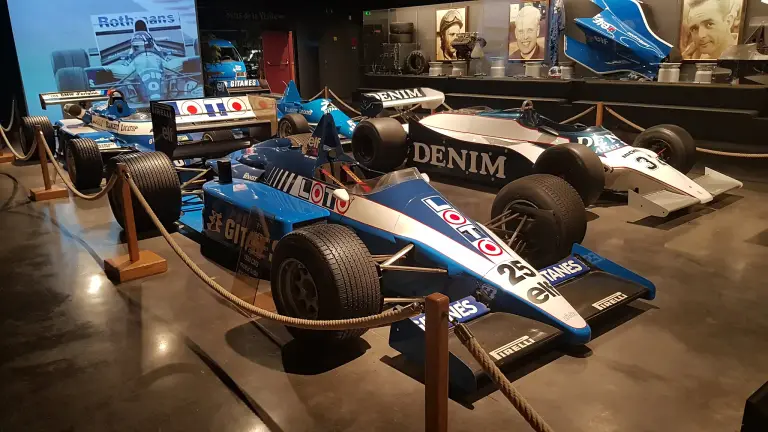
- Formula One link: the Ligier team used one as a pit vehicle.
Ligier JS4 versions
- JS4 (1980–1983): the original 50 cc microcar.
- Standard, Luxe, Grand Luxe: trim levels introduced in late 1981.
- JS8 (1982): 125 cc engine, 7.5 hp, A4 permit required.
- JS6 (1984): rounded front end and a 49 cc Derbi engine.
- JS10: long-wheelbase truck with a 350 kg payload.
- Série 5 (1986): final facelift before the Série 7.
The JS4 was replaced in the range by the Optima, originally sold as the Série 7. Ligier’s sports car past is covered by the JS2, and its racing cars by the JS5. More cars are in the Ligier collection.
Video: Ligier JS4
Video on YouTube.
Sources
- Ligier JS4, English Wikipedia: design, sales, variants, later models