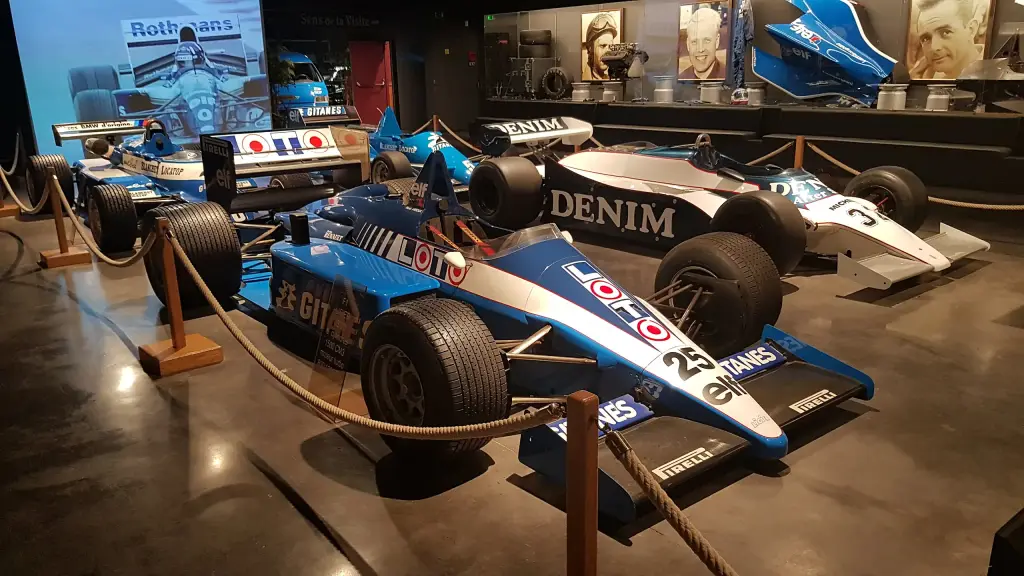
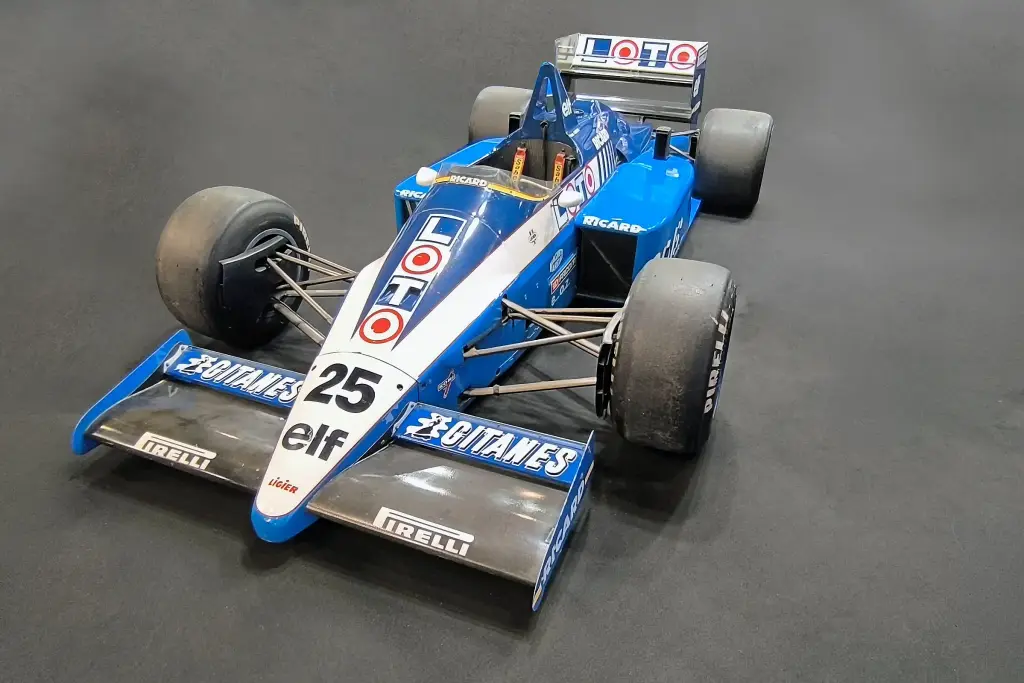
The Ligier JS27 was the Formula One car with which the French team Ligier competed in the 1986 season. A development of the previous year’s JS25, it was lighter, had a lower fuel tank and revised aerodynamics to suit a reduced fuel limit.
Ligier JS27 at a glance
| Season | 1986 |
|---|---|
| Predecessor | Ligier JS25 |
| Engine | Renault, customer supply |
| Chassis built | five |
| Drivers | Jacques Laffite, René Arnoux, Philippe Alliot |
| Podiums | two, both by Laffite |
| Best result | second in Detroit |
| Constructors’ position | fifth |
| Fuel limit | 195 litres, down from 220 |
| Notable | last Ligier to lead a lap until 1996 |
This page is based on English Wikipedia only, so the figures could not be cross-checked against a second source.
History of the Ligier JS27
Design
The JS27 was a development of the previous year’s JS25, with a lower fuel tank and revised aerodynamics to take advantage of a fuel limit reduced from 220 to 195 litres. It was also lighter than its overweight predecessor, and the customer supply of Renault engines was more effectively integrated into the overall package than before, although the engines were always slightly behind those of fellow Renault users Lotus and were not developed during the season.
Chassis
Three JS27 chassis were ready for the first round in Brazil, and two more were built during the season: chassis 04 appeared at the Belgian Grand Prix and chassis 05 was ready for Canada. Chassis 01 was written off because of the extensive front-end damage from Jacques Laffite’s career-ending accident at the British Grand Prix.
The 1986 season
The car was initially driven by the French pairing of Ligier mainstay Laffite and René Arnoux, who had missed almost all of 1985 after being sacked by Ferrari following the Brazilian Grand Prix. At 42, Laffite was the oldest driver on the grid. The JS27 scored numerous points finishes in the first half of the season, including two podiums from Laffite; at Detroit he led the race and finished second, while Arnoux was on course for second until he crashed. By the British Grand Prix Ligier were fourth in the Constructors’ Championship, behind Williams, McLaren and Lotus but ahead of Ferrari.
The second half
At Silverstone Laffite was caught in a first-lap pile-up that seriously injured his legs and effectively ended his Formula One career. With the accident and a lack of chassis development, the JS27 was less competitive afterwards: Arnoux and substitute driver Philippe Alliot scored only four points from the German Grand Prix onwards, but that was enough for fifth in the Constructors’ Championship, the highest-placed team on Pirelli tyres. After the JS27 the team suffered a slump until 1993, and the car was the last Ligier to lead a Grand Prix lap until Olivier Panis won in Monaco in 1996.
Design and features
- Lower fuel tank: packaging built around the 195-litre race limit introduced for 1986.
- Lighter chassis: a direct response to the overweight JS25.
- Renault engines: customer V6 turbo power, integrated better than before but behind the works-supported teams.
- Pirelli tyres: the team ended the year as the best-placed Pirelli runner.
Ligier JS27 versions
- Chassis 01–03: ready for the start of the 1986 season in Brazil.
- Chassis 04: introduced at the Belgian Grand Prix.
- Chassis 05: ready for the Canadian Grand Prix.
- JS25: the 1985 predecessor from which the JS27 was developed.
The JS27 came after the JS11 and the team’s first Formula One car, the JS5. Ligier’s road cars, including the JS2, are in the Ligier collection.
Sources
- Ligier JS27, English Wikipedia: design, chassis, season results