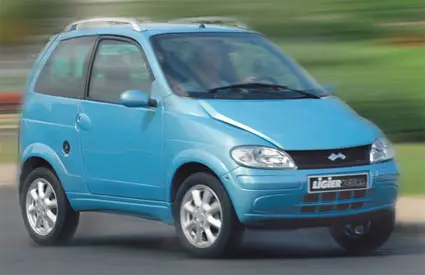
The Ligier JS2 is a mid-engined sports coupé that Ligier built in the French commune of Abrest near Vichy between 1971 and 1975. Road-going and competition versions were made, and the car was named in tribute to Guy Ligier’s friend and former teammate Jo Schlesser.
Ligier JS2 at a glance
| Production | 1971–1975, Abrest near Vichy, Allier |
|---|---|
| Layout | mid-engined, rear-wheel drive |
| Body | fibreglass by Frua, with revisions by Pichon-Parat |
| Chassis | steel backbone with a polyurethane foam core |
| Suspension | wishbones and coil springs, anti-roll bars front and rear |
| Brakes | power-assisted discs |
| Engine 1971 | Maserati C114 V6, 2675 cc, 170 CV |
| Engine 1973 | Maserati V6, 2965 cc, 195 CV |
| Price at launch | 74,000 francs |
| Weight | 980 or 1030 kg |
| Series 2 | 1975, hidden headlamps, seven built |
History of the Ligier JS2
Origins
Guy Ligier and his racing teammate, business partner and close friend Jo Schlesser talked about building a car that overcame the shortcomings of the cars they were driving. After Schlesser’s death Ligier retired from racing and established Automobiles Ligier in 1968. The JS2 was the company’s second product after the JS1, and the letters in its name, like those of the JS1, are a tribute to Schlesser.
Design
Bodywork was again by Frua, but Guy Ligier insisted that the proportions of the cabin be adjusted so that the car was not too wide, had a low centre of gravity and good outward visibility. His requirement that it also be practical brought wide doors and a usable trunk. The road car was built on a backbone chassis made of a layer of polyurethane foam sandwiched between sheets of steel, with wishbones and coil springs at all four corners, power-assisted disc brakes and anti-roll bars front and rear. Minor components such as door handles and tail-lights came from Peugeot and Citroën.
From Ford to Maserati
The JS2’s first public showing was at the 1970 Paris Salon, with a 2.6-litre Ford V6. Ford, which was developing its own mid-engined GT70, declined to supply engines. A deal with Raymond Ravenel, managing director of Citroën, brought the Maserati C114 V6 from the SM: a 90-degree double-overhead-camshaft unit designed by Giulio Alfieri, of light alloy, displacing 2675 cc and producing 170 CV. Michel Têtu redesigned the rear cradle and stretched the car by 50 mm, and Pichon-Parat made final revisions to the appearance. This version debuted at the 1971 Paris Salon at 74,000 francs, with first deliveries in November 1972; 48 cars were built that year.
Growth and the end
In February 1973 the JS2 received the larger 2965 cc C114 engine shared with the Maserati Merak, raising power to 195 CV and the price to 74,500 francs; 80 cars were built that year, and some rare examples used the 220 CV Merak SS engine. In 1974 Ligier agreed to sell through Citroën’s dealership network, which also provided after-sales service, and Citroën transferred assembly of the SM to Abrest; 114 JS2s were built that year. A revised Series 2 appeared in 1975 with hidden headlamps, five-lug wheels, rear lights from the Peugeot 304 and a price of 80,000 francs, but the oil crisis had shrunk the market and only seven were built. On 22 May 1975 Citroën announced that Maserati had been put into receivership; control passed to De Tomaso, who ended production of the V6 and left Ligier without an engine, bringing the JS2 to an end.
Competition
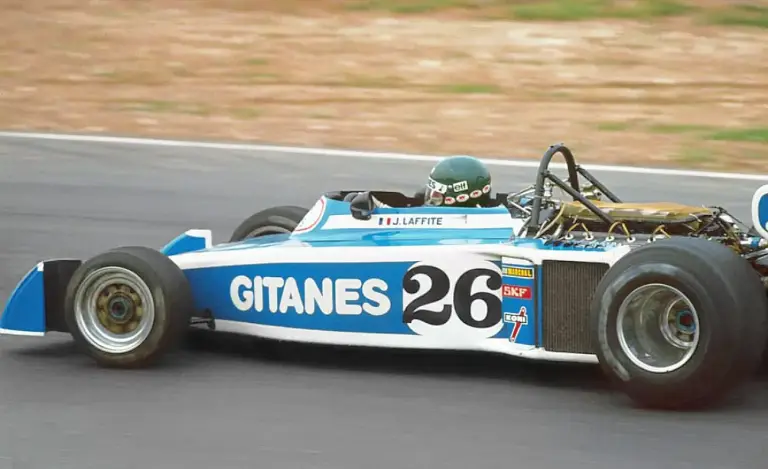
The racing JS2 used an aluminium chassis instead of steel. At Le Mans in 1973 three cars were entered; the works cars retired but Claude Laurent’s private entry finished 19th. In 1974 Jacques Laffite and Alain Serpaggi finished eighth, and at the end of the season JS2s finished first and second in the Tour de France, which the team of Gérard Larrousse, Jean-Pierre Nicolas and Johnny Rives won outright. At Le Mans in 1975 the Ford Cosworth DFV-engined car of Jean-Louis Lafosse and Guy Chasseuil finished second, one lap behind the Mirage of Derek Bell and Jacky Ickx.
Design and features
- Maserati V6: the same engine as the Citroën SM, in 2.7-litre and later 3.0-litre form.
- Frua bodywork: a fibreglass coupé shape revised by Pichon-Parat for production.
- Backbone chassis: steel sheets bonded to a polyurethane foam core.
- Practical cabin: wide doors, a usable trunk and good visibility at Guy Ligier’s insistence.
- Racing pedigree: class results at Le Mans and an outright win in the 1974 Tour de France.
Ligier JS2 versions
- Prototype (1970): shown in Paris with a 2.6-litre Ford V6 that was never supplied.
- JS2 2675 cc (1971–1973): 170 CV, 74,000 francs.
- JS2 2965 cc (1973–1975): 195 CV, the engine shared with the Maserati Merak.
- Merak SS-engined cars: a few examples with 220 CV.
- Series 2 (1975): hidden headlamps and five-lug wheels, seven built.
- Competition JS2: aluminium chassis, up to 330 CV in 1973.
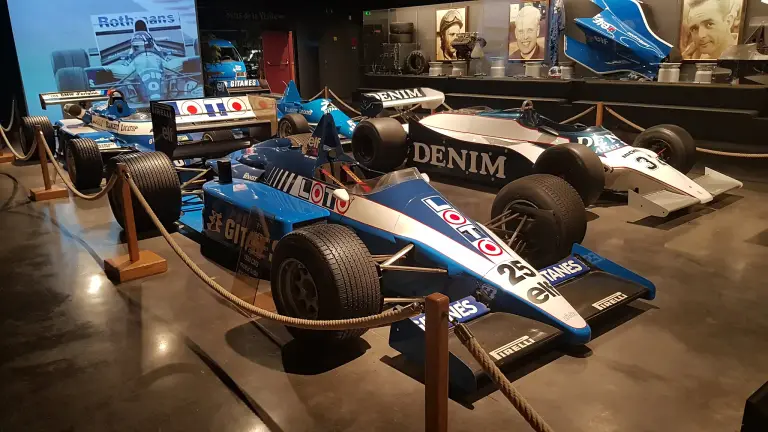
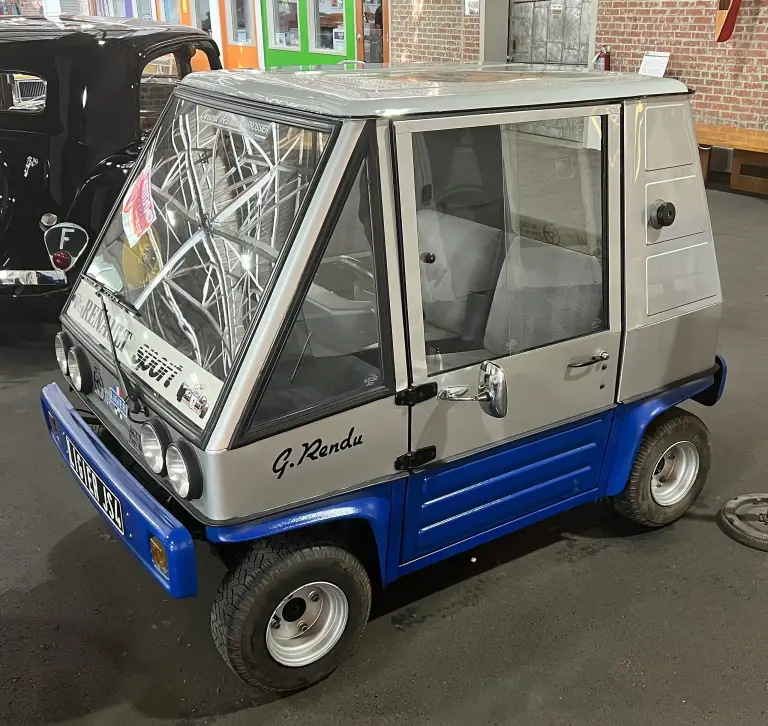
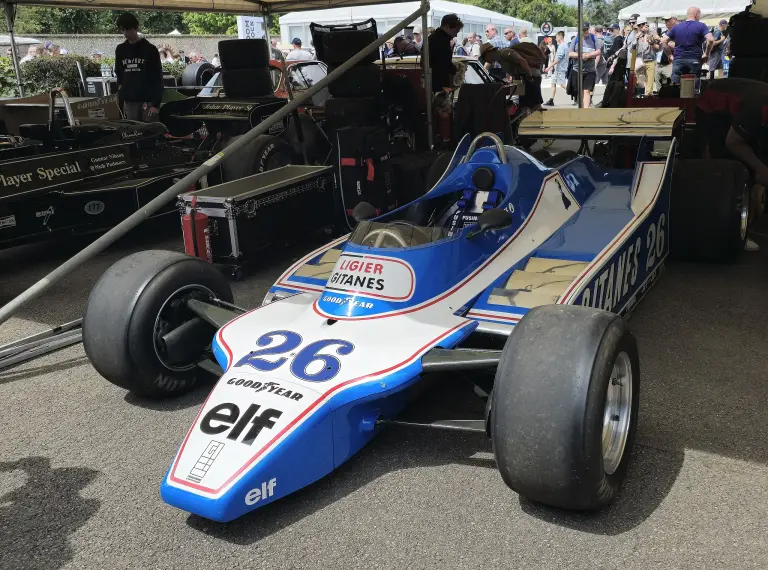
The JS2 was Ligier’s road-going flagship before the company turned to Formula One with the JS5 and the JS11, and to microcars such as the JS4. More cars are in the Ligier collection.
Video: A bord de la Ligier JS2
Video on YouTube.
Sources
- Ligier JS2, English Wikipedia: design, engines, production, racing
- Ligier JS2, French Wikipedia: Series 2 details, Le Mans and Tour de France results