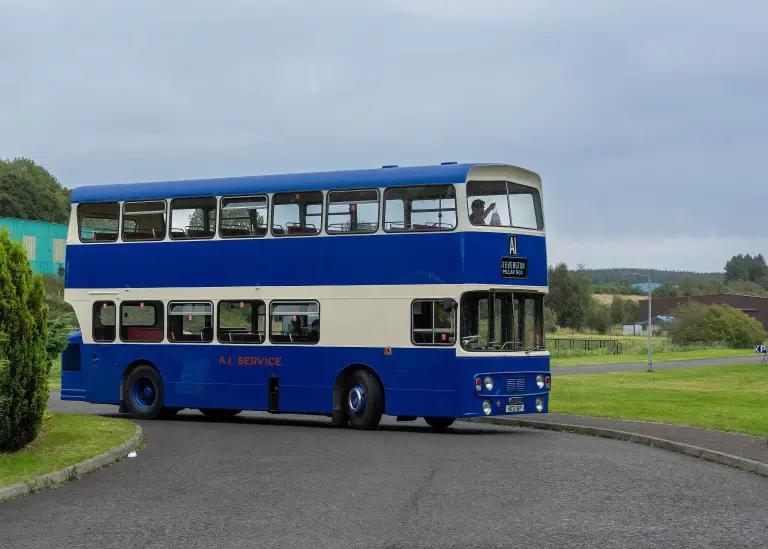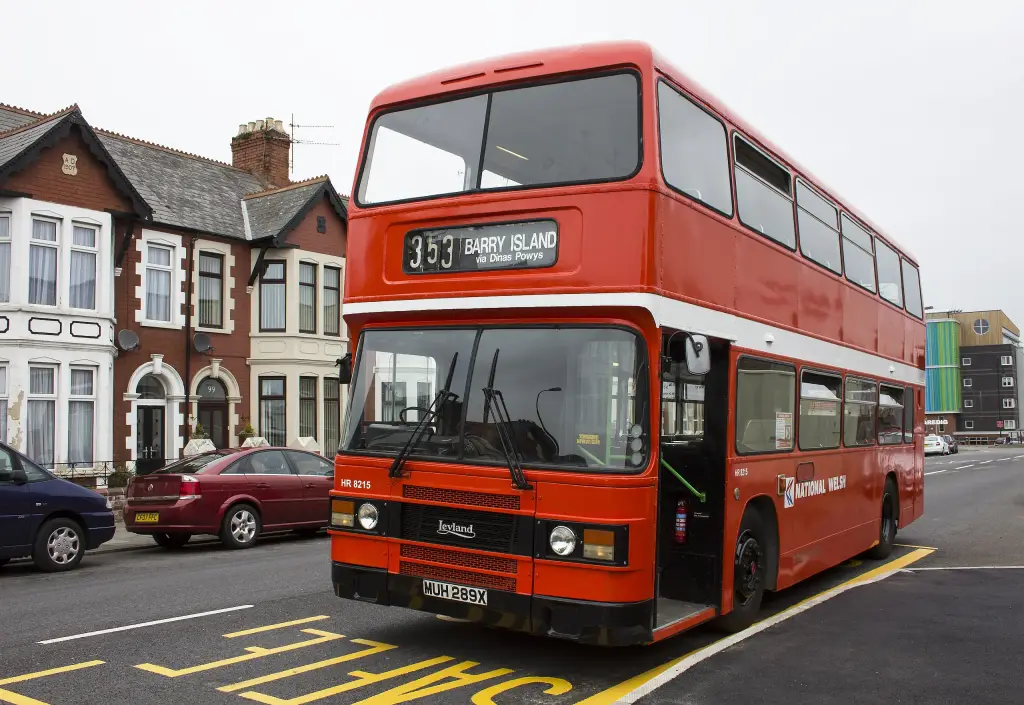
The Leyland Olympian is a two-axle and three-axle double-decker bus chassis manufactured by Leyland between 1980 and 1993. It was the last Leyland bus model in production, and after Leyland was bought by Volvo it continued as the Volvo Olympian until 2000.
Leyland Olympian at a glance
| Maker | Leyland |
|---|---|
| Type | two- and three-axle double-decker chassis |
| Production | 1980–1993 |
| Project | B45, named Olympian in 1979 |
| Unveiled | 1980 Commercial Motor Show |
| Lengths | 9.56 m and 10.25 m |
| Export lengths | 10.4 m, 11.32 m and 11.95 m, three axles |
| Engines | Leyland TL11; Gardner 6LXB or 6LXCT; later Cummins L10 |
| Bodies | Alexander, East Lancs, ECW, Leyland, Marshall, Northern Counties, Roe/Optare |
| First production | Ribble Motor Services, August 1981 |
| Built at | Brislington, then Farington and Workington |
| Last Leyland bus | Workington closed in 1993 |
Based on one source, the English Wikipedia article on the Olympian.
History of the Leyland Olympian
From Titan to B45
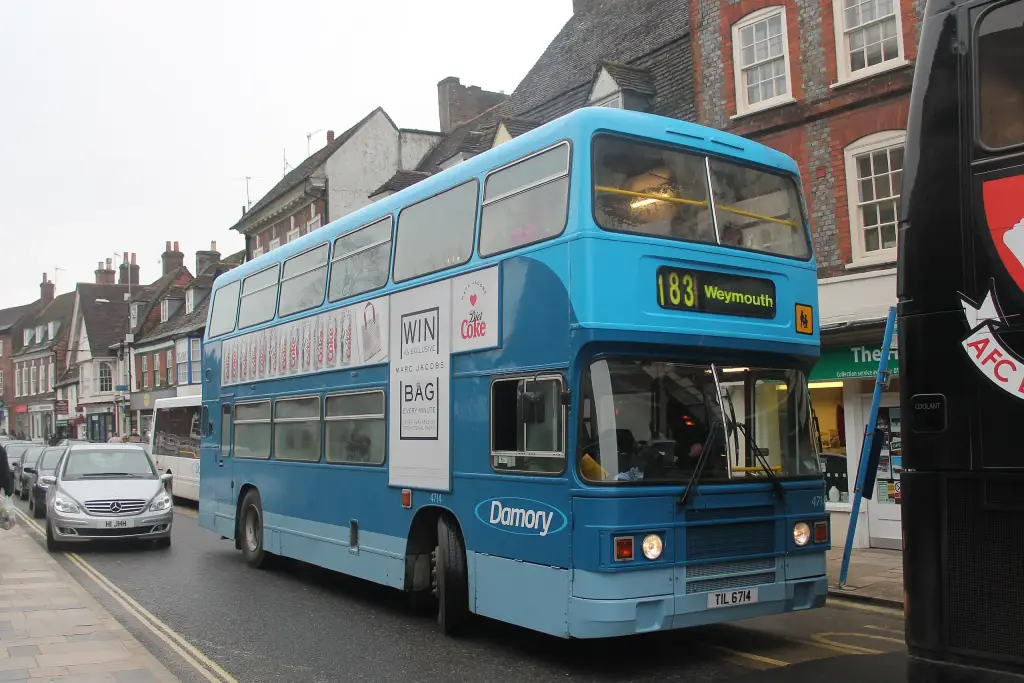
The Olympian used the same chassis and running gear as the Leyland Titan integral double-decker, which London Transport ordered in large numbers. Operators also wanted non-integral vehicles whose chassis could be bodied by other manufacturers, so Leyland created the B45 project, named Olympian, in 1979. It was in many ways an update of the popular Bristol VRT, whose customers largely chose Olympians after Bristol Commercial Vehicles merged with Leyland in 1965, and it later replaced the Leyland Atlantean. The Olympian was unveiled at the 1980 Commercial Motor Show in two lengths, 9.56 m and 10.25 m. Engines were the Leyland TL11, a development of the O.680 and also of 11.1 litres, or the Gardner 6LXB or 6LXCT, and some later Olympians had Cummins L10 engines; one had a 5LXCT.
Export and air conditioning
For export a three-axle version was built in lengths of 10.4 m, 11.32 m and 11.95 m, and it was very popular with operators such as Kowloon Motor Bus. In 1988 Leyland developed an air-conditioned Olympian whose refrigerant compressor was driven by the main engine rather than a separate engine.
Production
Nine demonstrators were built between 1979 and 1981 before the first production Olympian entered service with Ribble Motor Services in August 1981. The bus was first made at the former Bristol factory in Brislington, where the first thousand were completed, and production moved to Leyland’s Farington and Workington plants in 1983. It was bodied by a wide range of coachbuilders: Walter Alexander, East Lancs, ECW, Leyland itself, Marshall, Northern Counties and Roe or Optare.
Volvo and the end
In 1988 Leyland was purchased by Volvo, which continued only the Olympian and the Lynx because of the large number of outstanding orders. Further buses went to Dublin Bus, London Transport, China Motor Bus and Hong Kong Citybus. The final orders, from a fire-stricken Strathclyde Buses, Dublin Bus, China Motor Bus, Citybus and Singapore Bus Services, ended the Leyland Olympian, the last going to Singapore Bus Services, and the Workington plant closed in 1993. The Volvo Olympian replaced it with the same chassis and a Volvo TD102KF engine instead of the Gardner option, and remained in production until 2000.
Operators
The Olympian was highly popular in Britain, ordered by operators before and after privatisation. London Regional Transport took three for evaluation in 1984 and, after the Titan was discontinued in 1984, London Buses bought 350 Olympians between 1986 and 1992, most with ECW bodywork and the later deliveries with Leyland integral or Alexander R-Type bodies. London Country bought 102 before deregulation with ECW and Charles H. Roe bodies. All the passenger transport executives except the West Midlands bought Olympians in the early and mid-1980s. Greater Manchester Transport was the largest PTE operator with about 280 from 1980 to 1986, followed by 30 more in 1988 and 1989 with Northern Counties bodies. West Yorkshire bought 163 with full-height Charles H. Roe bodywork, and its successor Yorkshire Rider another 62. Greater Glasgow and Strathclyde Transport bought 46, and Strathclyde’s Buses another 55, nearly all with Alexander R-Type bodies. Tyne & Wear took 65 in 1985 and 1986, and Merseyside had 15 as an experimental fleet.
Design and features
- Proven running gear: the chassis and mechanicals of the Leyland Titan integral.
- Coachbuilder choice: a non-integral chassis that operators could have bodied to their taste.
- Two and three axles: short home-market versions and long export models for Hong Kong and elsewhere.
- Air conditioning: a 1988 version with the compressor driven by the main engine.
Leyland Olympian versions
- Two-axle: 9.56 m and 10.25 m home-market chassis.
- Three-axle export: 10.4 m, 11.32 m and 11.95 m versions.
- Air-conditioned: the 1988 model for hot markets.
- Volvo Olympian: the same chassis with a Volvo TD102KF engine, built until 2000.
The Olympian replaced the Leyland Atlantean and was the last Leyland bus, alongside the Leyland Lynx. More Leyland vehicles are in the Leyland collection.
Sources
- Leyland Olympian, English Wikipedia: design, engines, production, operators