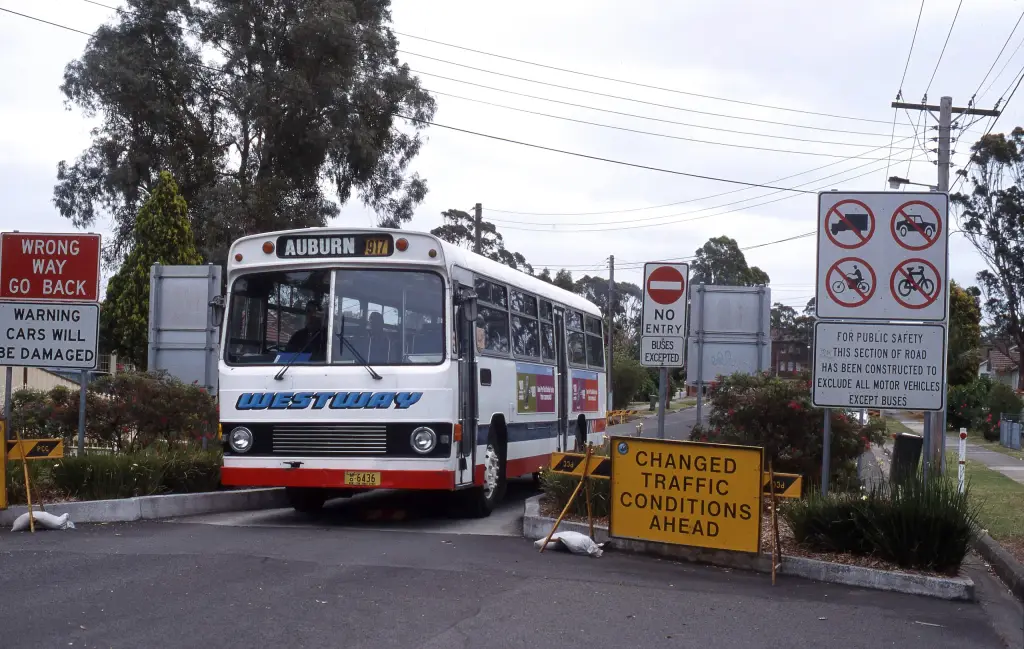
The Leyland Leopard was a mid-engined single-decker bus and coach chassis manufactured by Leyland between 1959 and 1982. Developed from the Leyland Tiger Cub, it became one of the most widespread British single-deckers, and it was superseded by the Leyland Tiger.
Leyland Leopard at a glance
| Maker | Leyland |
|---|---|
| Type | mid-engined single-decker bus and coach chassis |
| Production | 1959–1982 |
| Developed from | Leyland Tiger Cub |
| Engine | Leyland O.600, later O.680 |
| Original bus | L1, 30 ft, 16 ft 2 in wheelbase |
| Original coach | L2, 30 ft |
| 36 ft models | PSU3 series, launched 1961 |
| Later series | PSU4, PSU5 |
| Gearbox | Pneumocyclic, with A suffix from 1968 |
| Superseded by | Leyland Tiger |
| Northern Ireland | about 1,500 Leopards between 1965 and 1984 |
Based on one source, the English Wikipedia article on the Leopard.
History of the Leyland Leopard
From Tiger Cub to Leopard
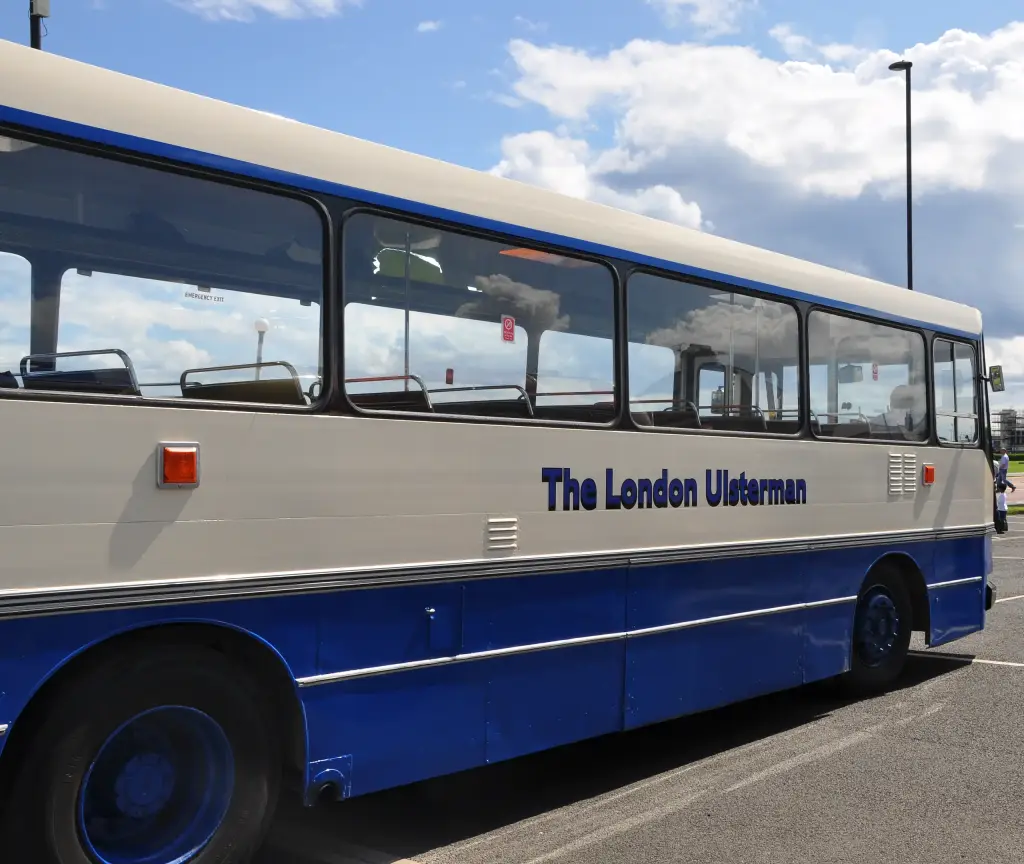
The Leopard was introduced in 1959, developed from the Leyland Tiger Cub. One of the most important changes was the larger and more powerful O.600 engine, and later Leopards received the 11.1-litre O.680. The original 30 ft bus version was coded L1, right-hand drive, with a 16 ft 2 in wheelbase and an overall length of 29 ft 4 in. The 30 ft coach was the L2, with the same wheelbase but an inch shorter overall, and the left-hand-drive LHL1 was 29 ft 2 in long. All had a swept turning circle of 68 ft.
The 36 ft PSU3
The first 36 ft models were launched at the 1961 Scottish Motor Show at Kelvin Hall on an 18 ft 6 in wheelbase. The PSU3.1R, PSU3.1L, PSU3.2R and PSU3.2L bus versions had a chassis length of 35 ft 1.5 in and a turning circle of 71 ft, while the PSU3.3R, PSU3.3L, PSU3.4R and PSU3.4L coaches had a 31 ft chassis and a 68 ft turning circle. The standard gross vehicle weight of the PSU3 was 11.25 tons, with 13 tons optional. By May 1964 all Leopards had the O.600, and only the longer .2 and .4 versions could be ordered with Pneumocyclic transmission.
PSU4 and PSU5
In 1966 the LHL1, L1 and L2, together with the Royal Tiger Cub, were replaced by the Leopard PSU4 series, which had a similar chassis and axles to the PSU3; coach versions had a shorter frame instead of the L2’s drop-frame extension. Córas Iompair Éireann had C-class buses of the same length as the PSU4 but coded PSU3.4R. From 1968 Leyland added an A suffix across its passenger models to mark the rationalised Pneumocyclic gearbox, which replaced various AEC and Leyland epicyclic transmissions and included a ten-speed splitter version; it was built in a new extension at the Farington works. All PSU4A and PSU3A Leopards had the larger O.680.
New models did not get the suffix, so the 20 ft wheelbase version announced in 1968 was the PSU5.4R, the first going to Córas Iompair Éireann. Compared with the PSU3A and 4A it offered an optional ten-speed splitter gearbox with a wide-ratio five-speed as standard, a Worldmaster front axle and a Maudslay rear axle. From December 1970 shorter Leopards were changed to PSU5 specification and took a B suffix, a change also applied to the last Panthers. The Scottish Bus Group kept buying the manual-gearbox Leopard with the O.600 until it was dropped in 1972 or 1973.
Later changes
Late in 1974 spring-operated parking brakes, automatic brake adjusters, a water-cooled air compressor and a revised engine mounting produced the PSU3C, PSU4C and PSU5A. Leyland stopped making a manual gearbox for the Leopard, and a version with the ZF S4-60 gearbox was sold to the Scottish Bus Group as the PSU3C.3R. During 1976 springs and axles were uprated and the close-ratio five-speed Pneumocyclic became standard on the PSU3D, PSU4D and PSU5B. In 1977 a change in crashworthiness rules moved the air-brake chambers and created the PSU3E, 4E and 5C. In 1979, the model’s twentieth year, tyre equipment and the coolant warning system were revised, the wide-ratio Pneumocyclic with direct air operation became standard again and the ZF S6-80 six-speed synchromesh became a general option on coach chassis coded .5, the PSU4F, PSU3F and PSU5D. In 1982, with the TL11-powered Tiger already on sale, the PSU4G, 3G and 5E received a rationalised O.680 that shared components with the TL11.
Operators
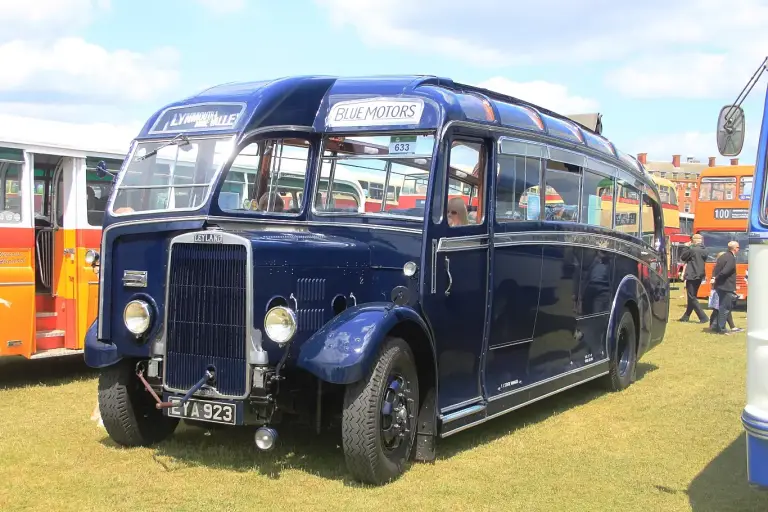
In England, National Bus Company subsidiaries such as Birmingham & Midland Omnibus Company built large Leopard fleets, and BET Group companies were major customers. A BET standard body was produced mainly by Marshall and Willowbrook, with some by Weymann and Metro-Cammell. Barton Transport of Chilwell near Nottingham built a fleet of 200 with Plaxton Elite and Supreme coach bodies and used them for all types of work, including local stage services, so all had a wide two-piece express or grant door; the latter name came from the New Bus Grant, under which the government paid part of the cost of a new bus meeting certain specifications. Many other operators bought Leopards to the grant specification. In Scotland the Scottish Bus Group bought many, mostly with Alexander Y-type bodies as buses and coaches. CIÉ in Ireland bought a substantial fleet, mainly with bodywork from its own workshops, as did the UTA and its successor Ulsterbus in Northern Ireland, which used Alexander (Belfast) bodies. The Leopard was common on Northern Irish roads for over 40 years, from the first in 1965 to the last in 1984, and about 1,500 were built. During the Troubles, 228 Leopards were stolen from depots and destroyed in the streets.
Design and features
- Mid-mounted engine: the O.600, later the larger O.680, sat under the floor.
- Bus and coach chassis: the same basic design served stage services and long-distance coaches.
- Pneumocyclic gearbox: rationalised from 1968 with an A suffix and a ten-speed splitter option.
- Long service: about 1,500 Leopards in Northern Ireland alone between 1965 and 1984.
Leyland Leopard versions
- L1 and L2: the original 30 ft bus and coach of 1959.
- LHL1: the left-hand-drive 30 ft version.
- PSU3: the 36 ft models of 1961, in bus and coach form.
- PSU4 and PSU5: the 1966 and 1968 series, with A and B suffixes for later changes.
- PSU3C–3G, 4C–4G and 5A–5E: the updates from 1974 to 1982.
The Leopard followed the Leyland Cub and was replaced by the Leyland Tiger. More Leyland vehicles are in the Leyland collection.
Sources
- Leyland Leopard, English Wikipedia: designations, engines, operators, production