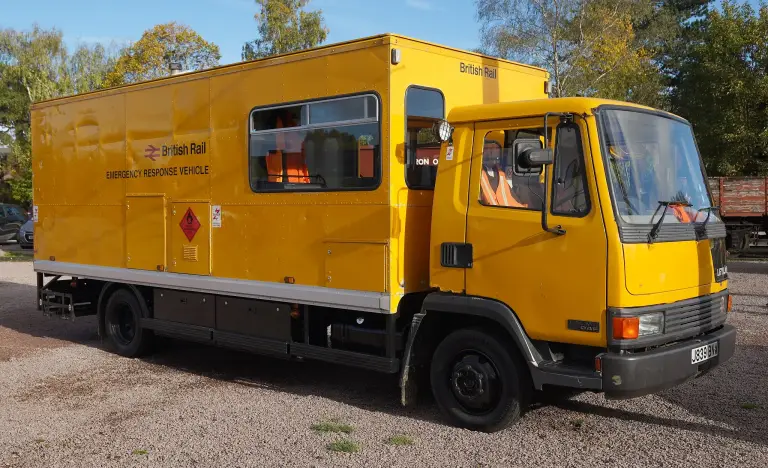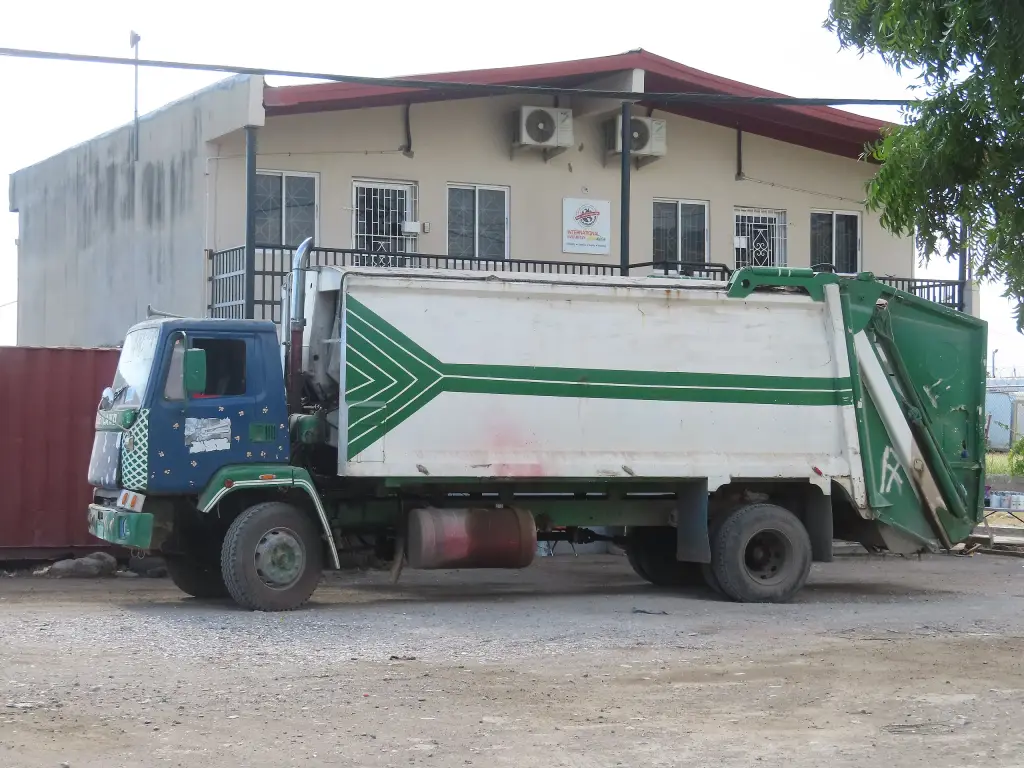
The Leyland Freighter was a forward-control lorry that appeared in 1982 alongside the Leyland Cruiser. Part of British Leyland’s T45 modernisation programme, it replaced the Boxer and Clydesdale and filled the fast-growing sector up to 17 tonnes gross weight. From 1990 it was sold as the Leyland DAF 50.
Leyland Freighter at a glance
| Maker | British Leyland, later Leyland DAF |
|---|---|
| Type | distribution truck |
| Introduced | 1982, alongside the Cruiser |
| Project | T45 |
| Replaced | Leyland Boxer and Leyland Clydesdale |
| Gross weight | up to 17 tonnes |
| Drive | 4×2 only |
| Cab | T45 cab, standard or double cab with sleeper, no high roof |
| Chassis | from the Boxer and Clydesdale, with Maudslay or Albion rear axles |
| Engine | Leyland 400 diesel, up to 160 hp |
| 1987 engine | Cummins B-series, up to 180 hp, with ZF 600 gearbox |
| From 1990 | Leyland DAF 50, DAF 50 on the continent |
| Replaced by | DAF 65/75 in 1994 |
Based on one source, the German Wikipedia article on the Freighter.
History of the Leyland Freighter
Leyland Freighter, 1982–1990
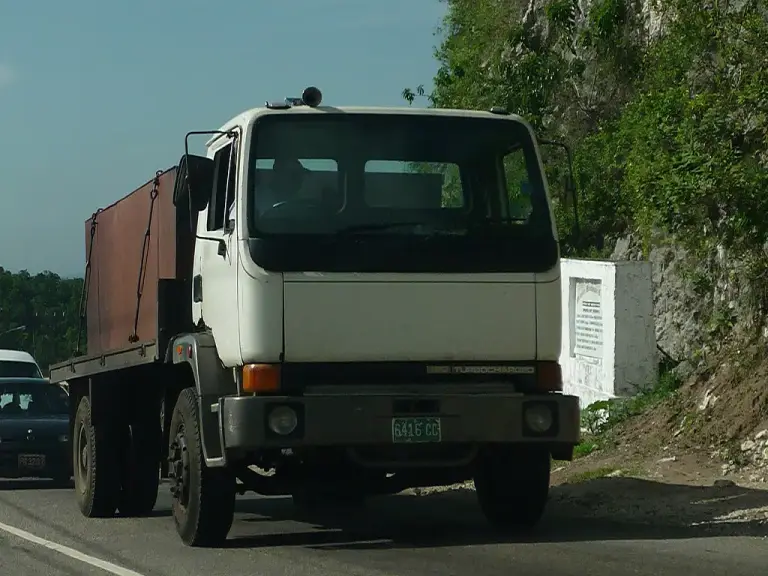
The Freighter appeared in 1982 in parallel with the Cruiser, as part of the British Leyland commercial vehicle programme based on the T45 project. It replaced the Boxer and Clydesdale, whose basic design dated from the 1960s. The cab was the same as on the Cruiser, in standard or double-cab form with a sleeping space, and both used the T45 cab family of the Roadtrain and Constructor, but smaller and without the high roof. Like the Cruiser, the Freighter had rear-wheel drive in 4×2 form and could be ordered with a box body or as a chassis for bodywork. Its role was the fast-growing sector up to 17 tonnes gross weight, between the Roadtrain above and the Leyland Super G below.
The chassis came from the Boxer and Clydesdale in modified form, with rear axles from Maudslay or Albion, the latter with hub reduction. Power came from the Leyland 400 diesel, with or without a turbocharger, giving up to 160 hp through a Turner six-speed gearbox. The brakes were carried over from the predecessors, though the heaviest model used the Roadtrain’s front brakes. The Ford Cargo, the British market leader, had appeared only a year earlier, and the Freighter now alternated with it at the top of the registration tables. Seddon Atkinson later offered a revised 16-tonne range called the 2-11 with a new Perkins Phaser diesel, which made Leyland’s 400 look old-fashioned, since its basic design went back to the 1960s. Leyland responded by offering the Cummins B-series, already used in the Roadrunner, in the Freighter from 1987 with more power. As with the Roadrunner, Leyland made castings and other engine parts for Cummins and bought the engines more cheaply. Power first reached 180 hp, and because the Turner gearbox could not take it, the ZF 600 six-speed was fitted instead.
Leyland DAF 50 and DAF 50, 1990–1994
After the Leyland DAF merger the Freighter became the Leyland DAF 50 in Britain and the export markets outside continental Europe during 1990, while on the continent it was sold as the DAF 50. The change brought a slightly revised front, a modernised interior and better quality and comfort. Intercooling raised the Cummins engine to 210 hp. Production ended in 1994, and the DAF 65/75 replaced the model.
Design and features
- T45 cab: the modern cab family of the 1980s Leyland range, without the high roof.
- 17-tonne class: aimed at the growing distribution market below the Roadtrain.
- Leyland 400 engine: up to 160 hp, later replaced by the Cummins B-series.
- Cummins from 1987: up to 180 hp with a ZF 600 gearbox.
Leyland Freighter versions
- Box body: a factory-bodied distribution truck.
- Chassis cab: for bodywork by outside coachbuilders.
- Double cab with sleeper: for longer routes.
- Leyland DAF 50 and DAF 50: the 1990–1994 version with a revised front and up to 210 hp.
The Freighter was part of the Leyland T45 family and sat above the Leyland Cruiser. More Leyland vehicles are in the Leyland collection.
Sources
- Leyland Freighter, German Wikipedia: chassis, engines, market role, DAF 50