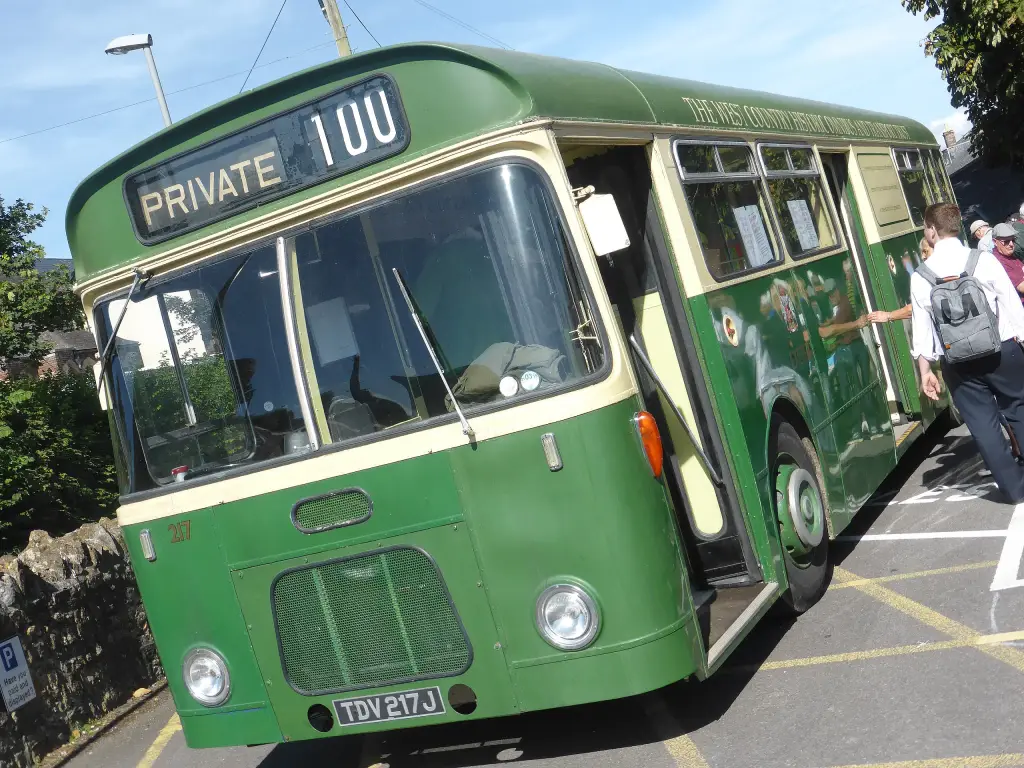
The Leyland Panther was a rear-engined single-decker bus chassis manufactured by Leyland between 1964 and 1972. A version with a smaller engine was sold as the Leyland Panther Cub, and the type was bought by operators in Britain, Sweden, Australia, New Zealand and Israel.
Leyland Panther at a glance
| Maker | Leyland |
|---|---|
| Type | rear-engined single-decker bus chassis |
| Production | 1964–1972 |
| Smaller version | Leyland Panther Cub |
| British orders | over 600 |
| Export orders | about 700 |
| Sunderland | 30 with Strachans bodies, 1965 |
| Liverpool | 110 with Metro Cammell Weymann bodies |
| Southport | 22 with Marshall bodies |
| Preston | 41, including the last six built |
| Sweden | 200 left-hand drive with Park Royal bodies |
| Brisbane | 341 between 1966 and 1970 |
| Perth | 127 between 1968 and 1974 |
Based on one source, the English Wikipedia article on the Panther.
History of the Leyland Panther
A rear-engined single-decker
The Panther was introduced in 1964 as a rear-engined single-decker chassis. Leyland also offered the Panther Cub with a smaller engine. In total over 600 Panthers were built for British operators and about 700 chassis were built for export.
British operators
Sunderland Corporation Transport ordered 30 Panthers in 1965 with Strachans bodies, all delivered by December 1966, and by 1971 the fleet had grown to 90. Liverpool City Transport bought 110 with Metro Cammell Weymann bodywork, Southport Corporation Transport 22 with Marshall bodies, and Preston Corporation built up 41, including a number with Seddon Pennine bodies and the last six Panthers ever built. Hull Corporation Transport was an early adopter with Charles H. Roe bodywork, taking twelve in all, one of them built in 1964 for exhibition at the Commercial Motor Show. East Yorkshire Motor Services ordered 19 with Marshall bodywork in 1965 and 1966, and the West Riding Automobile Company took 45 in 1967 with both Marshall and Roe bodies. One survives at the Dewsbury Bus Museum, restored to its as-delivered condition.
Exports
Storstockholms Lokaltrafik in Sweden had 200 left-hand-drive Panthers bodied by Park Royal. The largest single order came from Brisbane City Council, which bought 341 between 1966 and 1970, and the Metropolitan Transport Trust in Perth took 127 between 1968 and 1974. Smaller Australian operators, including Forest Coach Lines, Grenda’s Bus Service, Melbourne-Brighton Bus Lines and Rover Coaches, also bought Panthers, and second-hand examples were imported from Sweden and Britain in the late 1970s. Ten Panthers went to Dunedin City Transport in New Zealand, and another ten to Egged in Israel, where they were bodied locally by Ha’argaz.
Design and features
- Rear engine: a single-deck chassis with the engine at the back.
- Panther Cub: a smaller-engined version for lighter work.
- Coachbuilder choice: bodies came from Strachans, MCW, Marshall, Roe and Seddon Pennine.
- Export success: about 700 chassis went abroad, more than the British total.
Leyland Panther versions
- Panther: the standard rear-engined chassis.
- Panther Cub: the version with a smaller engine.
- Left-hand-drive export: 200 for Stockholm with Park Royal bodies.
- Australian and New Zealand batches: large fleets in Brisbane, Perth and Dunedin.
The Panther was one of the rear-engined single-deckers the Leyland National was meant to replace, and it sat alongside the Tiger coach. More Leyland vehicles are in the Leyland collection.
Sources
- Leyland Panther, English Wikipedia: production, British operators, exports