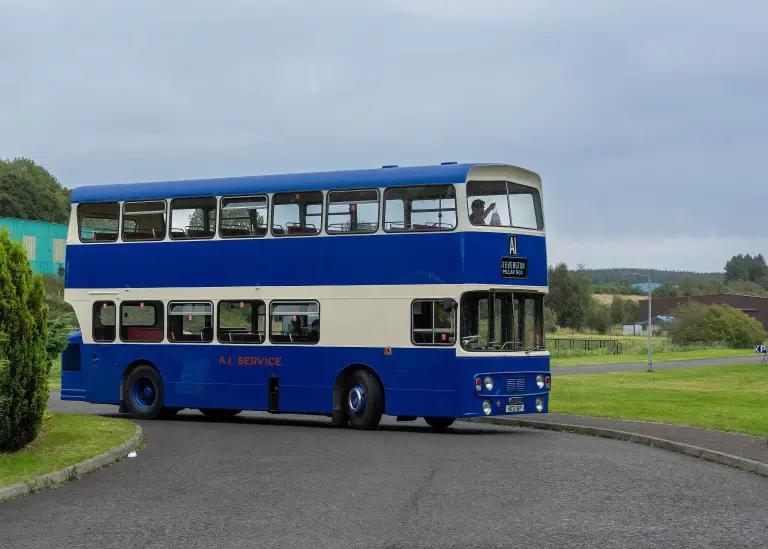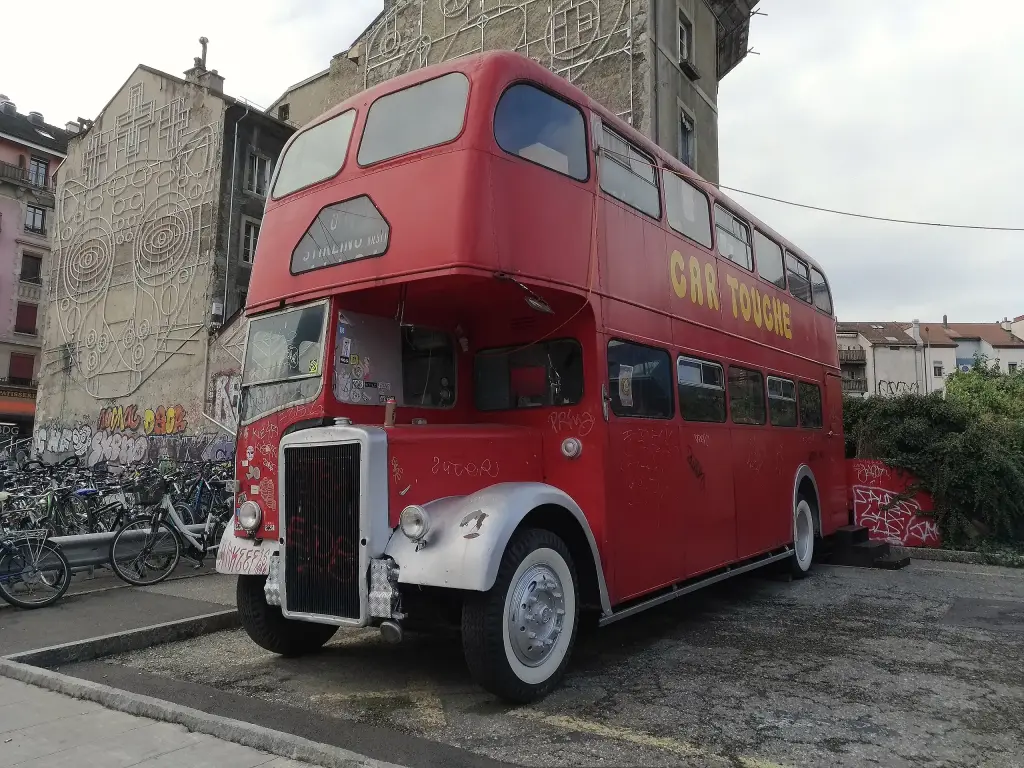
The Leyland Titan was a forward-control chassis with a front-mounted engine, designed to carry double-decker bus bodywork. It was built mainly for the United Kingdom between 1927 and 1942 and again from 1945 to 1969, and it was exported widely. Ashok Leyland of India took up production and still builds a much-developed version.
Leyland Titan at a glance
| Maker | Leyland Motors |
|---|---|
| Type | front-engined double-decker bus chassis |
| Production | 1927–1942 and 1945–1969 |
| Export markets | Australia, Ireland, India, Spain, South Africa and others |
| Drive | right-hand drive in all markets |
| Predecessor range | named Leyland passenger models from 1925 |
| Double-deck name | Leviathan, up to 48 seats |
| Single-deck names | Leveret, Lioness, Lion and Leopard |
| Later production | Ashok Leyland Titan in India |
Based on one source, the English Wikipedia article on the front-engined Leyland Titan.
History of the Leyland Titan
Dropped frames and named models
Before 1924 Leyland Motors and most British commercial vehicle makers used similar simple ladder frames for buses and lorries. For buses the saloon floor sat too high, which made access difficult and raised the overall height if a covered top deck was fitted. The London General Omnibus Company’s AEC 405 of 1923, the NS class, used side members upswept over the axles to lower the floor by about a foot, but the Metropolitan Police refused covered top decks on it for several years. In 1924 Maudslay introduced its swept-down ML chassis, though no double-deckers were catalogued until 1930.
In 1925 Leyland followed with a dropped-frame double-deck model for general sale and, unlike its rivals, gave its dedicated passenger models names. The single-deck chassis were named after animals: the 20 to 23-seat Leveret, the 26 to 30-seat Lioness, the 32 to 36-seat Lion and the 38-seat Leopard. The double-decker was called Leviathan and was designed for up to 48 seats, with six solid rubber tyres as standard. About 60 Leviathans were sold by 1927, mostly to municipal operators in Lancashire and Cheshire, with Crosville the largest private operator.
Leyland thought differently from the makers promoting six-wheel double-deckers to replace trams. The Lion became the best-selling single-deck bus and coach in Britain, with almost 3,000 Lions and Lionesses sold by the end of the three-year L-series run, returning Leyland to profit after heavy losses in the early 1920s. Chairman Henry Spurrier recruited new design talent, including G.J. “John” Rackham as chief engineer in 1926, to give Leyland a long-term technical and sales lead.
The Titan
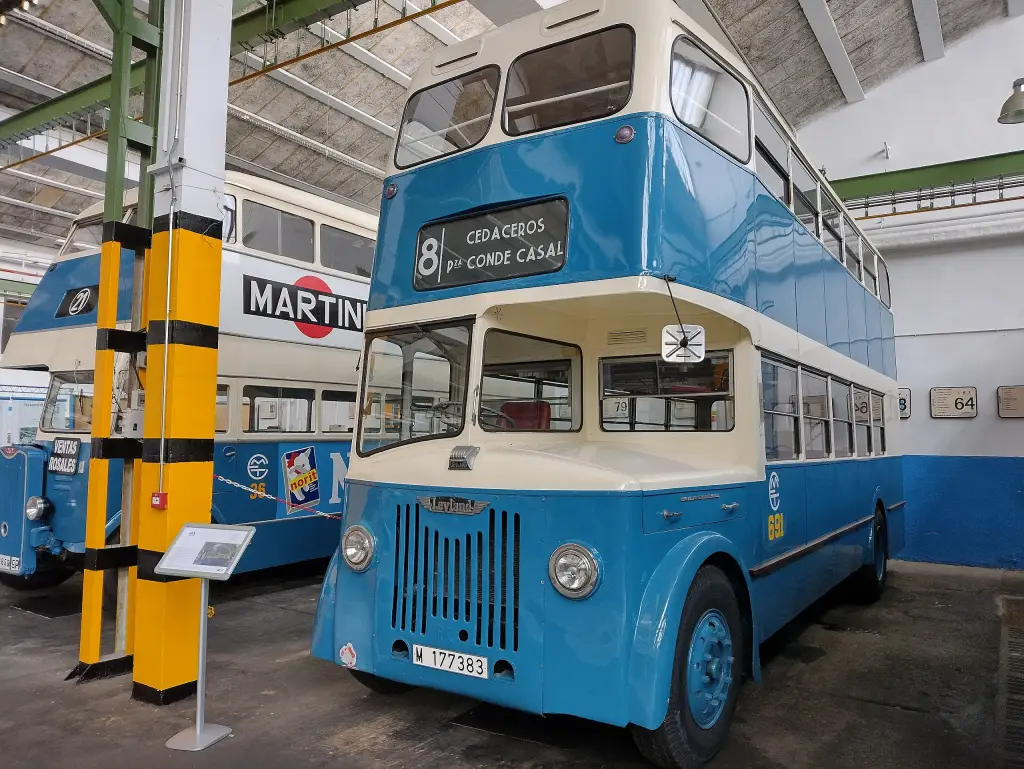
The Titan was a forward-control chassis with a front-mounted engine, built mainly for the British market from 1927 to 1942 and again from 1945 to 1969. It was widely used in Britain and exported successfully to Australia, Ireland, India, Spain, South Africa and many other countries. From 1946 specific export models were introduced, although all Titans were right-hand drive regardless of the driving side in the customer country. After Leyland ended Titan production in Britain, Ashok Leyland of India took it up and marketed the bus in South Asia as the Ashok Leyland Titan, which in much-developed form is still in production.
Design and features
- Front engine: a forward-control chassis with the engine ahead of the driver.
- Dropped frame: the low chassis frame allowed a covered top deck without excessive height.
- World sales: exported to Australia, Ireland, India, Spain, South Africa and beyond.
- Indian continuation: the Ashok Leyland Titan is still built in developed form.
Leyland Titan versions
- Titan: the standard home-market double-decker chassis.
- Export Titans: specific export models from 1946, all right-hand drive.
- Ashok Leyland Titan: the Indian version, still in production.
The Titan was one of Leyland’s long-running double-deckers, alongside the later Atlantean and Routemaster. More Leyland vehicles are in the Leyland collection.
Sources
- Leyland Titan, English Wikipedia: origins, production, exports, Indian continuation