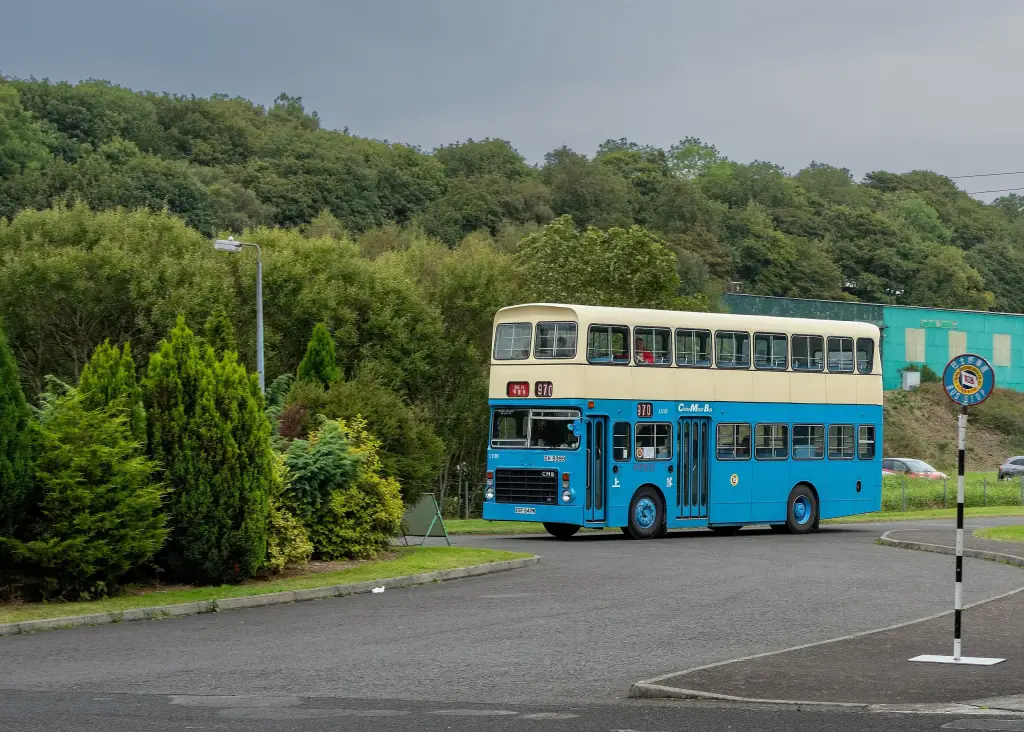
The Leyland Victory Mark 2 is a front-engined double-decker bus chassis manufactured by Leyland between 1978 and 1981. Like its rival the Dennis Jubilant, it was designed for Hong Kong’s hilly roads and one-person operation with a farebox, and it became one of the territory’s most familiar buses.
Leyland Victory at a glance
| Maker | Leyland |
|---|---|
| Type | front-engined double-decker bus chassis |
| Production | 1978–1981 |
| Developed from | Guy Victory J |
| Evaluation | four chassis to Kowloon Motor Bus |
| Engine | Gardner 6LXB |
| Gearbox | Voith D851; one CMB bus had a SCG GB350 |
| Bodies | Alexander, last 20 for CMB by Duple Metsec |
| Kowloon Motor Bus | 540 between 1979 and 1983 |
| China Motor Bus | 167 between 1979 and 1982 |
| New Lantao Bus | nine new, six second-hand |
| Nickname | the chicken |
Based on one source, the English Wikipedia article on the Victory Mark 2.
History of the Leyland Victory
Designed for Hong Kong
The Victory Mark 2 was developed from the Guy Victory J, which Bus Bodies (South Africa) also used for its own double-decker. Four examples went to Kowloon Motor Bus for evaluation. The chassis could be fitted with the Gardner 6LXB engine and a Voith D851 gearbox, but one Victory Mark 2 for China Motor Bus was experimentally fitted with a Self-Changing Gears GB350 gearbox. Almost all Hong Kong Victory Mark 2s had Alexander bodywork, except the last 20 built for China Motor Bus, which had Duple Metsec bodies. Single-deck versions of the Guy Victory were also operated in Southeast Asian cities such as Singapore, Kuala Lumpur and Penang.
Operators
Kowloon Motor Bus introduced 540 Victory Mark 2s between 1979 and 1983, including one unsuccessful air-conditioned coach whose unit was later removed. China Motor Bus bought 167 between 1979 and 1982, and New Lantao Bus nine between 1980 and 1983 plus six second-hand from KMB later. In 1993 New Lantao Bus sold ten of its Victory Mark 2s to Citybus, which took over 26 routes from China Motor Bus on 1 September 1993. The type served nearly every region of Hong Kong: the New Territories, Kowloon, Hong Kong Island and Lantau Island. All New Lantao and Citybus examples were withdrawn in the mid-1990s, KMB withdrew its last in early 1998, and China Motor Bus ran them until its routes and vehicles were taken over by New World First Bus on 1 September 1998. The last ex-CMB Victory Mark 2s were withdrawn on 31 August 2000. Four Citybus buses became service vehicles, and some withdrawn KMB and CMB buses were sold for rescue training.
Reputation and preservation
The Victory Mark 2 gained a reputation as an unsafe bus, mainly because its soft suspension and high centre of gravity made it prone to overturning. In Hong Kong it was nicknamed the chicken because its soft suspension made it rock back and forth in motion like a walking bird. Some ex-China Motor Bus examples have been preserved: LV2, LV30 and LV158 in Hong Kong, and LV36, which was donated to the Scottish Vintage Bus Museum.
Design and features
- Built for Hong Kong: designed for hilly roads and one-person operation with a farebox.
- Gardner power: the reliable 6LXB engine with a Voith D851 gearbox.
- Alexander bodies: almost all except the last 20 China Motor Bus buses, which had Duple Metsec bodies.
- The chicken: soft suspension gave a rocking ride and the nickname.
Leyland Victory versions
- KMB Victory Mark 2: 540 buses, including one air-conditioned coach.
- CMB Victory Mark 2: 167 buses, the last 20 with Duple Metsec bodies.
- New Lantao Bus: nine new and six second-hand examples.
- SCG gearbox prototype: one China Motor Bus chassis with a Self-Changing Gears unit.
The Victory Mark 2 was a front-engined Hong Kong bus, a generation before the Leyland Olympian became popular there. More Leyland vehicles are in the Leyland collection.
Sources
- Leyland Victory Mark 2, English Wikipedia: design, operators, reputation, preservation