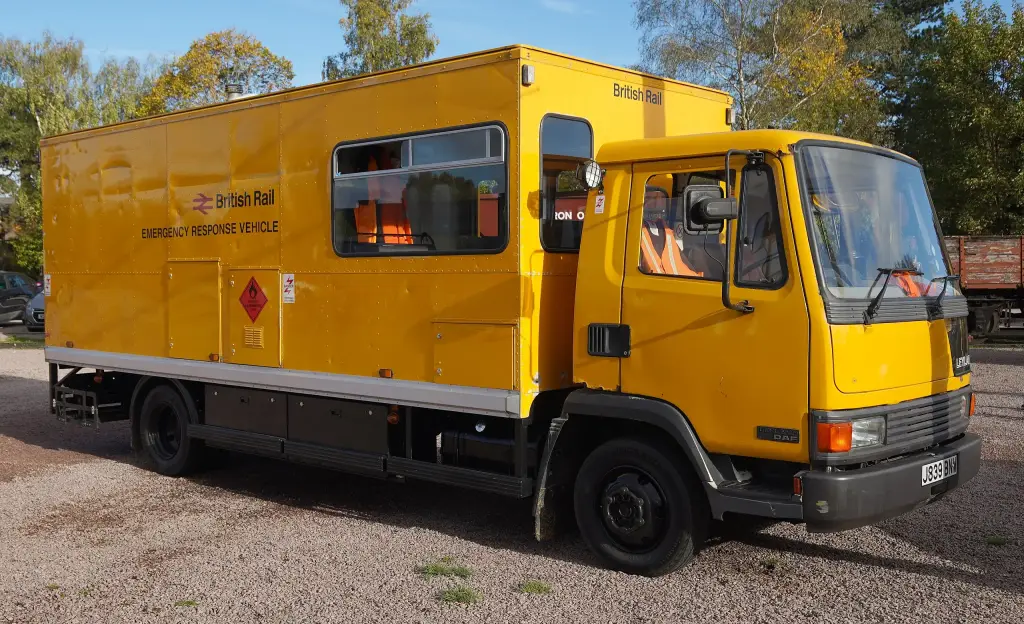
The Leyland Roadrunner was a forward-control distribution truck introduced in 1984, the last model of the British Leyland T45 programme. Designed as a rival to the Ford Cargo in the 7.5-tonne class, it replaced the ageing Leyland Super G and became the British market leader.
Leyland Roadrunner at a glance
| Maker | British Leyland, later Leyland DAF |
|---|---|
| Type | 7.5-tonne distribution truck |
| Introduced | 1984 |
| Project | T45 |
| Rival | Ford Cargo |
| Replaced | Leyland Super G |
| Engine | Leyland 6.98NV, 120 hp |
| Gearbox | Turner, synchromesh |
| Steering | ZF power steering as standard |
| Cab | T45-derived, with a small kerb-view window |
| From 1991 | Leyland DAF 45, DAF 45 on the continent |
| Replaced by | Leyland DAF and DAF 45/55 in 1994 |
Based on one source, the German Wikipedia article on the Roadrunner.
History of the Leyland Roadrunner
The gap in the range
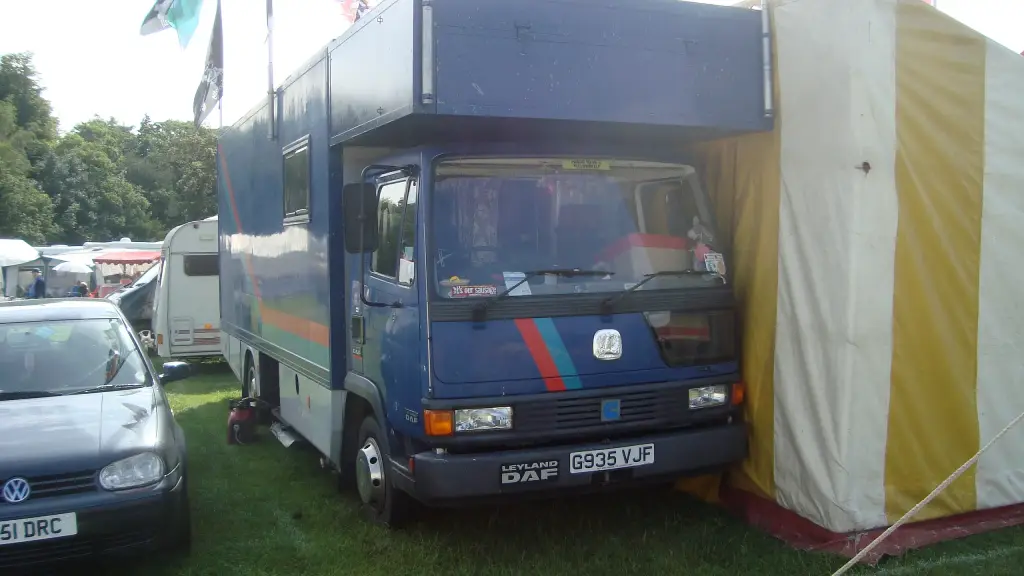
The Roadrunner was launched in 1984 as a direct rival to the Ford Cargo of 1981. In the fastest-growing sector of the lorry market, the 7.5-tonne class, Leyland had only the outdated Super G, a 1980 revision of the G-series that started at 10 tonnes and already trailed the Ford D-series and the updated Bedford TL. With the Cargo on sale the Super G looked even weaker, and a replacement became urgent. British Leyland’s answer was the T45 project: the Roadtrain tractor unit and Constructor came in 1981, the Freighter and Cruiser in 1982, giving Leyland a modern range above 11 tonnes. For the 7.5-tonne class the T45 cab could not simply be carried over because of its weight, though many pressings, including the doors, were shared with the larger models.
The cab
The Roadrunner had a very large windscreen for good visibility and carried over a safety detail from the Morris and Leyland FG: a small window on the passenger side below the windscreen that let the driver see the kerb. It also had equipment unusual for the time, such as heated mirrors and central ventilation directly in front of the driver. The headlamps were the same units as on the Austin Maestro. The dashboard was minimalist but had plenty of storage, with space under the passenger seat and a large bag on the cab wall behind the driver for maps and papers. The steering wheel was shared with the other models and the Roadrunner had ZF power steering as standard.
Engines and market
Before the T45 project Leyland had improved its engines considerably. The Leyland O.680 became the TL11 with a revised injection system and a new turbocharger, and the Leyland O.500, which had earned a reputation for unreliability through cylinder head failures, was thoroughly revised with a new head and introduced as the Leyland 6.98NV. This engine went into the Roadrunner with 120 hp, coupled to synchromesh Turner gearboxes. The Roadrunner also used an improved brake system from the other models, which afterwards received it in turn.
By 1984 Leyland had a complete modern range with the Roadrunner, Freighter, Constructor, Cruiser and Roadtrain, covering every weight class and duty. In Britain that made Leyland the only full-range maker, since Ford and Bedford offered only light or medium trucks and Foden and ERF only medium or heavy ones. In Europe only Mercedes-Benz, MAN, Renault Trucks and Iveco had a similarly complete programme, and their smaller models mostly used older designs, with the exception of the Mercedes-Benz LN launched at the same time. The Roadrunner was heavily advertised on posters, in commercial vehicle magazines and on television, and its modern design, economy and class-leading payload quickly made it the British market leader. Its successor, the DAF LF developed in the former Leyland plants, still holds that position and leads the whole European market, something the Roadrunner could not have achieved without a full Leyland dealer network; in Germany, for example, only a few dealers offered Leyland lorries.
Because 120 hp was modest and European rivals such as the Mercedes-Benz LN offered more choice, Leyland looked for alternatives. Cummins developed a light six-litre diesel series in the United States and Darlington known as the Cummins B-series. Leyland wanted a modern engine at minimum cost, so it signed a contract with Cummins to make certain parts and castings in exchange for cheaper individual B-series engines. The engine was first called the Leyland 300 series.
Leyland DAF years
After the merger of Leyland Motors and DAF into Leyland DAF, the Roadrunner was sold by DAF as the DAF 600, 800 and 1000 in continental Europe. After a revision it became the Leyland DAF 45 in the Commonwealth and export markets outside Europe and the DAF 45 in continental Europe from 1991. Leyland DAF went into insolvency in 1993 and Paccar became the new owner. After the model range was simplified and revised again, the Leyland DAF and DAF 45/55 replaced it in 1994.
Design and features
- 7.5-tonne class: aimed at the fastest-growing part of the British lorry market.
- T45 cab parts: doors and pressings shared with the larger Leyland trucks.
- Kerb-view window: a small window below the windscreen, inherited from the FG.
- Modern equipment: heated mirrors, central ventilation and ZF power steering as standard.
Leyland Roadrunner versions
- Roadrunner: the 1984 Leyland model with the 6.98NV engine.
- DAF 600, 800 and 1000: the continental names under Leyland DAF.
- Leyland DAF 45 and DAF 45: the 1991 revision.
- Leyland DAF and DAF 45/55: the 1994 replacement.
The Roadrunner was the smallest model of the Leyland T45 family, below the Freighter. More Leyland vehicles are in the Leyland collection.
Sources
- Leyland Roadrunner, German Wikipedia: development, cab, engines, market position