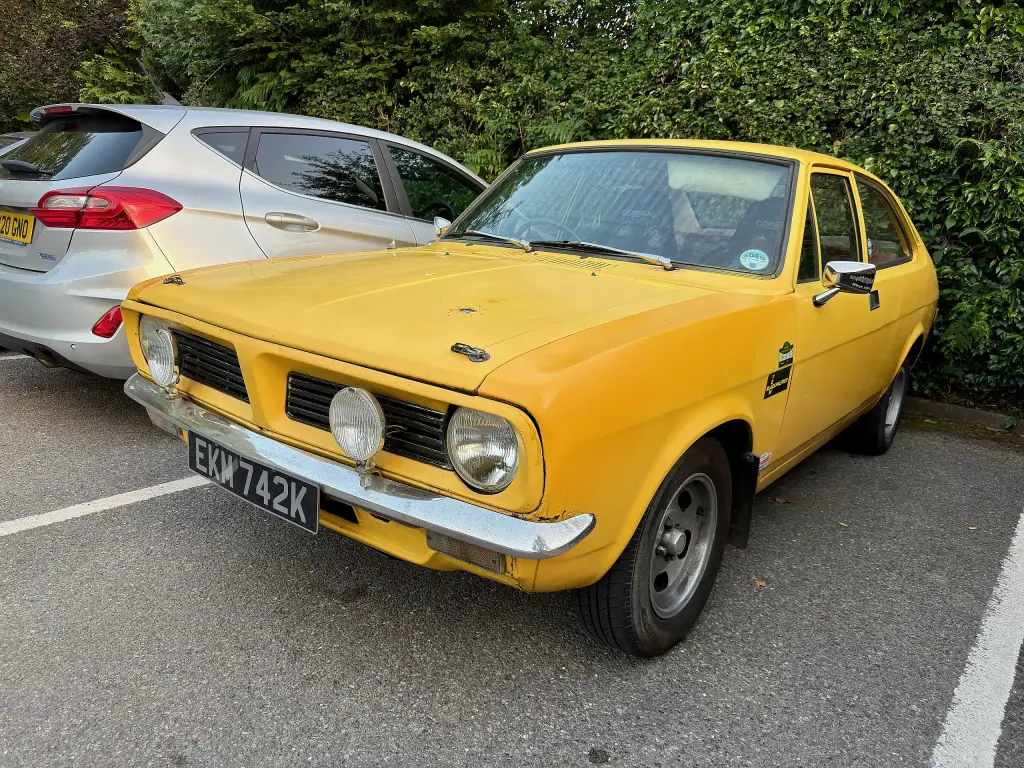
The Leyland Marina was the name under which the Morris Marina was sold in some markets. The car itself was a small family model built by the Austin-Morris division of British Leyland from 1971 to 1980, with rear-wheel drive and a range of saloon, estate, coupé, pick-up and van bodies.
Leyland Marina at a glance
| Maker | Austin-Morris, British Leyland |
|---|---|
| Also sold as | Morris Marina, Austin Marina, Leyland Marina, Morris 1700 |
| Production | 1971–1980 |
| Replaced | Morris Minor and Morris Oxford |
| Layout | front engine, rear-wheel drive |
| Bodies | saloon, estate, coupé, pick-up, van |
| Project code | ADO28 |
| Designer | Roy Haynes |
| Built at | Cowley, Oxford |
| Total built | 1.2 million |
| Replaced by | Morris Ital in 1980 |
| Fully replaced | by the Austin Montego in 1984 |
The Marina is described in the English Wikipedia article on the Morris Marina; the Leyland Marina was the export name of the same car.
History of the Leyland Marina
Why the Marina existed
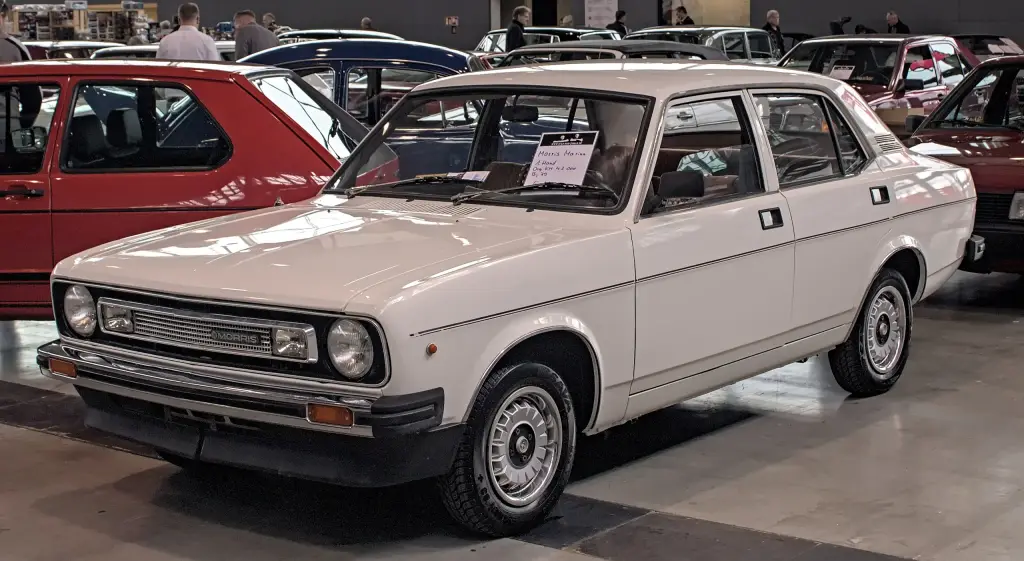
The Marina was developed under the ADO28 codename. Its impetus came when Leyland Motors merged with British Motor Holdings in 1968 to form British Leyland. The new management, largely made up of former Leyland Motors staff, found that apart from the Austin Maxi and a tentative design for a Mini replacement, BMH had no new cars under development. The mass-market range consisted of the 1948 Morris Minor, the 1959 Farina saloons and the decade-old 1100 and 1300 models. British Leyland therefore planned a replacement for the Minor and the Farina that could be produced quickly and sold for no more than five years, until a genuinely new car could follow.
To distinguish its brands, British Leyland decided that conservative, traditionally engineered cars would wear the Morris name, while more adventurous cars would be Austins. The ADO28 would therefore use a conventional rear-wheel-drive layout with a live rear axle, like the Ford Escort, Ford Cortina and Vauxhall Viva. The same approach was meant to help exports: Commonwealth markets such as South Africa, Australia and New Zealand wanted simple, strong cars rather than the complicated BMC designs with small engines. The Marina was unadventurous but simple, using existing BMC and Triumph components.
Design and production
The car was designed by Roy Haynes, who had designed the Ford Cortina Mark II, and it shared styling and dimensions with that car. With no budget for two separate rivals to the Escort and Cortina, the ADO28 was sized to compete with both, although it ended up only slightly smaller than the Cortina. Haynes wanted a coupé and a saloon, the coupé as a sporting premium model in the mould of the Ford Capri and the saloon for company drivers and families. His assistant Harris Mann designed the door handles, later reused on the Austin Allegro and Triumph TR7. Haynes also proposed a common floorpan shared between models, the first car design to use the idea, but British Leyland management found it too radical, and Triumph designer Harry Webster was brought in to push the project forward. Haynes soon left and Mann became chief designer.
The Marina was built at the former Morris Motors plant at Cowley in Oxford, which was largely unchanged since the 1920s and lacked capacity, so Leyland had to rebuild it, adding significantly to design and production costs. The car had originally been intended to use BMC’s E-series overhead-cam engines, but small sixes fell out of favour, and increasing stroke to raise capacity produced a tall engine that could not be slanted because of the fuel pump position.
Sales and reputation
The Marina was a popular car in Britain throughout its life, although it rarely came close to challenging the Ford Cortina. It was exported around the world, including to North America, and assembled in Australia, New Zealand, South Africa and Malaysia. In some markets it was sold as the Austin Marina, the Leyland Marina or the Morris 1700. A total of 1.2 million were built, but various sources rank the Marina among the worst cars ever built. Its 1980 replacement, the Ital, was the same car with mild styling changes, and the model was only fully replaced by the Austin Montego in 1984. British Leyland sold the Marina alongside the front-wheel-drive Austin Maxi of 1969 and the Austin Allegro of 1973.
Design and features
- Conventional engineering: front engine, rear-wheel drive and a live rear axle, chosen for simplicity and easy export.
- Shared parts: the car drew on existing BMC and Triumph components to keep costs down.
- Five body styles: saloon, estate, coupé, pick-up and van.
- One floorpan idea: Roy Haynes proposed a common floorpan, an idea British Leyland rejected as too radical.
Leyland Marina versions
- Morris Marina: the home-market name.
- Austin Marina: the name used in some export markets.
- Leyland Marina: the Leyland-badged version sold abroad.
- Morris 1700: another export name.
- Morris Ital: the 1980 replacement, the same car with mild styling changes.
The Marina was sold alongside the Mini in British Leyland showrooms, and the Australian P76 was the company’s larger attempt at a local car. More Leyland vehicles are in the Leyland collection.
Sources
- Morris Marina, English Wikipedia: development, design, production, sales