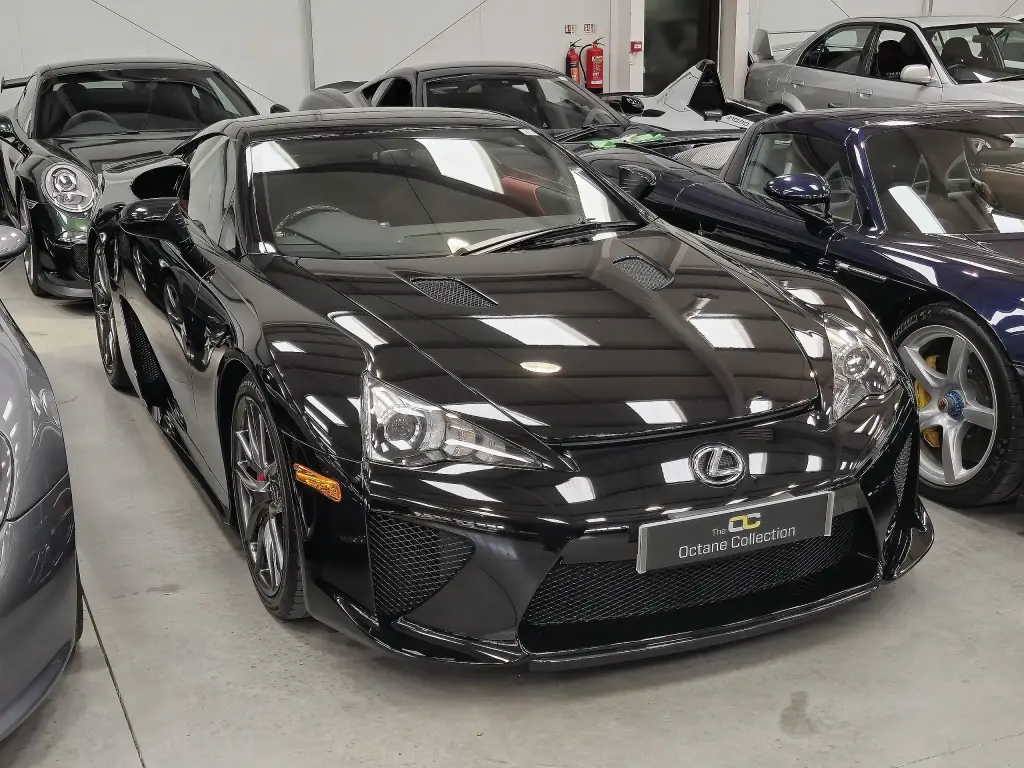
The Lexus LFA is a two-door supercar built by Toyota for Lexus between 2010 and 2012. Its 4.8-litre V10 was developed with Yamaha, the body was largely carbon fibre, and Lexus made exactly 500 of them.
Lexus LFA at a glance
| Production | 2010 to 2012, 500 cars |
|---|---|
| Development code | TXS, begun in early 2000 |
| First concept | LF-A, January 2005, Detroit |
| Production debut | Tokyo Motor Show, October 2009 |
| Assembly began | 15 December 2010 |
| Built at | Motomachi plant, Toyota, Aichi |
| Engine | 4.8-litre 1LR-GUE V10, built with Yamaha |
| Power | 412 kW (553 hp) |
| Torque | 480 N·m (350 lb·ft) |
| 0-60 mph | 3.6 seconds |
| Top speed | 325 km/h (202 mph) |
| Body | 65 per cent carbon fibre-reinforced polymer |
based on one source (English Wikipedia)
History of the Lexus LFA
Development of the car, coded TXS, began in early 2000 as a way of showing what Toyota and Lexus could build. The first prototype was finished in June 2003, and testing at the Nürburgring started in October 2004. The first LF-A concept appeared at the North American International Auto Show in January 2005 as a design study with no production plans, the design being a collaboration between Toyota and the Italian designer Leonardo Fioravanti. It had a glass roof, side cameras, twin rear radiators behind the rear wheels, a triple exhaust and turbine-shaped wheels.
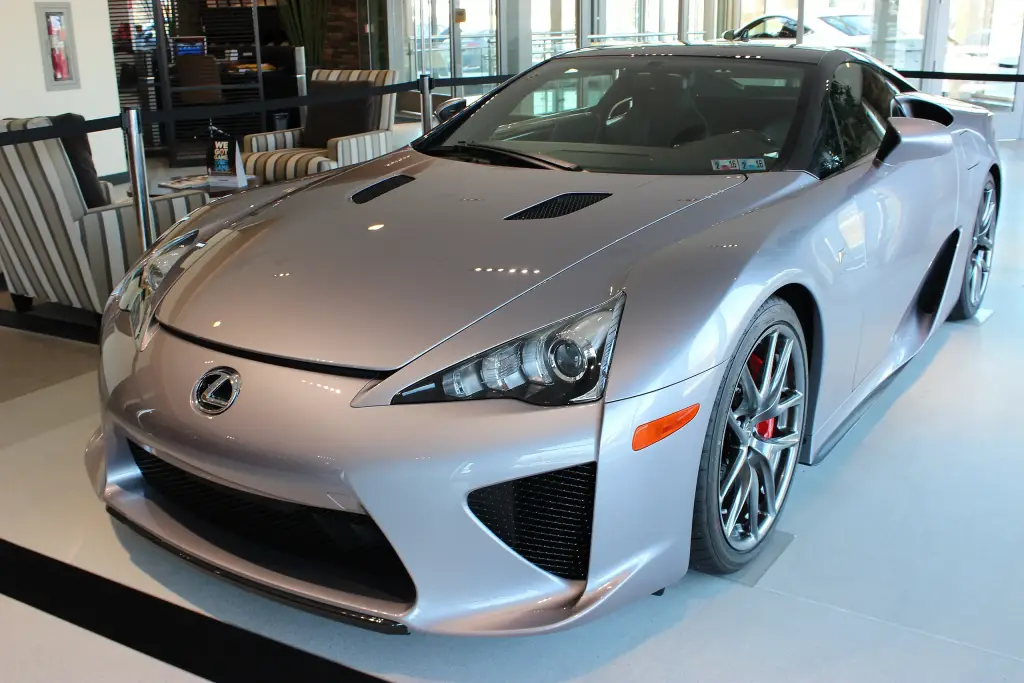
Public reaction led Lexus to push development towards production, and the project took longer when the planned aluminium frame was replaced by a carbon-fibre tub. A restyled LF-A concept came in January 2007 alongside the IS F, with a more aerodynamic body, a near-production interior and F badges. A roadster, the LF-A Roadster, followed at Detroit in January 2008 with a V10 of under 5.0 litres and over 373 kW (500 hp), and a racing prototype raced at the Nürburgring in May 2008. In December 2007 Auto Express reported an unofficial 7:24 lap there.
The production LFA debuted at the Tokyo Motor Show in October 2009, marking Lexus’s twentieth anniversary. Assembly began on 15 December 2010 at the Motomachi plant in Toyota, Aichi, and production ended on 17 December 2012 after two years and two days. The V10, built by Toyota with Yamaha, gave 412 kW (553 hp) and 480 N·m, enough for 0-60 mph in 3.6 seconds and 325 km/h. The body was 65 per cent carbon fibre-reinforced polymer with aluminium, titanium and magnesium, and the car won awards including Road & Track’s Best of the 2009 Tokyo Auto Show and a place among Top Gear’s five greatest supercars of the year.
Design and features
- V10 with Yamaha: a 4.8-litre engine of 412 kW (553 hp) developed by Toyota together with Yamaha.
- Carbon-fibre body: 65 per cent of the body mass was carbon fibre-reinforced polymer.
- Long development: nearly a decade of concepts and Nürburgring testing before the production car.
- Rare: a single run of 500 cars over two years, each built at Motomachi.
- Racing link: a prototype raced in VLN events at the Nürburgring in 2008.
Lexus LFA versions
- LF-A concept (2005): the first design study shown at Detroit.
- LF-A concept (2007): the restyled version with a near-production interior.
- LF-A Roadster (2008): an open concept with a V10 of over 373 kW (500 hp).
- LFA (2010-2012): the production coupé, 500 cars.
The LFA grew out of the LF concept series, which also included the LF-Ch, and it sat above the LS flagship in the range. More cars are in the Lexus collection.
Sources
- Lexus LFA, English Wikipedia: development, concepts, production, specifications