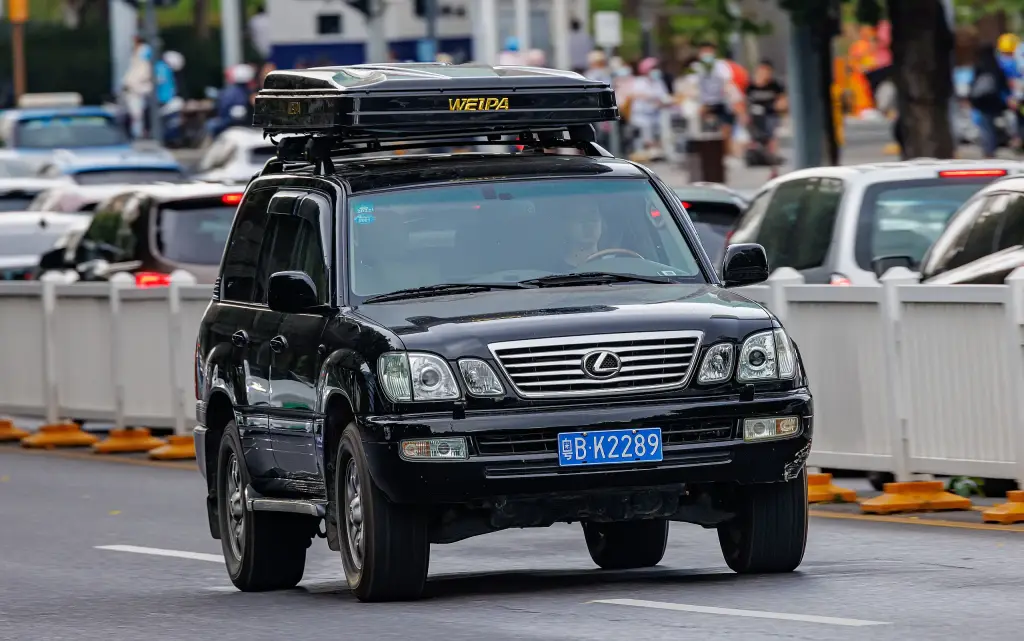
The Lexus LX is a full-size luxury SUV sold since January 1996 and built from November 1995. It is the largest and most expensive SUV in the Lexus range, and all four generations have been closely based on the Toyota Land Cruiser.
Lexus LX at a glance
| Class | full-size luxury SUV, Lexus flagship SUV |
|---|---|
| On sale | since January 1996 |
| Production began | November 1995 |
| Generations | four |
| Based on | Toyota Land Cruiser |
| First model | LX 450 (J80) |
| LX 450 engine | 4.5-litre inline-six, 160 kW (215 hp) |
| LX 450 seats | seven in three rows |
| Second generation | LX 470 (J100), 1998 |
| Third generation | LX 570, 2007 |
| Fourth generation | 2021, twin-turbo V6 |
| Name | Luxury Crossover |
based on one source (English Wikipedia)
History of the Lexus LX
The LX 450 was developed quickly in the mid-1990s because the United States was threatening 100 per cent tariffs on Japanese luxury cars, while SUVs were not covered. Lexus answered with a rebadged Land Cruiser, the J80 series, which started production in November 1995 and reached America in January 1996 as a 1996 model; Canada took the LX from 1997. The car was almost entirely a Land Cruiser, with a more luxurious interior, softer suspension and extra sound insulation.
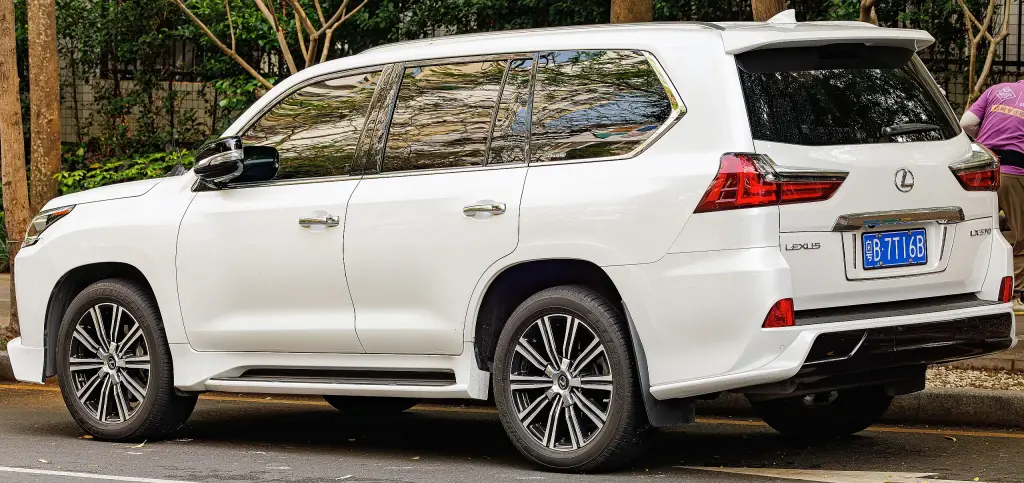
The LX 450 had a 4.5-litre straight-six of 160 kW (215 hp) and 373 N·m, solid axles front and rear, seating for seven in three rows and leather trim. It cost $47,995 in the United States, about $7,000 more than a Land Cruiser, and sold more than 5,000 units in 1996 and more than 9,000 in 1997, with a two-month waiting list at first. It was also ranked top full-size SUV in the J.D. Power initial quality survey, though some critics thought it underpowered for its weight.
The second generation, the LX 470, debuted at the Los Angeles Auto Show in December 1997 and went on sale in 1998 with a 4.7-litre V8 that rose from 172 kW to 200 kW (268 hp) over the years, front independent suspension and a 2,900 kg towing rating. The third generation, the LX 570, appeared at the New York International Auto Show in April 2007, and the fourth generation arrived in October 2021 with a twin-turbocharged V6. The LX 470 shared its styling with the Japanese-market Land Cruiser Cygnus.
Design and features
- Land Cruiser base: every LX has been built on Toyota’s heavy-duty Land Cruiser, with a body-on-frame chassis.
- Tariff origins: the first LX was created partly to sidestep proposed American tariffs on Japanese luxury cars.
- Seven seats: the LX 450 carried seven people in three rows, with a folding third row.
- V8 power: the LX 470 and LX 570 used V8 engines and could tow up to 2,900 kg.
- Flagship status: the LX is the largest and most expensive SUV Lexus sells.
Lexus LX versions
- LX 450 (1996): the first generation, with a straight-six and solid axles.
- LX 470 (1998): the second generation with a V8 and independent front suspension.
- LX 570 (2007): the third generation.
- LX 600 and LX 700h (2021): the fourth generation, with a twin-turbo V6 and a hybrid option.
The LX is the largest SUV in the range above the GX and the RX, and it shares its V8 with the GX 470. The flagship sedan is the LS; more cars are in the Lexus collection.
Sources
- Lexus LX, English Wikipedia: origins, generations, engines, sales