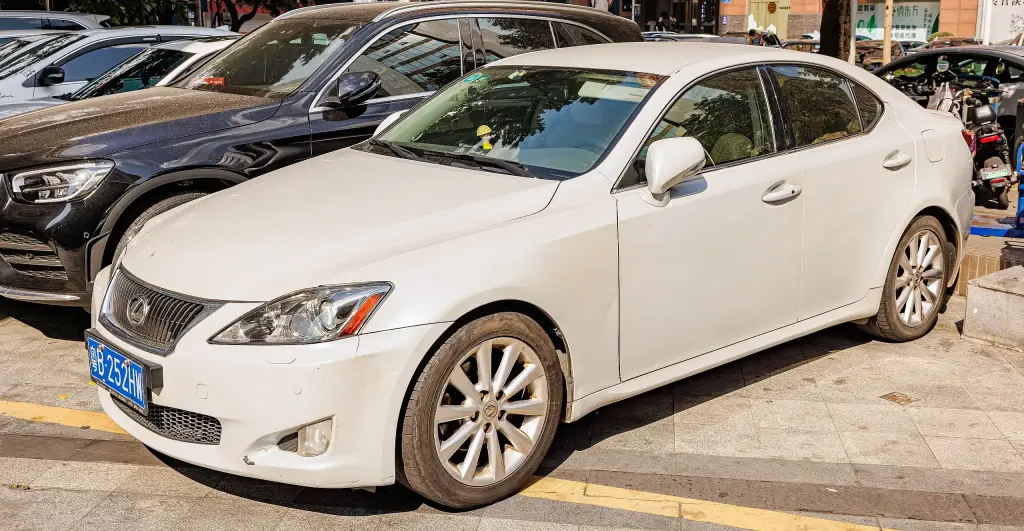
The Lexus IS is a compact executive car sold since 1998. It was the sporty, rear-wheel-drive entry to the Lexus range, below the comfort-oriented ES, and in Japan the first generation was sold as the Toyota Altezza.
Lexus IS at a glance
| Class | compact executive car (D-segment) |
|---|---|
| On sale since | 1998 |
| Japanese name | Toyota Altezza, 1998 to 2005 |
| Generations | three |
| Layout | front engine, rear-wheel drive |
| First generation | XE10, October 1998 in Japan |
| IS 200 (Europe) | 153 hp, 216 km/h, 0-100 km/h in 9.3 seconds |
| IS 300 (America) | 3.0-litre 2JZ-GE straight-six, from 2000 |
| Body styles | sedan, SportCross wagon and later a convertible |
| IS F | V8 performance sedan, 2007 |
| IS C | IS 250 C and IS 350 C, 2008 |
| Name | Intelligent Sport |
based on one source (English Wikipedia)
History of the Lexus IS
The first-generation Toyota Altezza was launched in Japan in October 1998, and the Lexus IS 200 reached Europe in 1999, with the IS 300 arriving in North America in 2000. The engineering was led by Nobuaki Katayama and the design by Tomoyasu Nishi, and the car used a shortened rear-wheel-drive platform with parts from the larger Aristo and GS. At home the AS200 had a 2.0-litre straight-six and the RS200 a 2.0-litre four; export cars had the IS 200 and the 3.0-litre IS 300. The design won Japan’s Car of the Year award for 1998-1999.
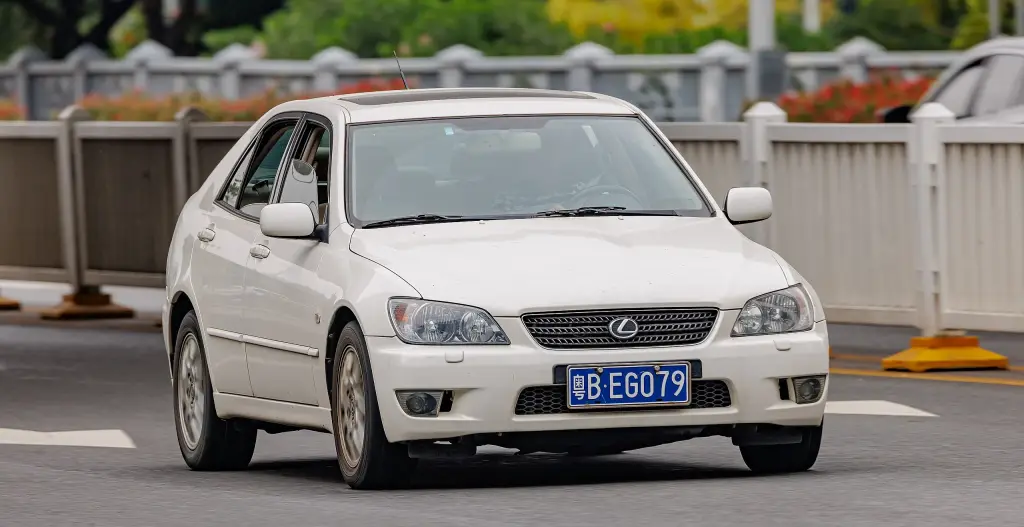
The first-generation IS was offered as a sedan and, from 2001, as the IS SportCross wagon, known in Japan as the Altezza Gita with a 3.0-litre six and rear- or all-wheel drive. The European IS 200 was rated at 153 hp with a top speed of 216 km/h and acceleration to 100 km/h in 9.3 seconds. The clear-covered tail lights of the car became so popular that aftermarket copies were sold for other models and the style was nicknamed Altezza lights. Lexus sold the Altezza in Japan until 2005, when the Lexus marque was introduced there.
The second generation, the XE20, came in 2005 with the V6 IS 250 and IS 350, the diesel IS 200d and IS 220d, the V8 IS F in 2007 and the IS 250 C and IS 350 C coupé convertibles in 2008. The third generation premiered in January 2013 with the IS 250 and IS 350, the turbocharged IS 200t and later IS 300, the hybrid IS 300h and F Sport versions. The IS was the smallest Lexus until the CT arrived in 2011, and its name stands for Intelligent Sport.
Design and features
- Rear-wheel drive: a sporting alternative to the front-wheel-drive ES, with a shortened platform and parts from the GS.
- Straight-six engines: the first generation used 2.0-litre and 3.0-litre sixes, with a 2JZ-GE in the IS 300.
- Altezza lights: the clear tail lights became a worldwide styling trend.
- Performance versions: the V8 IS F of 2007 and the IS 250 C and IS 350 C convertibles of 2008.
- Hybrid later: the third generation added the IS 300h hybrid.
Lexus IS versions
- IS 200 (1999): the European first-generation car with a 2.0-litre six.
- IS 300 (2000): the North American model with a 3.0-litre 2JZ-GE engine.
- IS SportCross (2001): the estate version, sold as the Altezza Gita in Japan.
- IS F (2007): a V8 performance sedan.
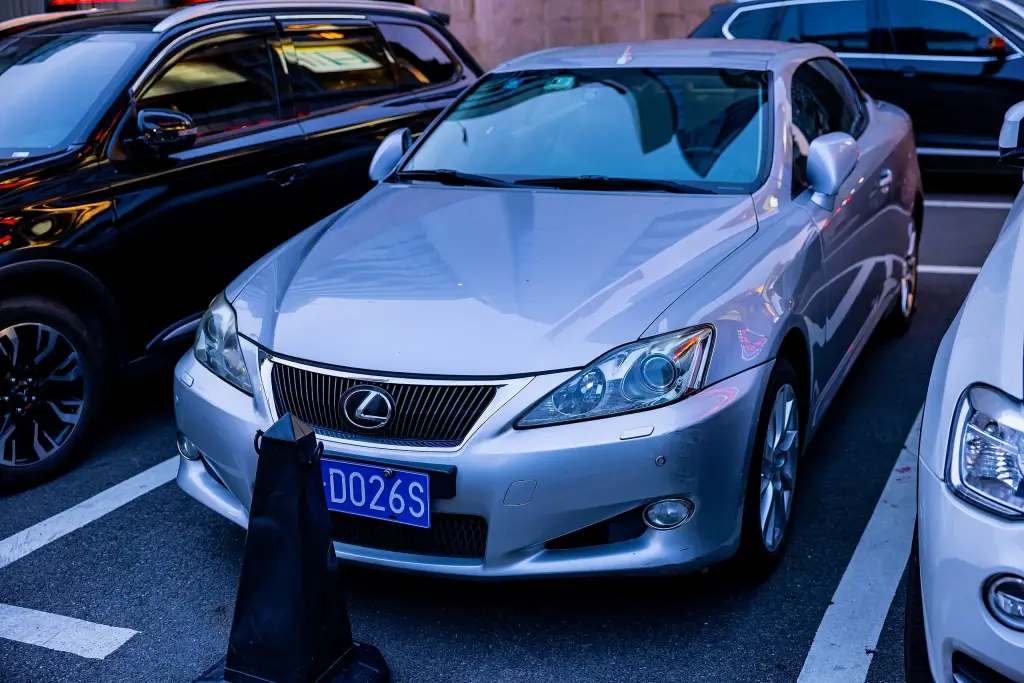
- IS 250 C and IS 350 C (2008): coupé convertibles.
- IS 300h: the hybrid of the third generation.
The IS was the sporting entry to the range above which sat the GS and LS, and it was later joined by the smaller CT. More cars are in the Lexus collection.
Sources
- Lexus IS, English Wikipedia: origins, generations, engines, variants