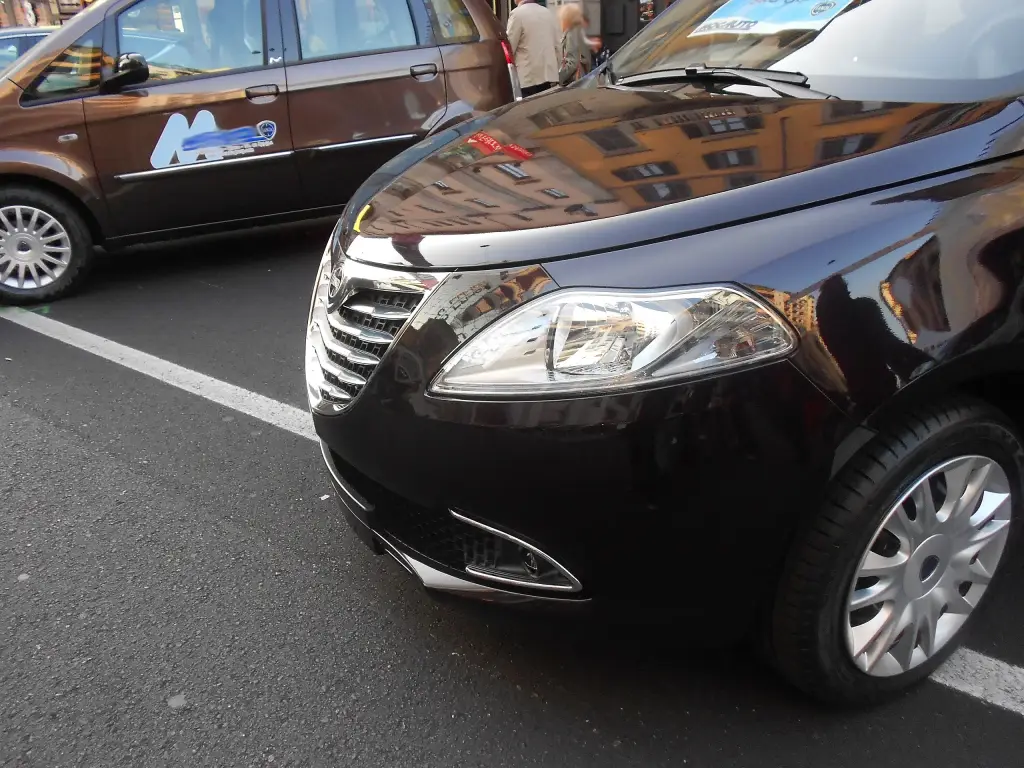
The Lancia Ypsilon began life in 1995 as the Lancia Y, a larger and more expensive replacement for the Y10. Between 1995 and 2005 Lancia built more than 870,000 Ypsilons at its Melfi plant in the Potenza region, and the model has remained in production through four generations, becoming the marque’s only car. Between 1995 and 2019 Lancia sold more than 1.6 million Y and Ypsilon cars in Italy alone.
Lancia Ypsilon at a glance
| Maker | Lancia, Melfi |
|---|---|
| Introduced | 1995, presented in Rome in January 1996 |
| Also called | Lancia Y, type 840 |
| Designer | Enrico Fumia |
| Bodies | three-door hatchback |
| Basis | Fiat Punto type 176 platform, shortened wheelbase |
| Engines | 1.1 and 1.2 FIRE, 1.4 12-valve |
| Power | from about 54 to 86 PS |
| Suspension | MacPherson front, trailing arms rear |
| Development | 24 months, about 400 billion lire |
| Body colours | 100 shades in the Kaleidoscope catalogue |
| Built | more than 870,000 by 2005 |
History of the Lancia Ypsilon
A new Y for a new market
The Lancia Y, type 840, was designed by Enrico Fumia in 1992 and developed in 24 months at a cost of about 400 billion lire. It was presented in Rome in January 1996 as a replacement for the Y10, and sales took off at once: more than 42,000 cars in the first two months. Lancia had left right-hand-drive markets two years earlier, so no right-hand-drive version was developed. The car was built on the platform of the Fiat Punto of 1993 with a shortened wheelbase and a fully independent suspension, MacPherson struts at the front and trailing arms at the rear.
Design and equipment
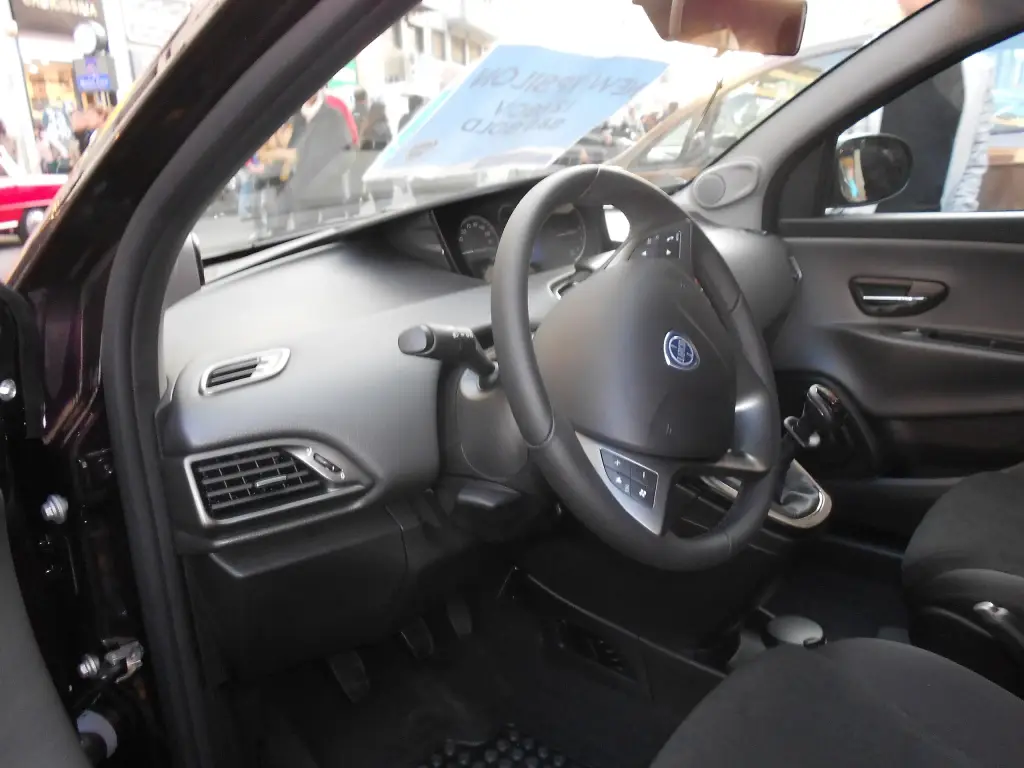
The arches defined the design, repeating on every side of the car. At 3.72 m long, the Y was 33 cm longer than the Y10 and seated five. Inside there was a soft plastic dashboard and an instrument cluster in the centre of the dashboard, a layout later adopted by the Musa and the 2003 Ypsilon. Buyers could choose from 100 body colours in the Lancia Kaleidoscope catalogue. A Cosmopolitan special edition of 600 cars, based on the LX trim and created with the magazine of the same name, was sold outside Italy.
Engines
The engines came from the FIRE family that had appeared in the Y10 in 1985, in 1,108 and 1,242 cc eight-valve forms. The top of the range was the 1.4-litre 12-valve Pratola Serra engine of 80 PS carried over from the Fiat Bravo and Brava; it was soon replaced by the first SuperFIRE engine, with four valves per cylinder and multipoint injection, which the Y was the first car to receive. The 1,242 cc SuperFIRE developed 86 PS at 6,000 rpm and 113 Nm at 4,500 rpm, and it remained in production as late as 2013 in the Ypsilon, Ford Ka and Fiat 500.
The Elefantino Rosso and the restyle
The Elefantino Rosso, the little red elephant that had been the symbol of Lancia’s HF rally cars, was the sporting version and the sister car of the Fiat Punto Sporting. It had grey Alcantara seats with dark grey cloth insets, a centre console, 15-inch wheels and titanium-look mirrors, a grey leather steering wheel and gear lever with red stitching, air conditioning, a shorter gearbox ratio for quicker acceleration, lowered and stiffened suspension with larger anti-roll bars and more direct power steering. It reached 177 km/h and was the only version with 195/50 R15 tyres. The LX and LS trims could also be ordered with the SuperFIRE engine. In October 2000 the car was restyled outside and inside, with a larger grille, new bumpers and tail lamps, smoother body-coloured side mouldings, new headrests, seats and steering wheel and a longer body of 3.74 m. Quattroruote tested the Ypsilon 16V LX beyond its usual city use and praised its power reserves and the comfort of a car worthy of a higher price.
Later generations
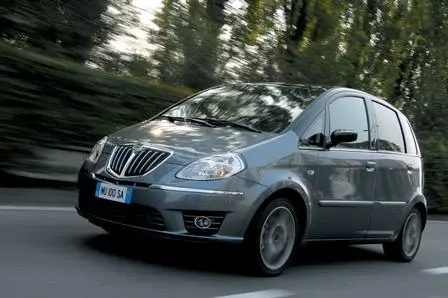
The Ypsilon name continued after 2003, when the model was replaced by a new generation that used the name Ypsilon alone. The third generation shared its platform with the Fiat 500 and was sold in Britain, Ireland and Japan as the Chrysler Ypsilon until 2015. Despite its limited presence outside Italy, the Ypsilon remained a strong seller at home: in 2019 it was still among Italy’s most popular small cars, and in 2023, despite its age, it had the highest market share in the B-segment in the country. As of 2024 it is Lancia’s only model.
Design and features
- Punto underpinnings: a proven platform with a shortened wheelbase and fully independent suspension.
- Centre instrument cluster: a layout later copied by the Musa and the 2003 Ypsilon.
- SuperFIRE debut: the first car to use Fiat’s four-valve 1.2 engine.
- Elefantino Rosso: a sporting version with Alcantara, bigger wheels and sharper steering.
Lancia Ypsilon versions
- Y LE, LS and LX: the original 1996 trims.
- Cosmopolitan: special edition of 600 cars.
- Elefantino Rosso: the sporting version.
- Restyle of 2000: new front end, interior and longer body.
The Ypsilon replaced the Lancia Y10 and was joined later by the Lancia Musa on a related platform. More cars are in the Lancia collection.
Sources
- Lancia Ypsilon, English Wikipedia: first generation, design, engines, restyle
- Lancia Ypsilon, Italian Wikipedia: generations and production history