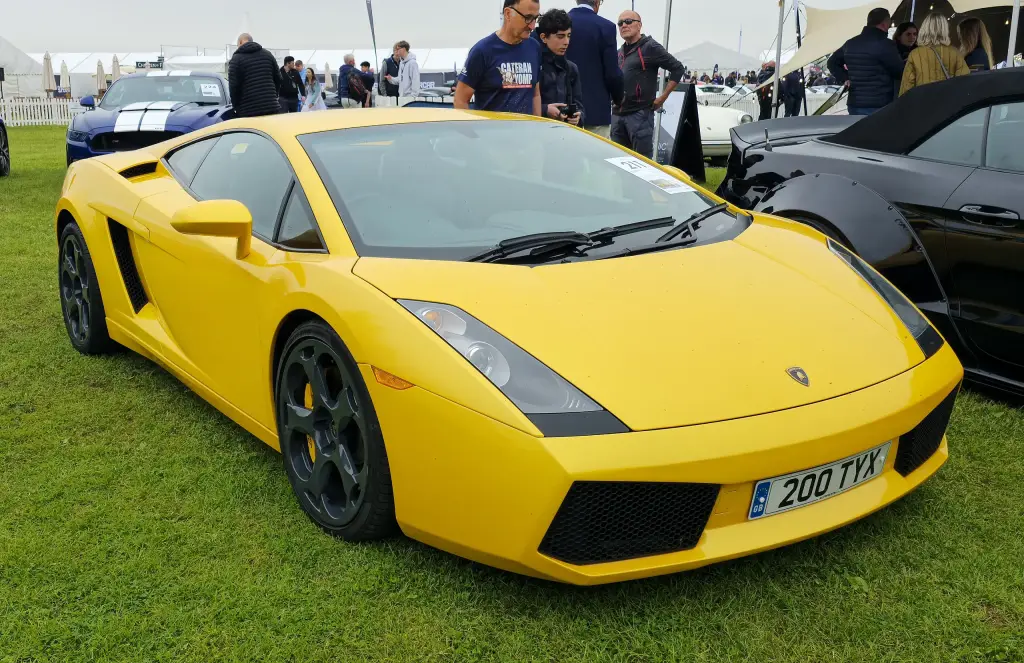
The Lamborghini Gallardo was the smaller Lamborghini built between 2003 and 2013, the first with a V10 engine and far and away the most successful model in the company’s history: 14,022 cars in ten years. Designed by Luc Donckerwolke and developed under Audi ownership, it brought new buyers to the marque and funded the V12 flagships of the period.
Lamborghini Gallardo at a glance
| Maker | Lamborghini, Sant’Agata Bolognese |
|---|---|
| Production | 2003–2013 |
| Designed by | Luc Donckerwolke |
| Engine | 4,961 cc V10 (2003–2008), 5,200 cc V10 (2008–2013) |
| Power | 500 PS, then 520, 530 and 560 PS in the LP 560-4 |
| Gearbox | six-speed manual or six-speed E-gear |
| Drive | all-wheel drive, rear-biased |
| Top speed | 309 km/h (original), 325 km/h (LP 560-4) |
| 0–100 km/h | about 4.0 seconds, 3.7 in the LP 560-4 |
| Built | 14,022 |
| Replaced by | Huracán, 2014 |
Production of the Superleggera is given as 618 cars in the English article and 619 in the German; the text uses ‘about 620’ rather than choosing between them.
History of the Lamborghini Gallardo
A smaller Lamborghini
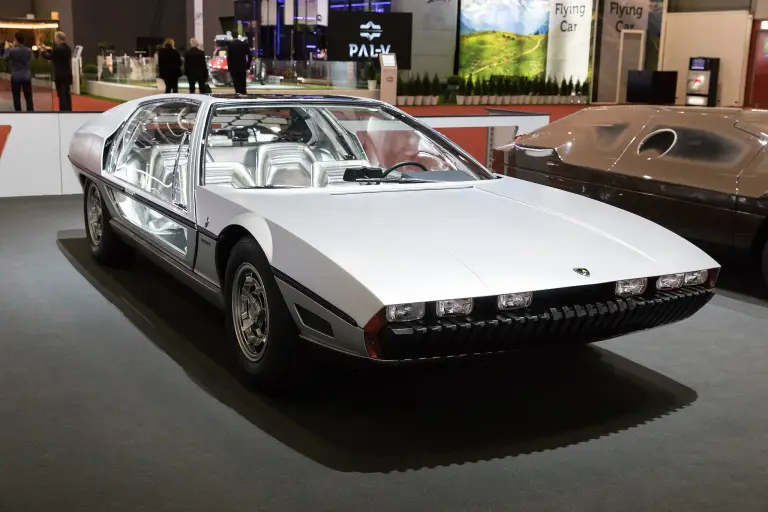
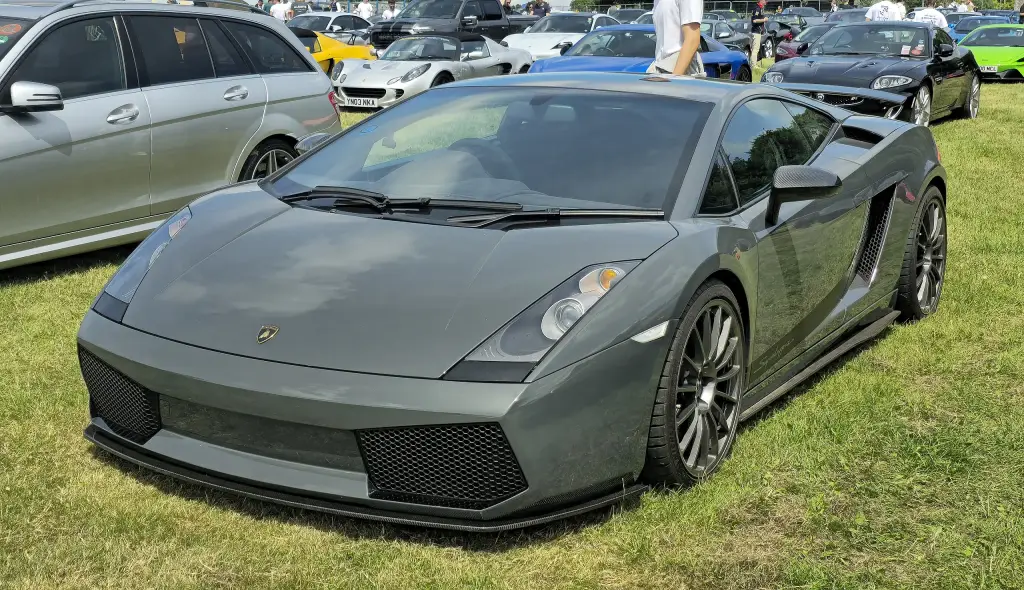
The idea came from the 1995 Calà concept, which Italdesign Giugiaro built for Lamborghini while the company was owned by Megatech, intended as a replacement for the Jalpa. Nothing came of it at the time, but after the Volkswagen Group took over in 1998 the design was revived: the Gallardo of 2003 kept the Calà’s outline and its V10 engine. The name comes from Francisco Gallardo, an eighteenth-century breeder of fighting bulls, and means ‘gallant’. Previewed at Geneva in 2003, the car was conceived as an entry-level model to rival the Ferrari 360, and at around €160,000 it was nicknamed the Porsche Boxster of Lamborghinis.
What made it different
Unlike the Murciélago, the Gallardo had no scissor doors — those stayed reserved for the V12 cars — and a smaller 5-litre V10 rated at 500 PS. The engine sat longitudinally in the middle, driving through a rear-biased all-wheel-drive system, which set it apart from most rear-drive rivals. Buyers could choose a six-speed manual or the E-gear automated manual, both built by Graziano, with paddles behind the wheel. The 2005 update raised output to 520 PS, shortened the gearing and revised the suspension and steering, answering early criticism; the Spyder arrived in 2006 and the lighter Superleggera, 100 kg down and 530 PS strong, in 2007. Lamborghini recalled about 1,500 cars of 2004–2006 model years over a possible power-steering fluid leak.
The LP 560-4 and the end
The 2008 facelift was the biggest change: a new 5.2-litre V10 with direct injection produced 560 PS, fuel consumption and CO2 fell by 18 per cent, and the car lost 20 kg. Styling followed the Murciélago LP 640 and the Reventón, and the E-gear gained a Corsa mode with 40 per cent quicker shifts and a launch-control function. The last Gallardo was built on 25 November 2013 and the Huracán replaced it in 2014.
Design and features
- V10 engine: the first Lamborghini with ten cylinders, mounted longitudinally behind the cabin.
- E-gear: a six-speed automated manual with paddle shifts, alongside the conventional manual.
- Rear-biased four-wheel drive: traction in all weathers without losing the rear-drive feel.
- Practicality: easier to drive and see out of than the Murciélago, which made it the volume seller.
Lamborghini Gallardo versions
- Gallardo (2003–2008): 5.0-litre V10, 500 PS, later 520 PS.
- Gallardo Spyder (2006): soft-top version with the 520 PS engine.
- Superleggera (2007): 530 PS and 100 kg lighter, with carbon-fibre panels.
- LP 560-4 (2008–2013): 5.2-litre direct-injection V10, restyled body.
- LP 550-2 and later editions: rear-wheel-drive and anniversary versions of the facelifted car.
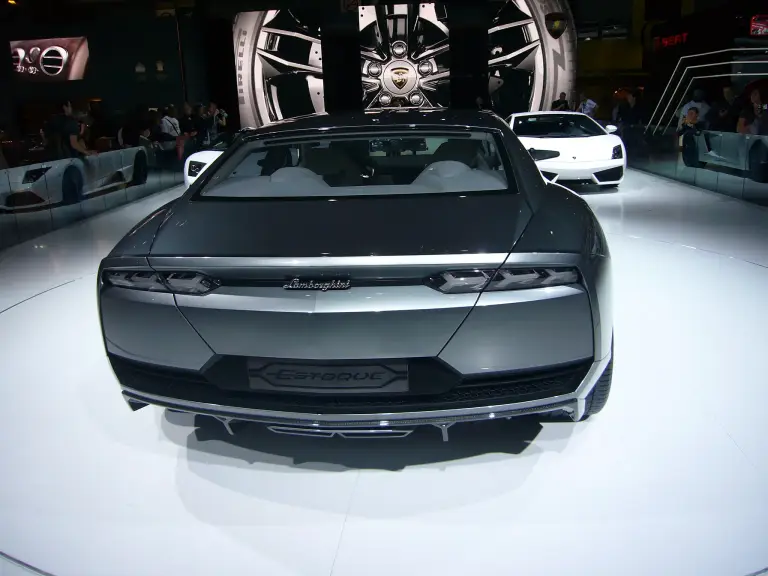
The Gallardo was the stablemate of the Murciélago and followed from the idea of the Jalpa; it lent its V10 to the Estoque concept. More cars are in the Lamborghini collection.
Sources
- Lamborghini Gallardo, English Wikipedia: development, versions, LP 560-4
- Lamborghini Gallardo, German Wikipedia: position in the range, Spyder, Superleggera