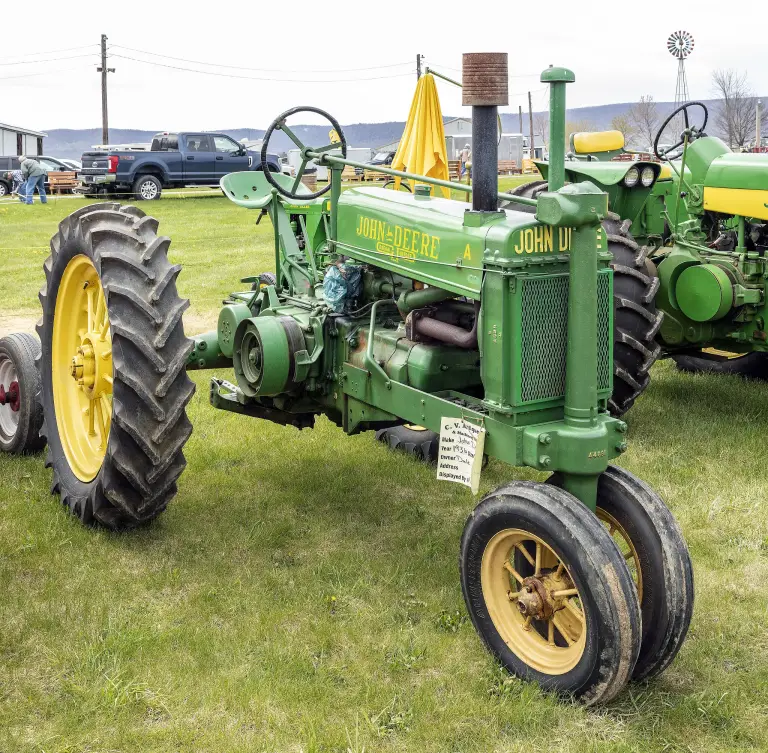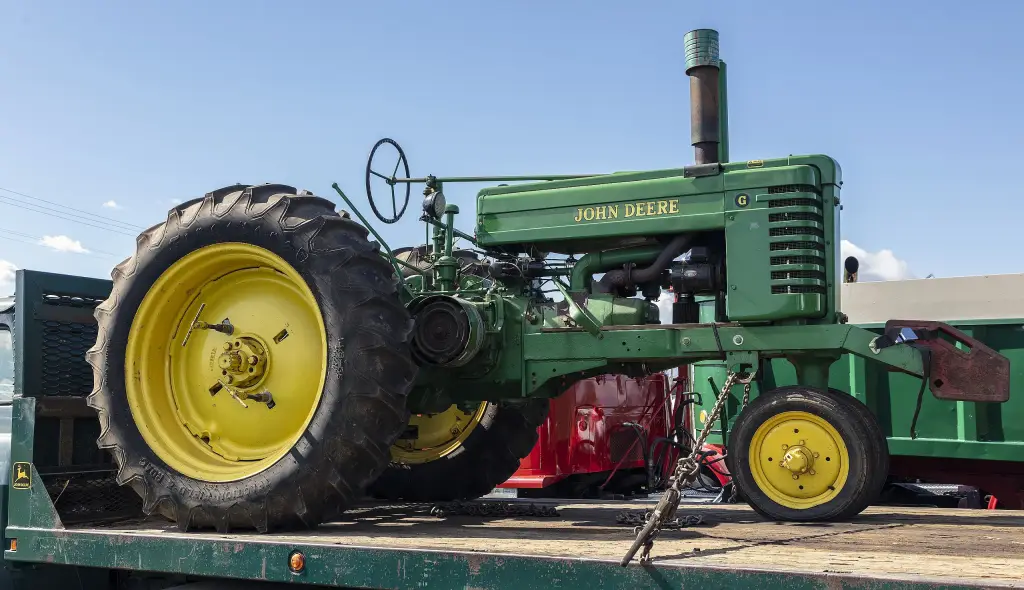
The John Deere Model G was a large three-plough row-crop tractor produced from 1937 to 1953. It sat above the Model A and Model B in the letter series, and its line continued through the 70, 720 and 730.
John Deere Model G at a glance
| Maker | John Deere, Waterloo, Iowa |
|---|---|
| Production | 1937–1953 |
| Type | three-plough row-crop tractor |
| Engine | two-cylinder side-by-side, 34 hp (25 kW) |
| Capacity | 412.5 cu in (6,760 cc) |
| Fuels | petrol and kerosene |
| Styling | Henry Dreyfuss, 1942, as the GM |
| Versions | GN single front wheel and GW wide front |
| Built | about 64,000 |
| Sale price | about $2,600 |
| Successors | John Deere 70, 720 and 730 |
History of the John Deere Model G
The G was released by John Deere in 1937 as a general-purpose row-crop tractor with enough power to manage three ploughs. As with most row-crop tractors, the spacing between the rear wheels could be adjusted to suit row spacings, and on later models the front wheels were offered in wide and narrow arrangements. The engine was a two-cylinder side-by-side unit of 34 hp (25 kW) and 412.5 cubic inches (6,760 cc), available in petrol and kerosene versions. About 64,000 Model Gs were built at the John Deere factory in Waterloo, Iowa, at a sale price of about $2,600.
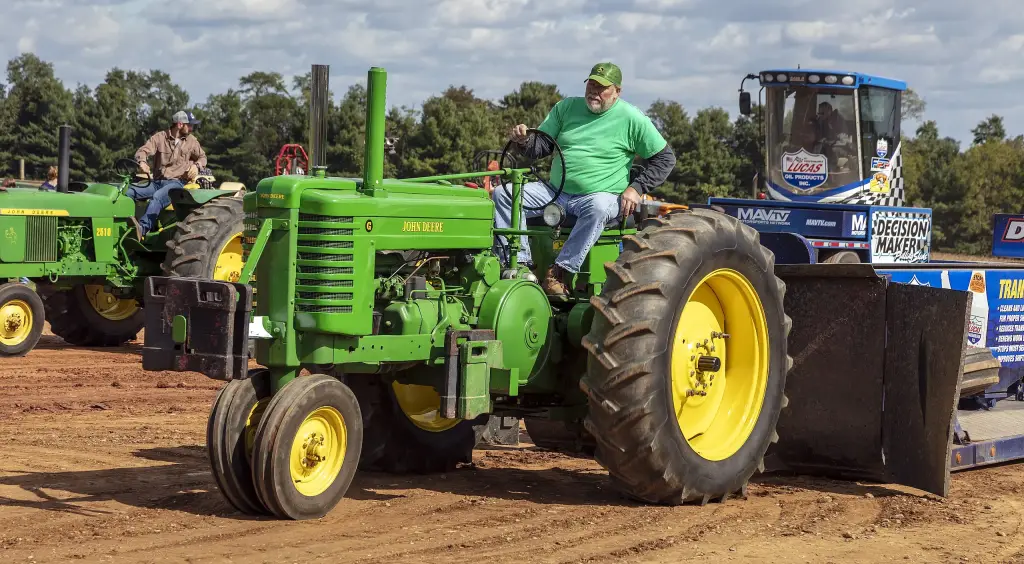
The name that was almost F
The tractor was originally to be called the Model F, since A, B, C (the GP), D and E (for stationary engines) had all been used, but Deere wanted to avoid confusion with the Farmall F-20 and moved to G, keeping the F-prefix for part numbers. Early Gs tended to overheat, so a larger radiator was fitted. In 1942 the G received Henry Dreyfuss styling and was designated the GM, as it was considered modernized. The plain G designation was reinstated in 1947, and GN (single front wheel) and GW (wide front wheels) models were produced.
The 70 and the two-cylinder finale
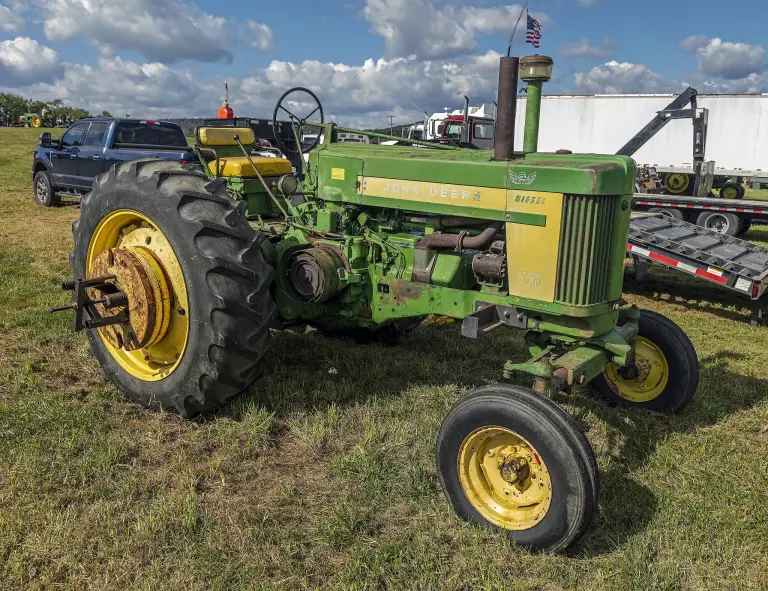
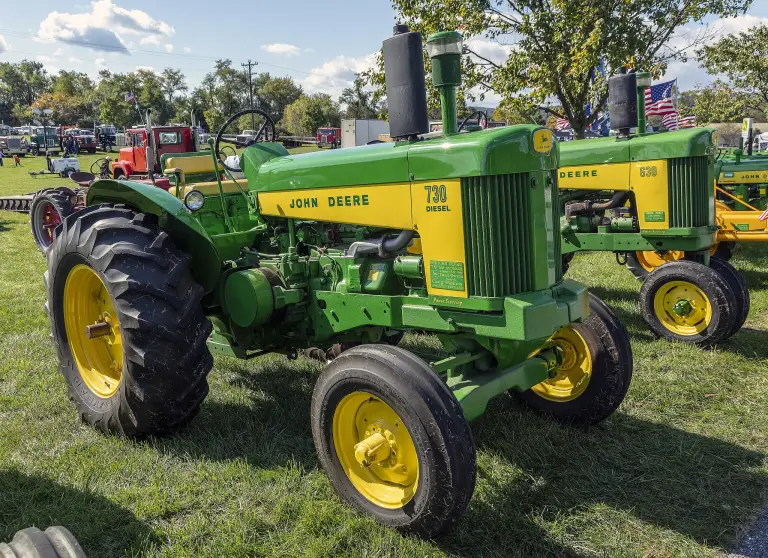
In 1953 the G was replaced by the John Deere 70 with all-new styling. The 70 could be ordered for petrol, distillate, liquefied petroleum gas and diesel fuels. Engine power was increased, and the 70 could pull four or five ploughs; the petrol starting engine of the diesels was updated from a horizontally opposed two-cylinder to a V4. The diesel was found to be particularly powerful and sold well, and about 43,000 70s were built at Waterloo at a sales price of about $2,800. In 1956 the 70 was replaced by the John Deere 720 with freshened styling; the 720 was the largest two-cylinder tractor Deere offered and the most powerful row-crop tractor of its time, its petrol engine developing 65 hp (48 kW). In 1958 came the 730, which kept the same powertrain as the 720 but offered an electric starter instead of the petrol starting engine on diesel models; American production ran to 1961, when the tooling moved to Rosario in Argentina.
Design and features
- Three-plough power: a step above the Model A in the letter series.
- Large two-cylinder: 412.5 cu in (6,760 cc) giving 34 hp.
- Adjustable track: rear wheels set to the row spacing.
- Dreyfuss styling: the 1942 restyle that produced the GM.
- GN and GW: single front wheel or wide front axle.
John Deere Model G versions
- G: the original 1937 tractor.
- GM: the modernized, Dreyfuss-styled version of 1942–1947.
- GN: single front wheel, from 1947.
- GW: wide front wheels, from 1947.
The G was the biggest of the pre-war letter series, above the Model A and Model B. Its direct descendants were the John Deere 720 and 730. More tractors are in the John Deere collection.
Video: John Deere G plowing
Video by G.C. Farmer on YouTube.
Sources
- John Deere Model G, English Wikipedia: production, engine, styling, the 70, 720 and 730