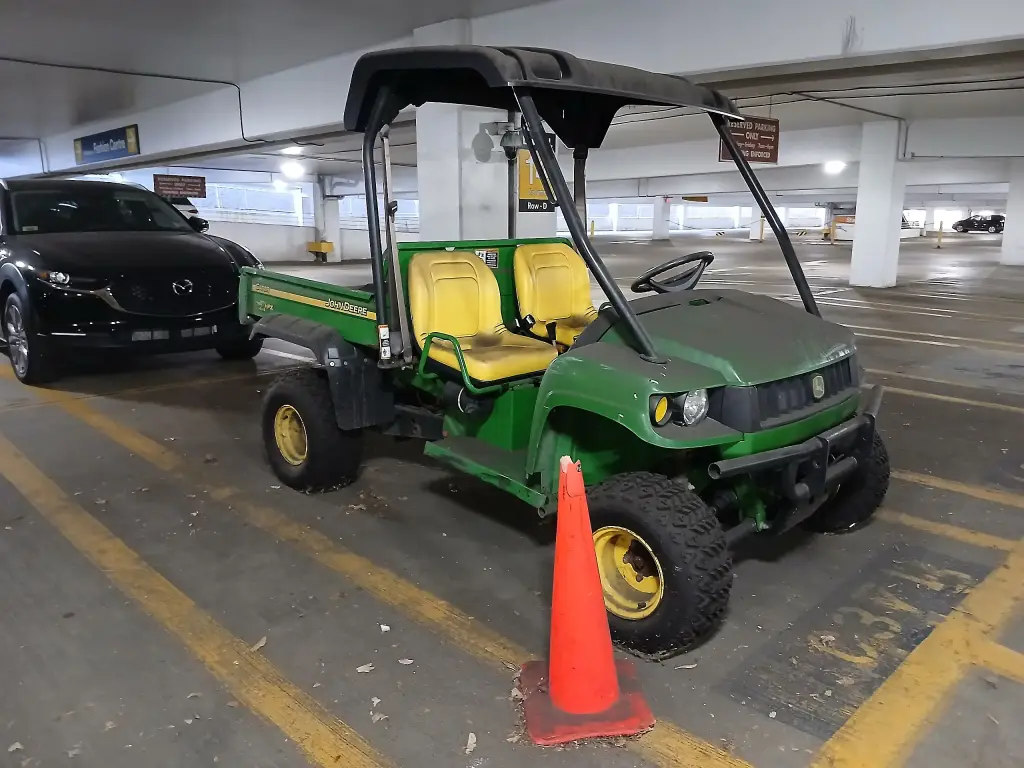
The John Deere Gator is a family of small all-terrain utility vehicles with a box bed, made for farms, worksites and ranches rather than for pure off-road driving. Introduced in 1992, it replaced the five-wheeled John Deere AMT of 1987.
John Deere Gator at a glance
| Maker | John Deere |
|---|---|
| Introduced | 1992 |
| Replaced | John Deere AMT of 1987 |
| Layout | box bed, available as an electric dump body |
| Wheels | four, five or six |
| Engines | 341 cc four-stroke petrol or an optional diesel |
| Transmission | continuously variable, belt and conical pulley |
| Payload | 600 lb (272 kg) recommended maximum |
| Lines | Traditional, High Performance (HPX), Compact and XUV |
| Special versions | Trail Gator, Turf Gator, M-Gator |
| XUV from 2011 | 825 cc three-cylinder petrol engine, up to 70 km/h |
| Military | M-Gator adopted by the U.S. Army in 1997 |
This page is based on a single source, the English Wikipedia article on the John Deere Gator.
History of the John Deere Gator
The Gator was introduced in 1992 and replaced the five-wheeled AMT, short for all-materials transporter, which had appeared in 1987. The AMT had been designed to be loaded easily into the back of a pickup truck for transport to remote places where towing a trailer would be dangerous or awkward; the first and second-generation AMT models were simple, easy to maintain and easy to repair on site. The Gator took over that role with a box bed and a wider choice of configurations.
Design
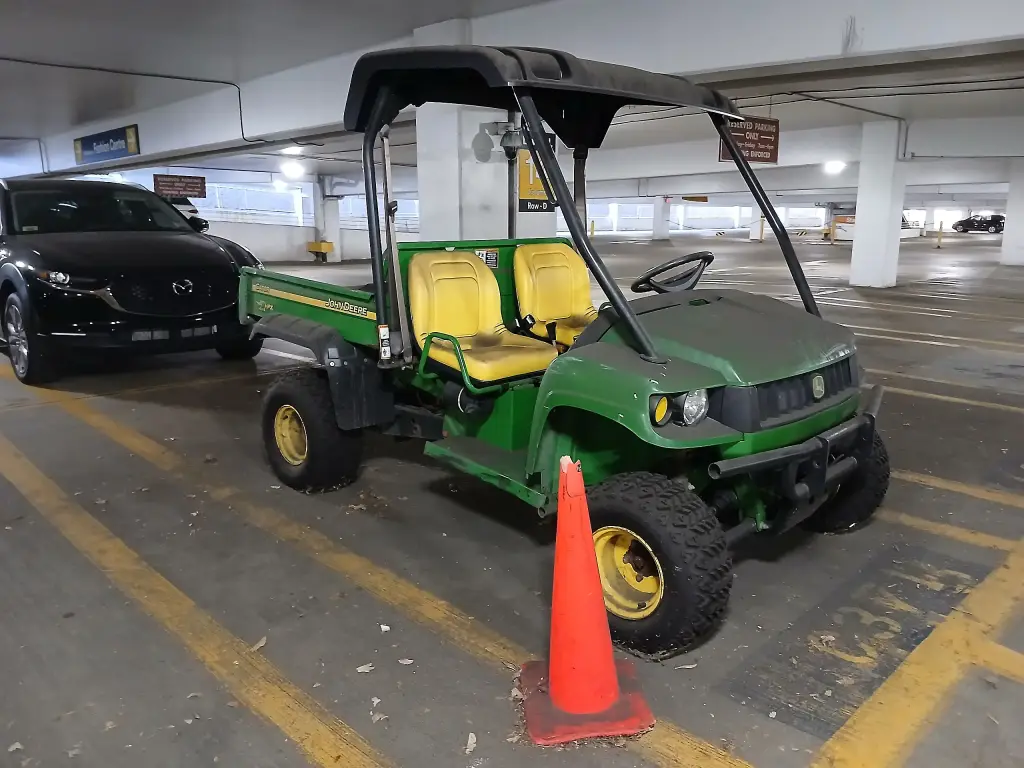
Gators use small but powerful 341 cc four-stroke engines of the kind found in lawn mowers, or an optional diesel also used in some John Deere mowers and utility tractors. Drive goes through a continuously variable transmission with a belt and a conical pulley system, so there is no clutch and no gear changing. Many third-party attachments are available, including snow ploughs, sanders and gun racks. The recommended maximum payload is 600 lb (272 kg).
The Gator lines
Within the family John Deere built several lines. The Traditional Series was the second generation of the original Gator, made for medium-duty work. The High Performance, or HPX, Series arrived in 2004, larger than the original and intended for heavier duty; the Compact Series also appeared in 2004, smaller and closer to a golf cart in size, for homeowners rather than commercial customers. The Gator XUV 4×4 came in 2007 as a more extreme machine for commercial and recreational use, with petrol or diesel engines and often fitted with a snow plough.
Later developments and military use
In 2011 Deere enlarged the XUV line with an 825 cc three-cylinder petrol engine as an alternative to the 625 cc unit; the new machine had a faster differential allowing up to 70 km/h, and the diesel version was pushed to 32 mph, then the fastest diesel utility vehicle on the market. The three vehicles were restyled and given a redesigned box. The U.S. Army adopted the M-Gator in 1997, and the Marine Corps used it too; the M-Gator A1 is the 6×4 variant with a three-cylinder Yanmar diesel that can also run on JP-8, and the vehicle can be air-dropped. Gators served in Iraq and Afghanistan for supply deliveries and casualty evacuation, being more nimble off-road than an HMMWV. In 2016 the American fleet of military utility vehicles, including the M-Gator A1 and A3, was rated at 1,100 lb (500 kg) payload for 4×4 units and 1,200 lb (540 kg) for six-wheeled ones. With iRobot, John Deere developed the uncrewed R-Gator, able to follow waypoints, avoid obstacles and follow soldiers or other vehicles.
Design and features
- Box bed: a load area like a pickup’s, optionally an electric dump body.
- No gearbox: a belt and conical pulley CVT, so no clutch or gear changes.
- Four, five or six wheels: several configurations of the same idea.
- Work-first design: made for farms, worksites and ranches.
- Many attachments: snow ploughs, sanders and other third-party equipment.
John Deere Gator versions
- Traditional Series: the second generation of the original Gator.
- HPX Series: larger and heavier-duty, from 2004.
- Compact Series: golf-cart sized, from 2004.
- XUV: the more extreme 4×4, from 2007, with an 825 cc engine from 2011.
- Trail and Turf Gators: an olive recreational version and golf-course machines.
- M-Gator and R-Gator: military and uncrewed versions.
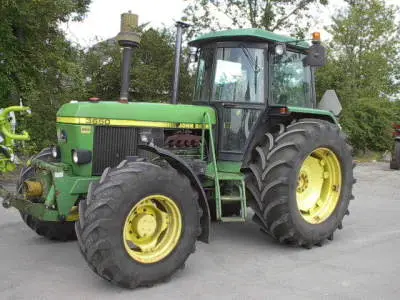
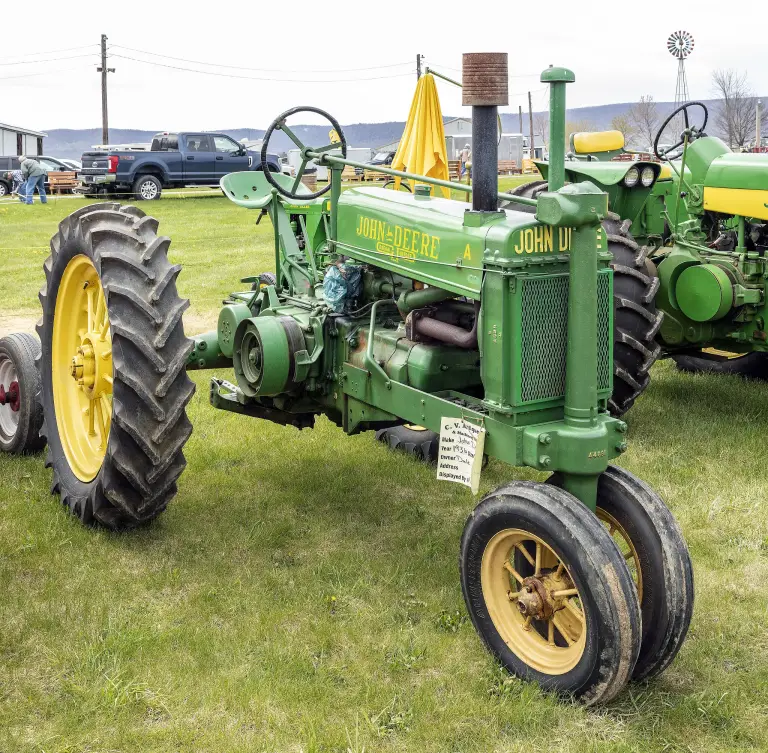
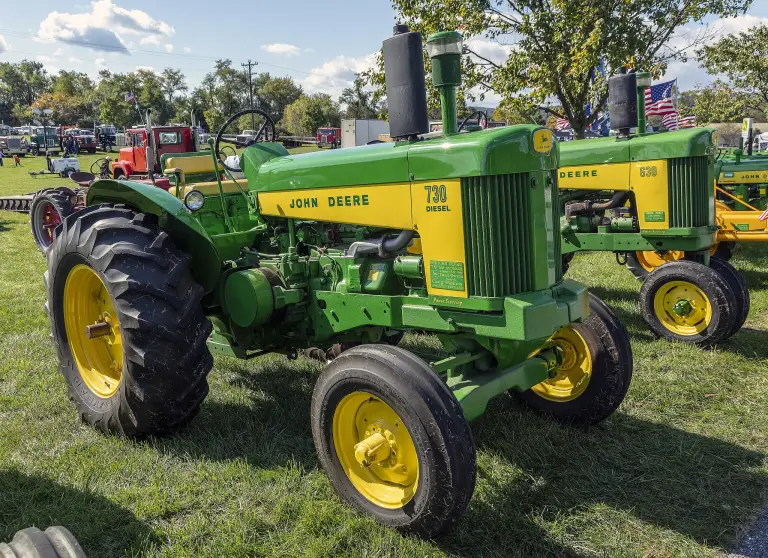
The Gator replaced the earlier John Deere AMT transporter and stands apart from the firm’s farm tractors such as the John Deere 3020. More machines are in the John Deere collection.
Video: John Deere Gator XUV 855D Diesel 4×4
Video by PowercutUK on YouTube.
Sources
- John Deere Gator, English Wikipedia: history, design, lines, XUV updates, military versions