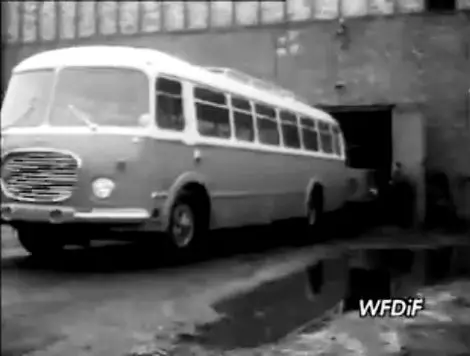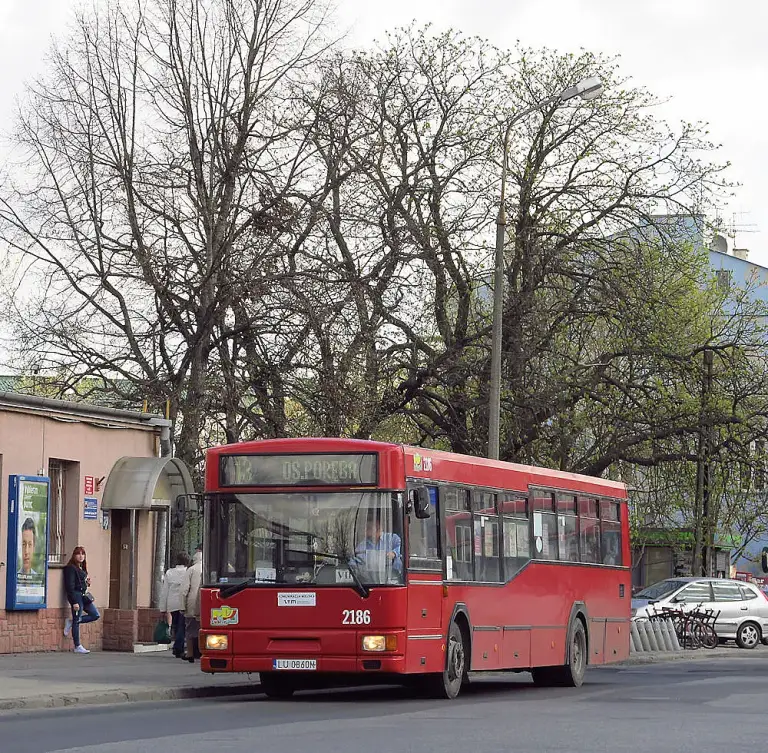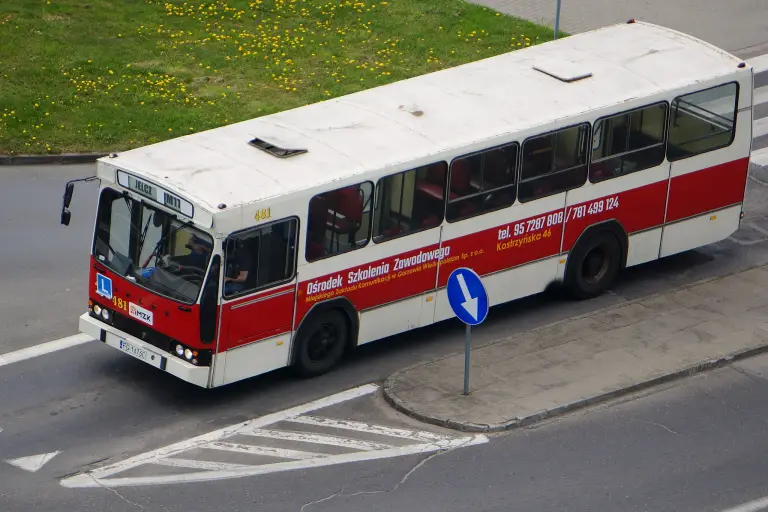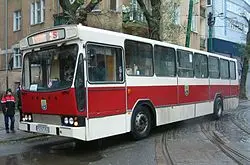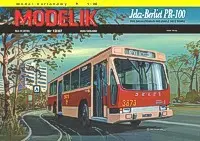
The Jelcz Berliet PR100 was a city bus built by the Jelczańskie Zakłady Samochodowe from 1972 to 1975 under licence from the French manufacturer Berliet. It was technically advanced but too small for Polish conditions, and it was always treated as a transitional model.
Jelcz Berliet PR100 at a glance
| Maker | Jelczańskie Zakłady Samochodowe, Jelcz |
|---|---|
| Licence | Berliet, France |
| Agreement signed | 1 August 1972 |
| Production | 1972-1975 |
| First batch | 20 buses, 95 per cent Western parts |
| Engine layout | rear-mounted |
| Doors | two, in front of the front axle and before the rear axle |
| Gearbox | Wilson semi-automatic, later manual |
| Floor | lowered at the front and in the middle |
| Replaced by | Jelcz Berliet PR110U, 1975 |
This page is based on a single source, the Polish Wikipedia article on the Jelcz PR100.
History of the Jelcz Berliet PR100
In the 1970s the Jelczańskie Zakłady Samochodowe, the leading Polish bus supplier, began looking for a successor to the outdated Jelcz 272 MEX. After more than three years of negotiations, a licence agreement was signed with the financially troubled French firm Berliet on 1 August 1972, and 20 buses were assembled at Jelcz in the same year, 95 per cent of them from Western parts. In later years the share of Polish components was gradually increased, which had an adverse effect on quality.
The PR100 was one of the most modern buses of its type in the world when it entered production. Unlike earlier buses it was not built on a truck chassis but designed from scratch, with the engine at the rear, like modern designs, which allowed the floor to be lowered at the front and in the middle where the doors are. The body had two doors, one ahead of the front axle and one before the rear axle, and drive went through a Wilson semi-automatic gearbox that was later replaced, because of its unreliability, by a conventional manual gearbox from the same maker.
In everyday service the bus was far from reliable. Apart from the gearbox, the engines gave trouble, and the poor condition of Polish city roads together with overloaded buses caused frequent cracks in the delicate body frame. Its greatest drawback, however, was its low capacity by Polish standards and the absence of a third door behind the rear axle, which made passenger exchange at stops difficult. Because the PR100 did not fully meet Polish requirements it was regarded as a transitional model from the moment it entered production, and in 1975 it was replaced by the slightly longer and improved Jelcz Berliet PR110U.
Design and features
- Purpose-built design: not based on a truck chassis, with the engine at the rear.
- Lower floor: the floor was lowered at the front and in the middle, where the doors are.
- Two doors only: one ahead of the front axle and one before the rear axle, without a third door.
- Western parts: the first batch was 95 per cent Western, with Polish content rising later.
Jelcz Berliet PR100 versions
- Jelcz Berliet PR100: the licensed French bus as built at Jelcz from 1972.
- Jelcz Berliet PR110U: the lengthened and improved successor of 1975.
The PR100 was replaced by the Jelcz PR110, and it was meant to succeed the Jelcz 272 MEX. More buses are in the Jelcz collection.
Sources
- Jelcz PR100, Polish Wikipedia: licence, production, construction and service problems