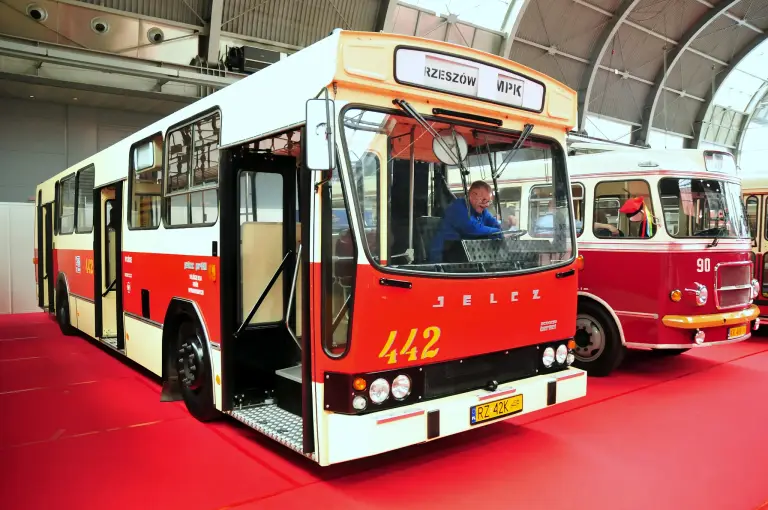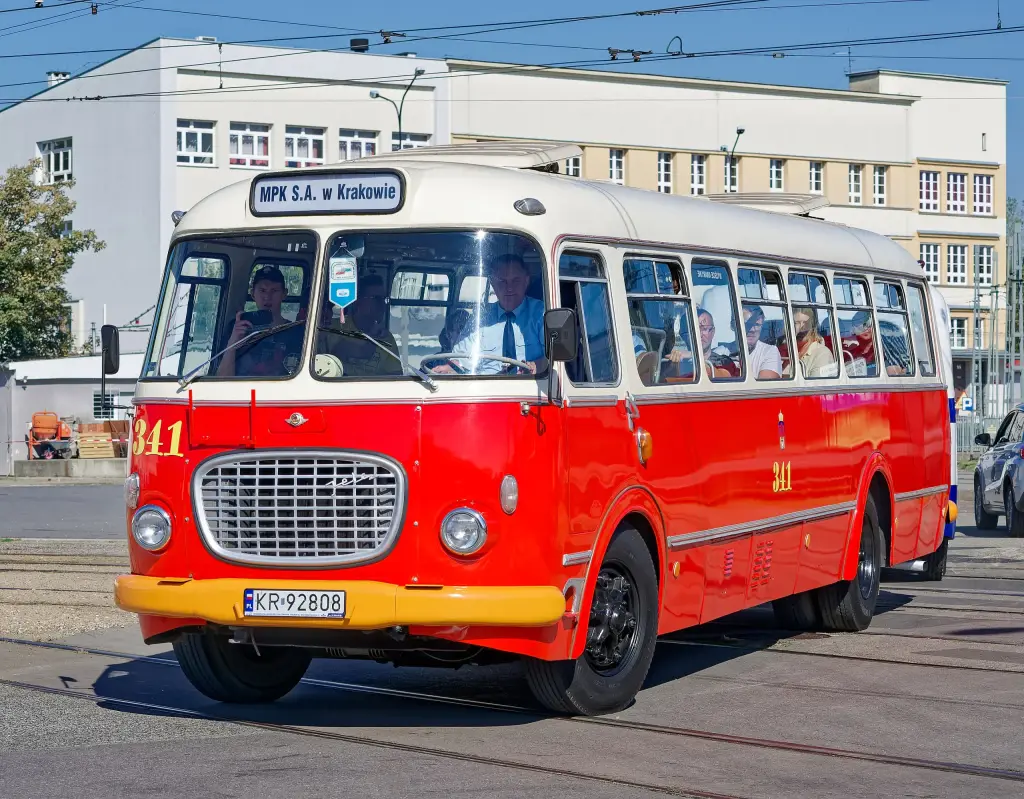
The Jelcz 272 MEX was a Polish city bus produced from 1963 to 1977 by the Jelczańskie Zakłady Samochodowe. It was an adaptation of the Jelcz 043 intercity bus to urban service, built under the Czechoslovak Škoda 706 RTO licence.
Jelcz 272 MEX at a glance
| Maker | Jelczańskie Zakłady Samochodowe, Jelcz |
|---|---|
| Type | city bus |
| Production | 1963-1977 |
| Licence | Škoda 706 RTO MTZ and 706 RTO MEX |
| Prototype | built in 1962 |
| Capacity | 81 passengers, 28 seated |
| Doors | pneumatically operated double doors |
| Engine | Škoda 706RT, 11,781 cm³, 160 hp |
| Gearbox | five-speed, non-synchronized |
| Final drive | 5.62 |
| Survivors | four examples in Poland |
This page is based on a single source, the Polish Wikipedia article on the Jelcz 272 MEX.
History of the Jelcz 272 MEX
The growing population of Polish cities in the 1950s and 1960s increased demand for transport, and the country lacked high-capacity city buses of its own. In 1962 the Jelczańskie Zakłady Samochodowe prepared the technical documentation and built a prototype of a city bus called the Jelcz 272 MEX, an adaptation of the 043 intercity model for urban lines, and series production began in 1963.
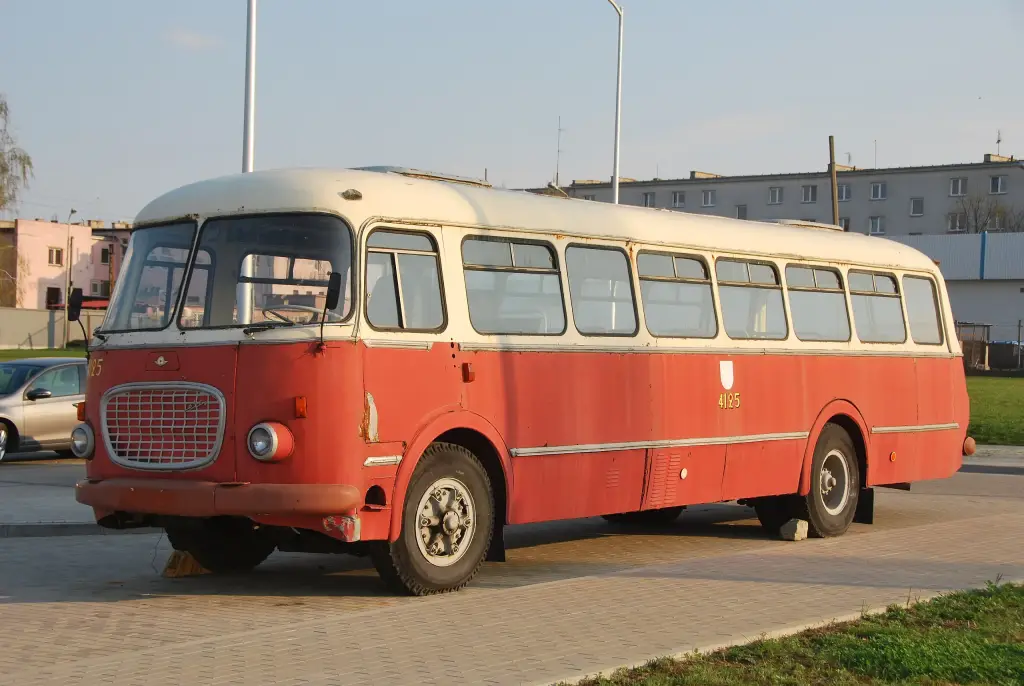
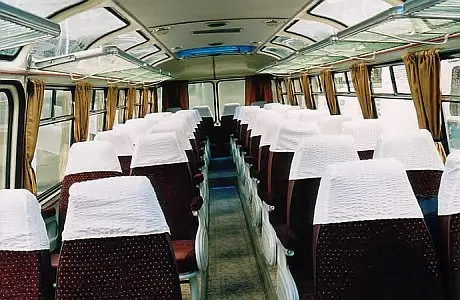
The body sat on a riveted longeron frame of pressed steel sheet and was welded from closed and open steel profiles, with steel sheets riveted to the skeleton. Above the windscreen there was a place for the destination display. On the right-hand side, between the front and rear axles and on the rear overhang, there were pneumatically operated double doors, while the left side had a door for the driver. The 1,900 mm high interior was arranged for 81 passengers, 28 of them seated, finished in lacquered fibreboard with a pine floor covered in rubber. Heating came from a fuel-fed heater and a water heater. Compared with the 043, the city version lost the luggage shelves above the windows and the roof rack.
The engine was the imported Czechoslovak Škoda 706RT, a six-cylinder inline diesel of 11,781 cm³ with direct injection and 117.6 kW (160 hp), mated to a five-speed non-synchronized gearbox. It sat at the front over the front axle and drove the rear wheels through a two-part tubular shaft, and the final drive was 5.62. The front axle was a rigid I-beam on semi-elliptic leaf springs with two hydraulic lever dampers, the rear axle used leaf springs with lever dampers, and the worm-and-nut steering had an AB 125 hydraulic pump. Production ended in 1977. Four Jelcz 272 MEX buses survive in Poland: two belong to public transport enthusiasts’ associations, one to MPK Lublin and one to a private collector, and in 2002 MPK Kraków rebuilt a Jelcz 043 into a 272 MEX.
Design and features
- Urban adaptation of the 043: pneumatic double doors, a destination display and no luggage racks.
- Capacity for 81: 28 seated passengers and 53 standing.
- Škoda 706RT engine: 11,781 cm³, 160 hp, with a 5.62 final drive.
- Rare survivors: only four examples remain in Poland.
Jelcz 272 MEX versions
- Jelcz 272 MEX: the standard city bus.
- MPK Kraków rebuild: a Jelcz 043 converted into a 272 MEX in 2002.
The 272 MEX was derived from the Jelcz 043 and was followed by the articulated Jelcz 021. More buses are in the Jelcz collection.
Video: Jelcz 272 MEX na INDUSTRIADA 2012
Video by TomaszThe8888 on YouTube.
Sources
- Jelcz 272 MEX, Polish Wikipedia: development, body, interior, engine and surviving examples