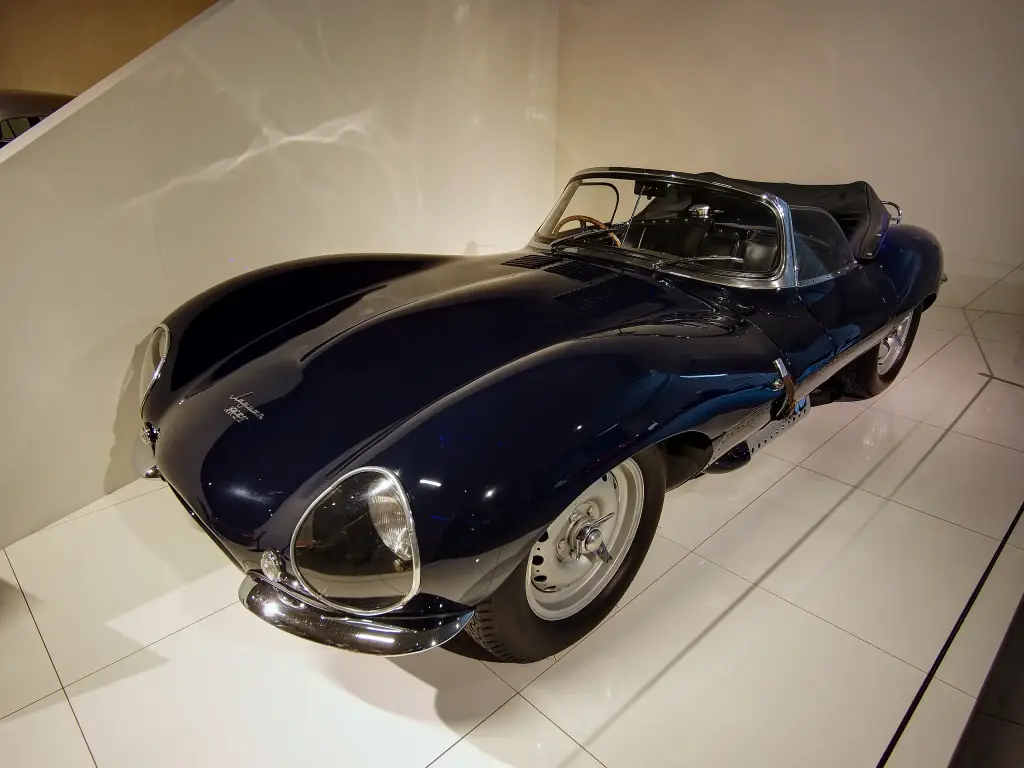
The Jaguar XKSS is a road-going version of the Jaguar D-Type racing car, initially built in 1957. Only 16 were built and sold at the time, and nine chassis were destroyed in a factory fire in 1957 before they could be completed.
Jaguar XKSS at a glance
| Based on | Jaguar D-Type racing car |
|---|---|
| Built | 1957, at Jaguar’s Browns Lane plant |
| Planned run | 25 cars |
| Sold at the time | 16, most of them in the United States |
| Destroyed in the fire | 9, on the evening of 12 February 1957 |
| Continuation cars | 9, announced in March 2016, expected to sell for more than £1 million each |
| Most famous owner | Steve McQueen, whose car was British racing green |
This page is based on English Wikipedia only (a trusted source); no German or other-language article on the XKSS was available, so the facts were not cross-checked against a second source.
History of the Jaguar XKSS
At the end of the 1956 season Jaguar withdrew from competition, leaving a number of completed and partly completed D-Types unsold at the Browns Lane factory. To recoup some of the investment in unused chassis and to exploit the lucrative American market for high-performance European sports cars, Sir William Lyons decided to convert a number of them to road-going specification.
From racer to road car
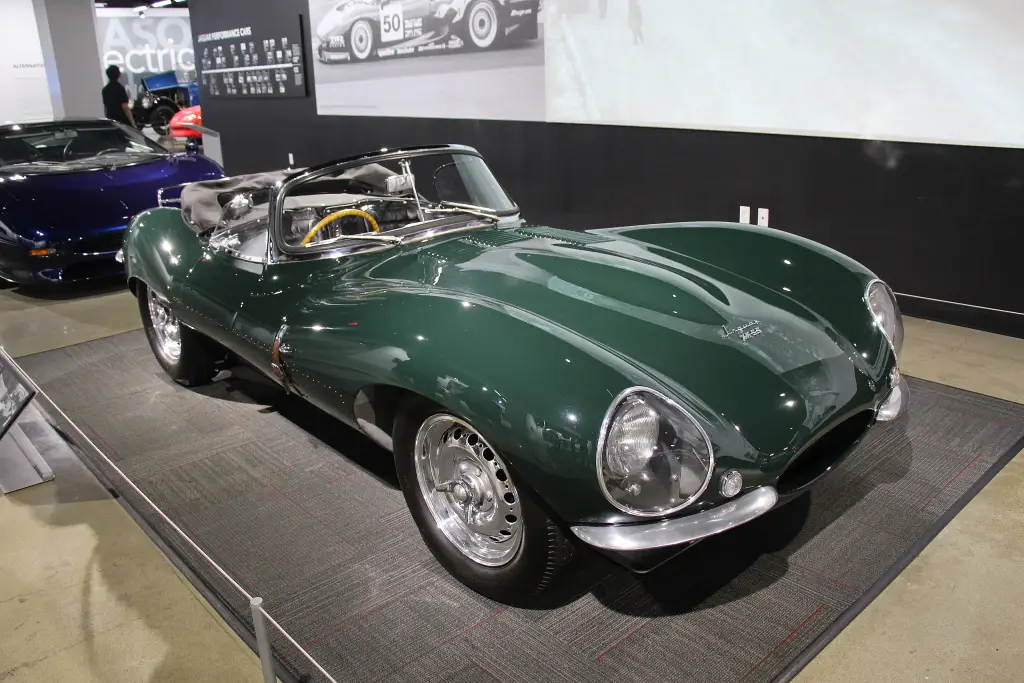
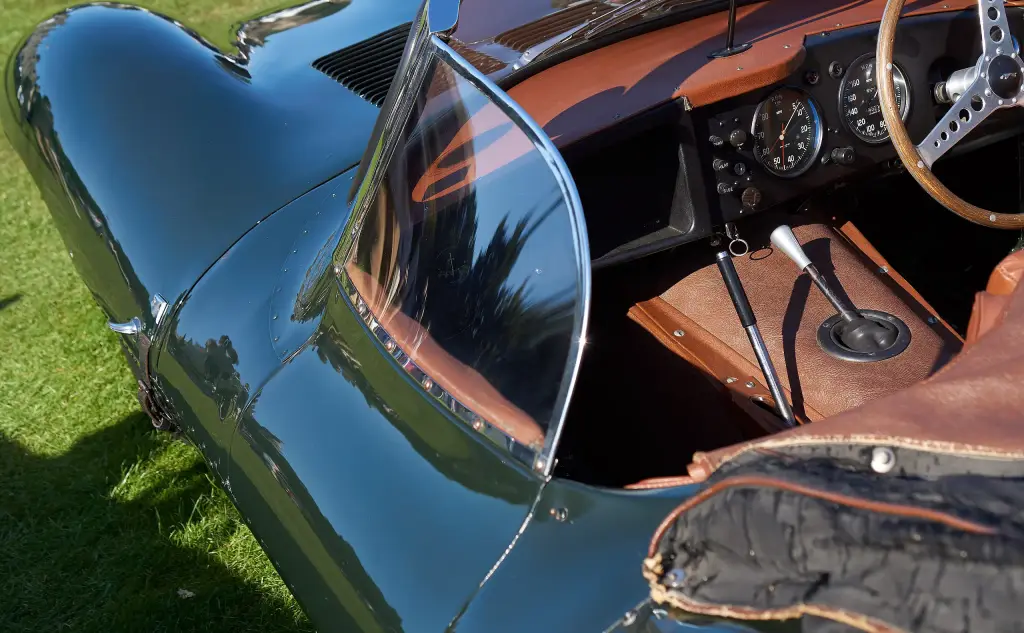
The structural changes included removing the bulkhead to create a single driver’s cockpit, eliminating the large fin behind the driver and adding a passenger-side door. Many other changes were needed for cosmetic, comfort and legal reasons: a full two-abreast interior, a full-width windscreen with a chrome surround, sidescreens for both doors, a rudimentary folding fabric roof, chromed front and rear bumpers, XK140 rear light clusters mounted high on the wings and thin chrome strips on the edges of the front light fairings.
The fire
By early 1957 a total of 16 of the planned production run of 25 had been completed. On the evening of 12 February a fire broke out at Browns Lane and destroyed the remaining nine in mid-production. All of the destroyed cars had been destined for North America, and most of the 16 already built were also sold in the United States. In March 2016 Jaguar announced that it would complete the original order of 25 by hand-building the remaining nine roadsters to the exact original specification and giving them the chassis numbers of the destroyed cars. The “continuation” cars were expected to sell for more than £1 million each.
Famous cars
The American actor Steve McQueen owned an XKSS for personal use, painted British racing green, and called it the “Green Rat”. In 2010 and 2011 it toured the United States as part of the “Allure of the Automobile” exhibit, and it is now on display at the Petersen Automotive Museum in Los Angeles. Another XKSS, with a D-Type and a C-Type, formed the pinnacle of the James Hull collection of 450 British cars, sold for an estimated £100 million in 2014, and XKSS 722 is at the Louwman Museum in The Hague.
Design and features
- Body: a D-Type with a passenger door, a full-width windscreen and a folding roof.
- Rarity: 16 built in 1957, then nine more in the 2016 continuation run.
- Market: aimed at American buyers of high-performance European sports cars.
Jaguar XKSS versions
- XKSS (1957): the 16 original road cars.
- Continuation XKSS (2016): nine hand-built cars with the chassis numbers of the ones lost in the fire.
The XKSS came from the racing Jaguar D-Type, whose older sibling is the Jaguar C-Type. For the road cars of the day, see the Jaguar XK120 and our Jaguar collection.
Sources
- Jaguar XKSS, English Wikipedia: history, the 1957 fire, the 2016 continuation and famous owners