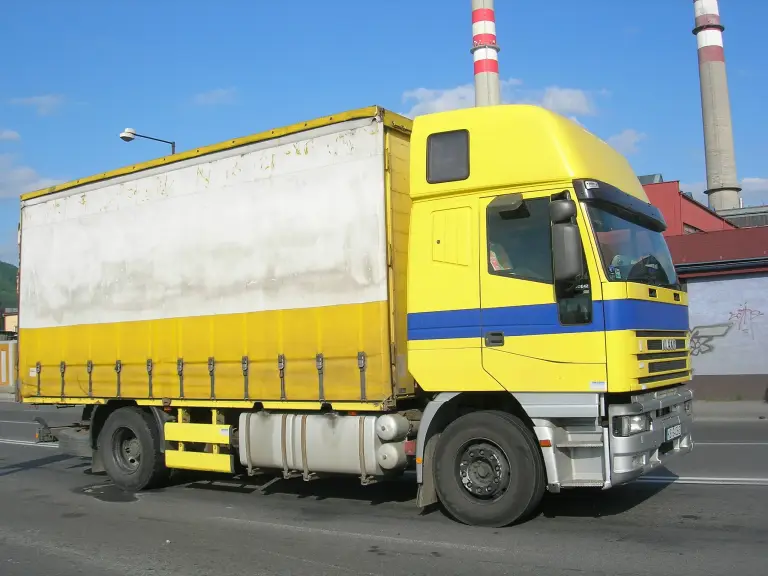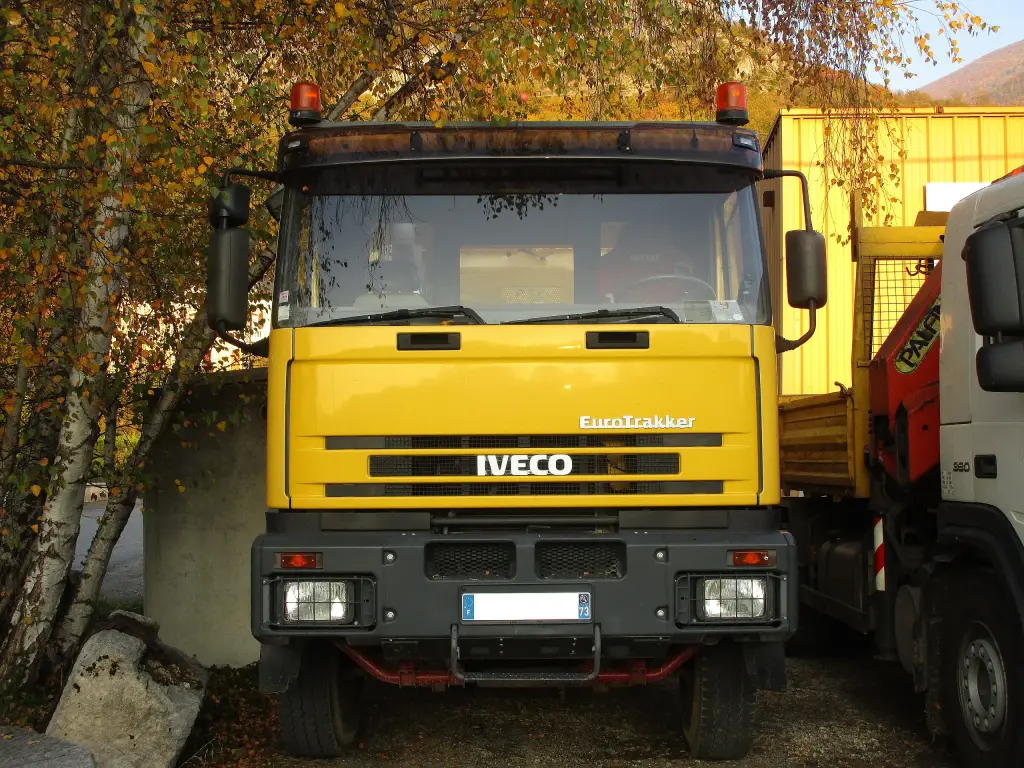
The Iveco Eurotrakker was a heavy lorry produced by Iveco from 1993 to 2004. It was launched as the successor of the Iveco 330 and was designed for loads from 18 to 72 tonnes on any ground. In 2004 the Trakker replaced it.
Iveco Eurotrakker at a glance
| Maker | Iveco |
|---|---|
| Production | 1993–2004 |
| Predecessor | Iveco 330 |
| Replaced by | Iveco Trakker |
| Load range | 18 to 72 tonnes |
| Layouts | 4×2, 4×4, 6×4, 6×6, 8×4 and 8×8 |
| Axles | two and three axles from the start, four axles added in 1996 |
| Cab | taken from the Eurotech, with a grille in the Iveco style of the time |
| Engines | 310 to 450 hp |
| Steering | left and right hand drive |
| Fire version | built by the Magirus division |
| 2000 update | new lights, bumpers and grille, Cursor 8 and 13 engines |
| 2001 update | EuroTronic2 automatic transmission |
Based on one source: the Italian Wikipedia article.
History of the Iveco Eurotrakker
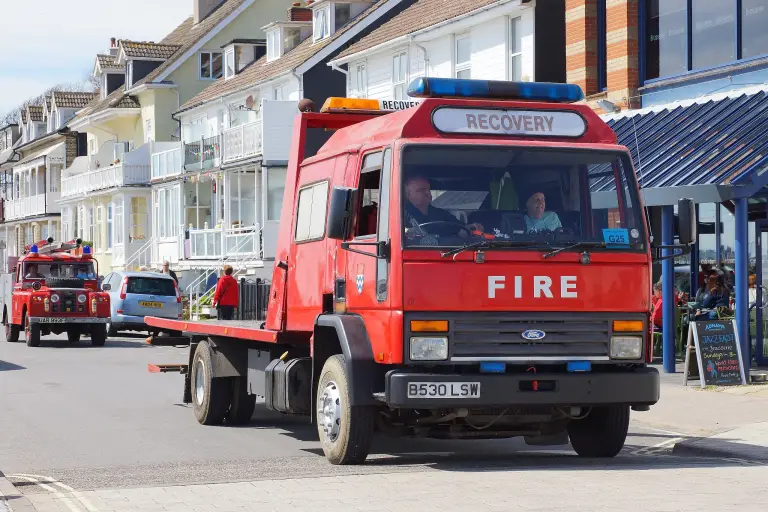
The Eurotrakker was designed for use anywhere in the world, which is why it was offered with right-hand drive for the British and other markets as well as left-hand drive. On the British market it was sold as an Iveco-Ford under a specific commercial agreement. Stylistically its front grille followed the Iveco family look of the period and resembled the road-going Eurotech, from which the lorry inherited the cab and part of its mechanicals.
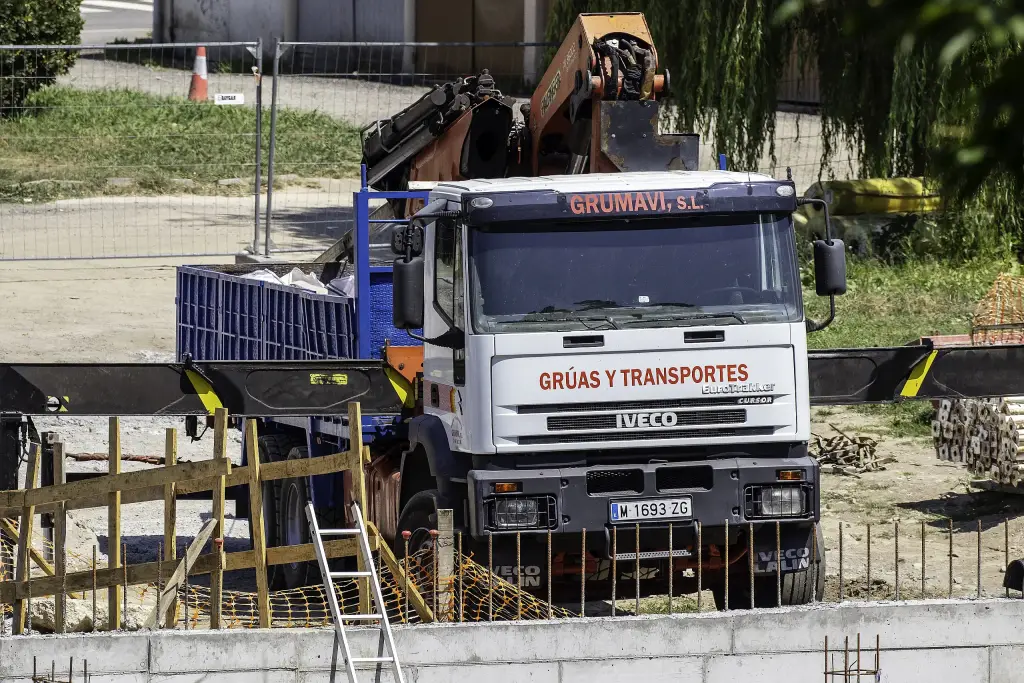
It came with two and three axles, including all-wheel drive, and a four-axle version was added in 1996. Drive layouts ran from 4×2 to 8×8, with engines from 310 to 450 hp. The lorry was designed to make conversions easy, thanks to a wide choice of transmissions and bodies, and was used mostly as a quarry and site vehicle, as a concrete mixer and as a crane carrier. The Magirus division built the fire-fighting version for the fire services.
Several mechanical changes came during its life. In 2000 the lorry received new front lights, new bumpers and a redesigned grille, together with the Iveco Cursor 8 and Cursor 13 engines with variable-geometry turbochargers and Euro 4 approval, and in 2001 the EuroTronic2 automatic transmission was introduced. Production ended in 2004, when the simpler Trakker took over.
Design and features
- All layouts: 4×2, 4×4, 6×4, 6×6, 8×4 and 8×8 for any kind of site.
- Eurotech cab: the road lorry’s cab and part of its mechanicals.
- Easy conversions: many gearboxes and body options for mixers, tippers and cranes.
- Fire version: built by Magirus for the fire services.
Iveco Eurotrakker versions
- Two- and three-axle models: the original range, including all-wheel drive.
- Four-axle models (from 1996): added for the heaviest site work.
- Iveco-Ford version: sold in Britain under the joint agreement.
- Cursor-engined models (from 2000): Cursor 8 and 13 with variable-geometry turbos.
- Fire-fighting chassis: bodied by Magirus.
The Eurotrakker carried on from the Iveco 330 and shared its cab with the Eurotech, and it was replaced by the Trakker. More Iveco lorries are in the Iveco collection.
Sources
- Iveco Eurotrakker, Italian Wikipedia: dates, loads, layouts, engines, updates