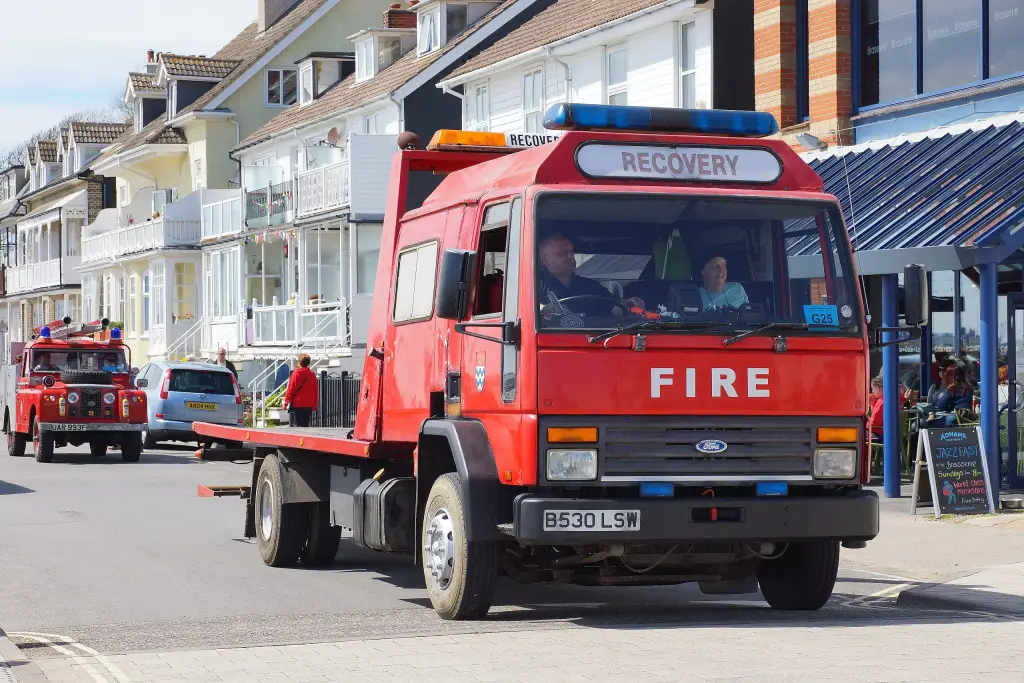
The Ford Cargo is a cab-over lorry that Ford introduced in 1981, designed by Ford of Britain as the successor of the Ford Transcontinental. In 1986 Ford sold its European truck operations to the Iveco group, and from then on the vehicles were badged Iveco Ford. The light Cargo was replaced in 1993 by the Iveco Eurocargo.
Iveco Ford Cargo at a glance
| Maker | Ford of Britain, then Iveco Ford Truck after 1986 |
|---|---|
| Production | from 1981, British production until October 1997 |
| Factory | Langley, Slough, with about a third of output exported |
| Designer | Patrick Le Quément |
| Style | Aeroflow black louvred grille, quarter windows down to floor level |
| Heavy models | 28 to 38 tonnes GCW from 1983 |
| Heavy engines | Cummins L10 in the 38-tonners, Perkins, Cummins or Deutz below |
| Light models | 7.49 tonnes with Dorset and Dover fours and sixes from 89 bhp |
| Replaced by | Iveco Eurocargo in 1993 for the light range |
| Later production | Brazil, Turkey, Argentina, Venezuela and India |
History of the Iveco Ford Cargo
The 1981 Cargo was styled by Patrick Le Quément, who also drew the Ford Sierra and later the Renault Twingo. Its design followed the family look of Ford of Europe’s cars, with the black louvred Aeroflow grille used on the Escort III and the Cortina 80, and with quarter windows stretching almost to floor level so that drivers in town could see paths and blind spots while parking.
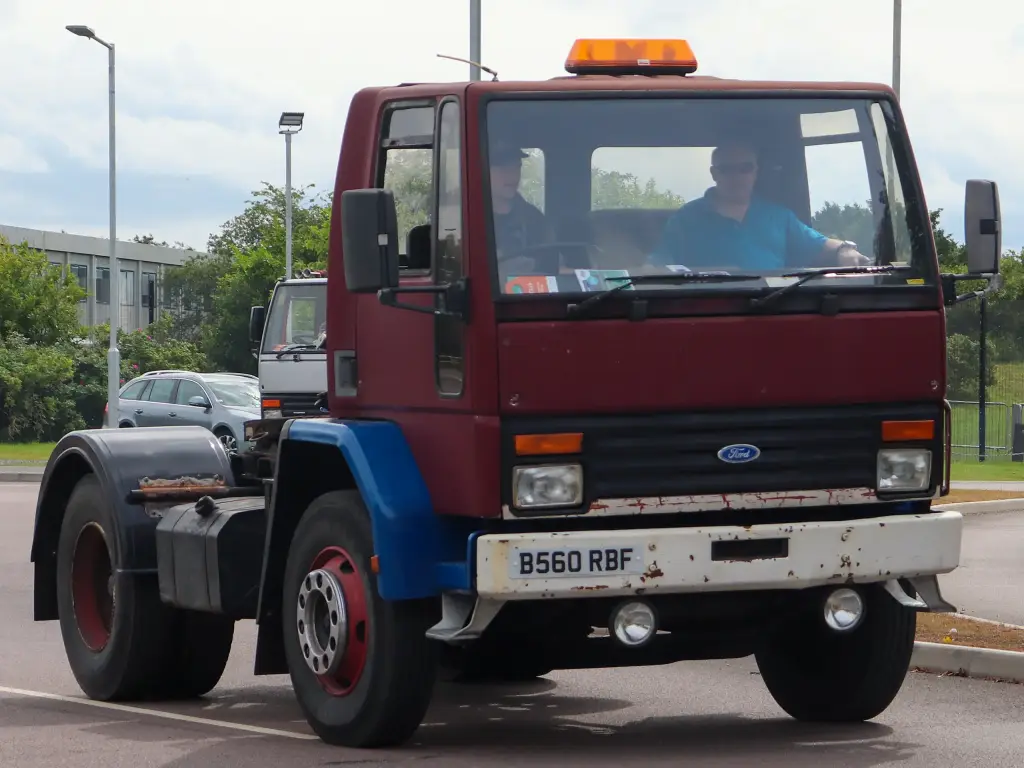
When the Ford Transcontinental heavy range ended in 1983, British Ford added heavyweight Cargo tractor units of 28 to 38 tonnes GCW. The 38-tonners used the Cummins L10, while the 28- and 32-tonne models had Perkins, Cummins or air-cooled Deutz diesels. The 7.49-tonne Cargos came with Dorset and Dover fours and sixes from 89 bhp in the 0809, the Dover six being mounted at a slant.
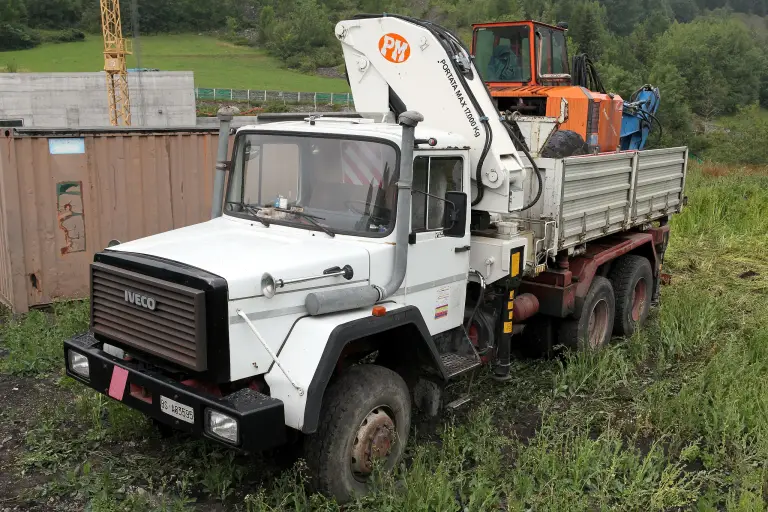
In 1986 Ford sold its European truck operations to Iveco, and later vehicles were badged Iveco Ford. After the recession of the 1990s Iveco rationalised production and the Langley plant closed in October 1997, ending British Iveco and Ford truck production. The original light Cargo had already been replaced in 1993 by the Iveco Eurocargo, which covered 7.5 to 18 tonnes GVW.
The Cargo was also built and assembled far beyond Britain. It was made in Brazil from 1981 to 2019, in Turkey by Ford Otosan, in Argentina and Venezuela, where it was known as the Ford Trader, and in India by Ashok Leyland as the eComet and the Stallion. In truck racing Rod Chapman won the FIA European Championship in 1985 and 1987 in a modified Cargo, and Gérard Cuynet did the same in 1988.
Design and features
- Car-like styling: Patrick Le Quément’s Aeroflow grille and deep quarter windows.
- Iveco Ford badge: European production passed to Iveco in 1986.
- Wide range: from 7.49-tonne light lorries to 38-tonne tractor units.
- Racing record: three European truck racing titles in the 1980s.
Iveco Ford Cargo versions
- Light Cargo (from 1981): 7.49 tonnes with Dorset and Dover engines.
- Heavy Cargo (from 1983): 28 to 38 tonne tractor units, Cummins L10 in the largest.
- Iveco Ford Cargo (from 1986): the same lorry with Iveco Ford badges.
- Overseas Cargo: Brazilian, Turkish, Argentine, Venezuelan and Indian production.
The light Cargo became the EuroCargo, and its British production ended when Iveco concentrated work in Brescia. More Iveco lorries are in the Iveco collection.
Sources
- Ford Cargo, English Wikipedia: design, engines, Iveco takeover, production, racing