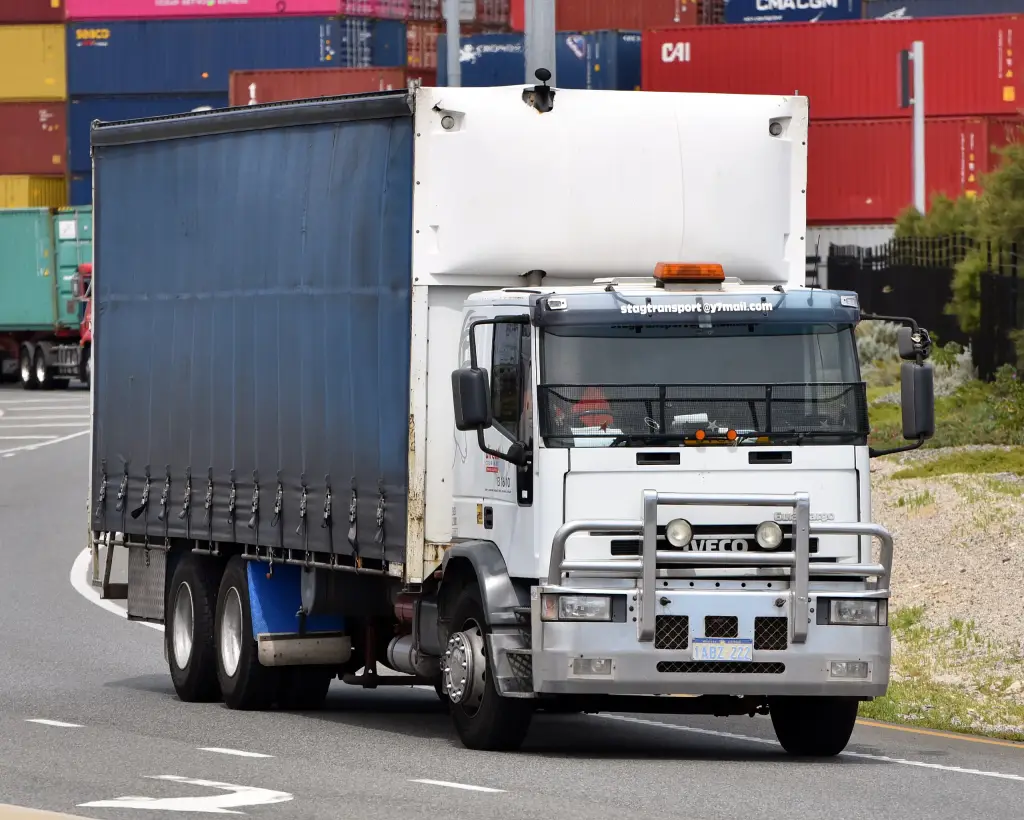
The Iveco EuroCargo is a range of medium-duty lorries produced by Iveco since 1991. It sits between the light Daily and the heavy Stralis in the range, and it replaced the Zeta of the 1970s. The first generation was designed at the Iveco design centre in Neu Ulm with help from Giorgetto Giugiaro of Italdesign.
Iveco EuroCargo at a glance
| Maker | Iveco |
|---|---|
| Production | since 1991 |
| Position in range | between the Daily and the Stralis |
| Replaced | Iveco Zeta |
| First generation | 1991–2002, designed at Neu Ulm with Italdesign |
| First-generation weights | 6–15 tonnes, up to 17 tonnes at Langley |
| First-generation engines | 8040 of 3,908 cc, 8060 of 5,861 cc, 8360 of 7,685 cc |
| Second generation | 2002–2015, styled by Bertone, 6–18 tonnes |
| Second-generation engines | Tector four of 3,920 cc and six of 5,880 cc |
| Third generation | from 2015, built in Brescia |
| Third-generation engines | Tector 5 of 4.5 litres and Tector 7 of 6.7 litres, 160–320 hp |
| Awards | International Truck of the Year 2016 |
History of the Iveco EuroCargo
The first EuroCargo was designed by the Iveco design centre in Neu Ulm under Leonhard Schmude, with help from Giorgetto Giugiaro of Italdesign. Gross weights ran from 6 to 15 tonnes, and up to 17 tonnes for the lorries built at Langley in Britain, in both 4×2 and 4×4 form. Buyers could choose three engine families, four cabs from a short day cab to a double cab, and four suspension layouts, and the lighter models had disc brakes on all wheels. An update in October 1997 revised the cab and the brakes and ended production at Langley, concentrating it in Brescia.
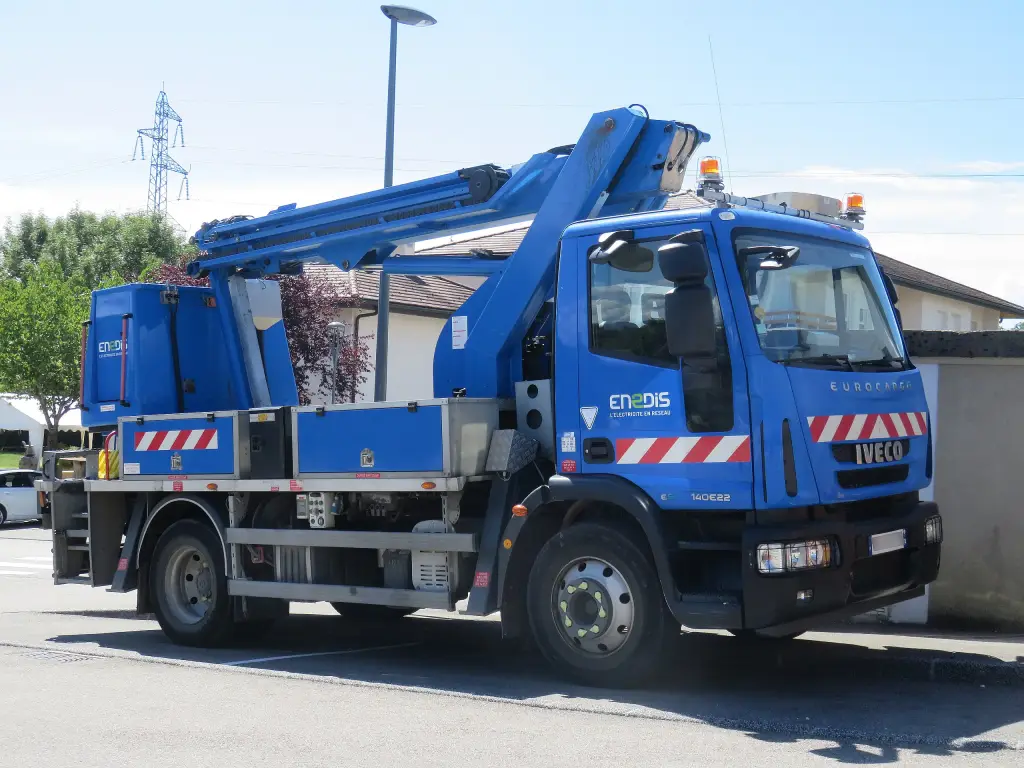
The second generation arrived in 2002 with bodywork by Bertone. It was built in Brescia, in Sete Lagoas in Brazil from 2005 and in Ferreyra in Argentina, and assembled in Venezuela as well, with gross weights from 6 to 18 tonnes. The engines were Iveco Tector units, a four of 3,920 cc with 129 to 170 hp and a six of 5,880 cc with 182 to 275 hp, and the range kept four cab types. Updates in 2004 and 2006 adapted the Tector engines to Euro 4 and Euro 5 with SCR and raised their power by 10 to 20 hp, and bus chassis for the Euromidi were built at the Barcelona plant.
In mid-2008 the EuroCargo was facelifted, with a new cabin design and ZF gearboxes in place of Iveco’s own, in five, six and nine speeds, some with the Eurotronic automated shift. Special All Blacks versions in black paint advertised the update, and the lorry finished second in the 2009 International Truck of the Year contest.
A new EuroCargo was presented on 15 September 2015 and is built in Brescia, with air intakes and a grille that form what has been called a smile. It brought a new dashboard, an airbag in the steering wheel and standard driver aids such as lane departure warning, electronic stability control, autonomous emergency braking and adaptive cruise control, plus the HI-SCR exhaust system, EcoSwitch and EcoRoll. The engines are the 4.5-litre Tector 5 and the 6.7-litre Tector 7 in seven power levels from 160 to 320 hp with up to 1,100 Nm, and a CNG unit of 204 hp is also offered. The model won International Truck of the Year 2016.
Design and features
- Three generations: Giugiaro-assisted original, Bertone-styled second and the 2015 model.
- Tector engines: four- and six-cylinder units from 129 to 320 hp.
- Many bodies: day cab, extended cab, sleeper and double cab, in 4×2 and 4×4.
- Driver aids: airbag, lane warning, autonomous braking and adaptive cruise on the 2015 lorry.
Iveco EuroCargo versions
- First generation (1991–2002): 6 to 15 tonnes, 8040, 8060 and 8360 engines.
- Second generation (2002–2015): Bertone bodywork and Tector engines.
- 2008 facelift: new cabin, ZF gearboxes and the All Blacks edition.
- Third generation (from 2015): Tector 5 and Tector 7, from 160 to 320 hp.
- Natural Power: CNG and LNG versions of the 2015 lorry.
The EuroCargo sits between the Daily and the heavy Stralis, and it replaced the Zeta. More Iveco lorries are in the Iveco collection.
Sources
- Iveco EuroCargo, English Wikipedia: generations, engines, weights, awards