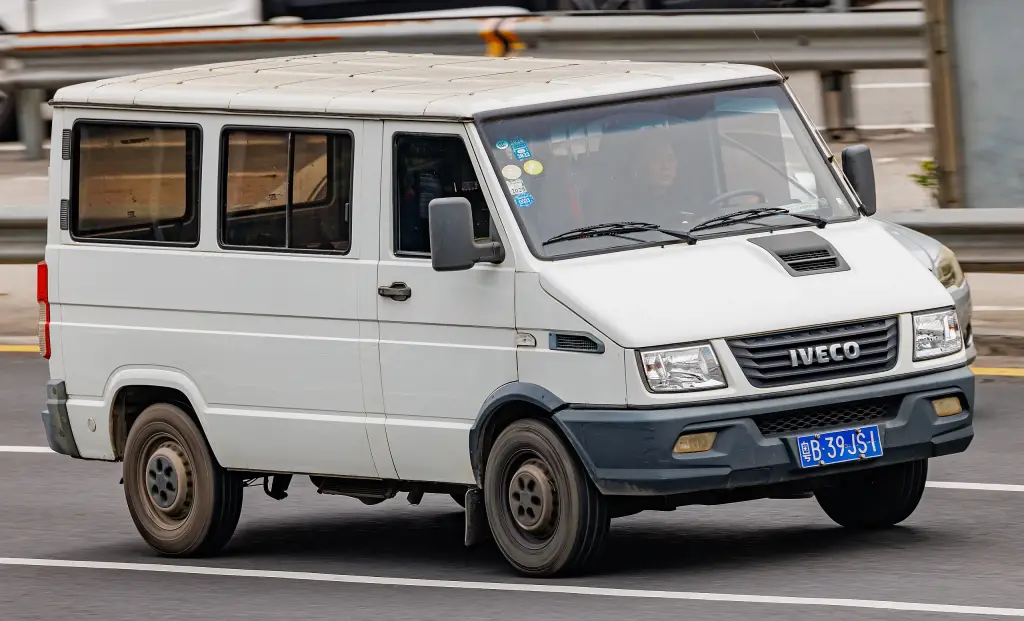
The Iveco Daily is a large light commercial van produced by the Italian maker since 1978, and until 1983 it was also sold as the Fiat Daily. Unlike the car-like unitary Fiat Ducato, the Daily is built on a separate ladder frame of the kind used by heavier commercial vehicles. It is made at the Iveco plant in Suzzara, near Mantua.
Iveco Daily at a glance
| Maker | Iveco, Suzzara plant |
|---|---|
| Production | since 1978 |
| Also sold as | Fiat Daily until 1983, OM Grinta, Alfa Romeo AR8, Unic Daily, Magirus Daily, Saurer |
| Construction | separate ladder frame, not a unitary body |
| Launch range | 30F8, 35F8 and 40F8, for 3.0, 3.5 and 4.0 tonnes gross weight |
| TurboDaily | introduced in 1985 |
| Four-wheel drive | added in 1984 |
| 1990 facelift | new cab and revised 2.5-litre Sofim engine |
| 1996 facelift | 2.8-litre engine, 59-12 and 59-13 models of 6.4 tonnes |
| Second generation | 1999, with common-rail injection, Agile and CNG versions |
| Units built | over three million by 2010 |
| Markets | sold in 110 countries |
History of the Iveco Daily
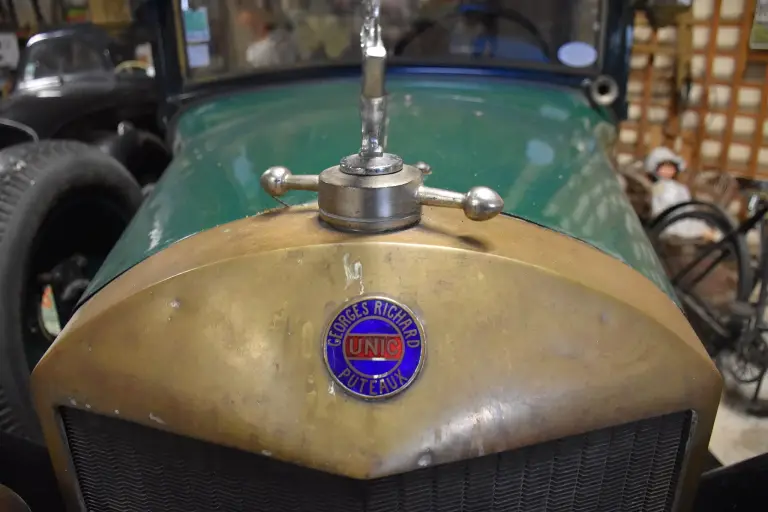
In 1978 Fiat presented the Daily as a light utility vehicle to succeed the Fiat 242 and the Fiat 616N, and it was well received at once for its robustness and versatility. It came as a panel van, a chassis cab and a double cab, and the long van could carry up to 17 cubic metres. The new van was sold under several names: Fiat Daily, OM Grinta and later OM TurboGrinta and Alfa Romeo AR8 in Italy, Unic Daily in France, Magirus Daily in Germany, and through Saurer-Fiat and Saurer-OM in Switzerland.
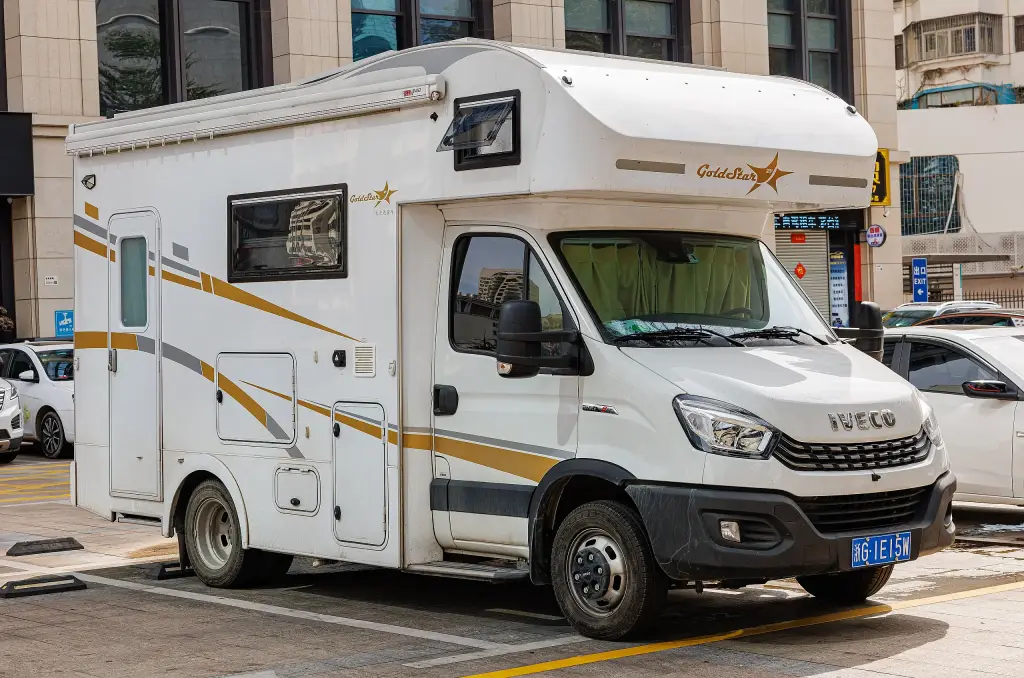
The model names of the first range were 30F8, 35F8 and 40F8: the first figures gave the gross weight in Italian quintals, the F stood for Fiat as the engine maker, and the last digit was the power in tens of horsepower. Between 1982 and 1983 the Iveco logo moved to the centre of the grille, with the Fiat or Unic names kept only at the bottom right. A four-wheel-drive range arrived in 1984 and the turbodiesel TurboDaily in 1985, with a 2.5-litre engine of 95 hp alongside naturally aspirated units of 72 and 75 hp.
The first generation was facelifted in 1990 with a completely revised cab and an improved 2.5-litre Sofim engine, and again in 1996, when a 2.8-litre engine of 102 hp was added and the 59-12 and 59-13 models of 6.4 tonnes gross weight appeared. After the Ford commercial operation joined Iveco in 1986, the Daily was sold in Britain as the Iveco-Ford Daily and the 3.5-tonne version was withdrawn there so as not to compete with the Ford Transit.
The second generation of 1999 brought new lights, common-rail injection on all turbodiesels and the end of the TurboDaily name. It added the Agile version with an automated gearbox and a CNG version, and two new weight classes, the Daily 65 and the Daily 28. The Daily was named Van of the Year for 2000, two million units had been sold by 2010, and since 1991 the van has also been licence-built in China by Naveco as the Deyi, later the Xindeyi and the Quanxindeyi.
Design and features
- Ladder frame: heavier-duty construction than the unitary bodies of most rivals.
- Many factories: built as Fiat, OM, Alfa Romeo, Unic and Magirus before the Iveco badge took over.
- Long life: the longest-running Iveco model, in production for over 40 years.
- Wide range: panel van, chassis cab, double cab, minibus, four-wheel drive and CNG versions.
Iveco Daily versions
- Fiat Daily (1978–1983): the original range of 30F8, 35F8 and 40F8.
- TurboDaily (from 1985): turbodiesel version with a 2.5-litre engine.
- Iveco-Ford Daily: British market version sold after 1986.
- Daily 4×4 (from 1984): four-wheel-drive chassis for off-road work.
- Second generation (1999): common-rail engines, Agile automated gearbox and CNG.
- Naveco Deyi: Chinese licence production from 1991.
The Daily sits below the EuroCargo in the Iveco range, and it shares its name with the light off-road Massif that followed it. More Iveco vehicles are in the Iveco collection.
Sources
- Iveco Daily, English Wikipedia: history, names, engines, generations, production