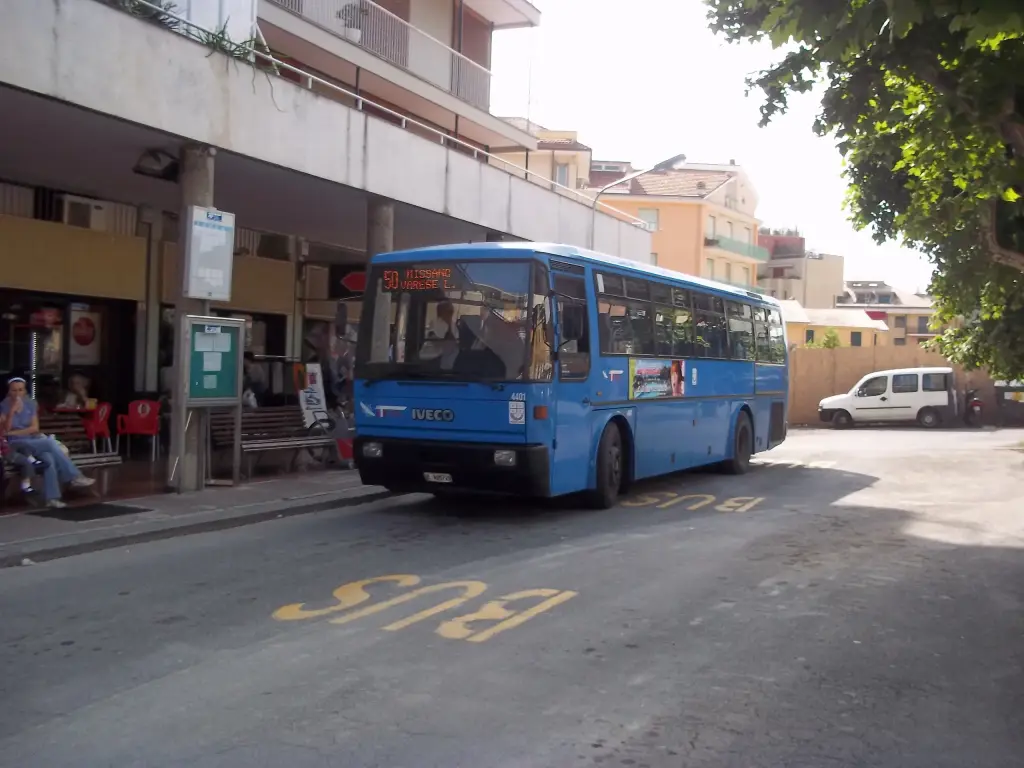
The Iveco 370 was an Italian coach and intercity bus presented by Fiat Veicoli Industriali in 1976 and built under the Iveco badge from 1980. It replaced three earlier Fiat bus families at once and was made in so many versions, with bodies by outside coachbuilders, that it stayed in production until 2001.
Iveco 370 at a glance
| Maker | Fiat Veicoli Industriali, then Iveco from 1980 |
|---|---|
| Production | 1976–2001 |
| Replaced | Fiat 306, Fiat 308 and Fiat 309 |
| Lengths | 9, 10, 11 and 12 m; the Gran Turismo version 10.5 m |
| Bodies | factory bodywork plus Orlandi, Menarini, Portesi, Padane, Dalla Via and others |
| Engine range | 9,572 to 17,173 cc, 200 to 352 hp |
| Main versions | 370.20, 370.24, 370.25, 370.26, 370.30, 370.35 |
| From 1987 | 370S, the most widespread version |
| From 1994 | 370SE with the 9,498 cc engine of the EuroClass |
| Replaced by | Iveco EuroClass from 1993 |
| Chassis production | until 1999 for outside coachbuilders |
| Also built in | France, under the Unic badge |
History of the Iveco 370
The 370 was shown in August 1976 to replace the Fiat 343, the Fiat 308 and the Fiat 306. The aim was to modernise the Fiat Veicoli Industriali bus range and to unite every kind of bus, from interurban service to long-distance touring, in a single model that could be adapted to the needs of individual operators. From 1979 it carried the new Iveco badge, alongside Fiat until 1983, and in 1983 Italian production moved from Cameri to the new Flumeri plant.
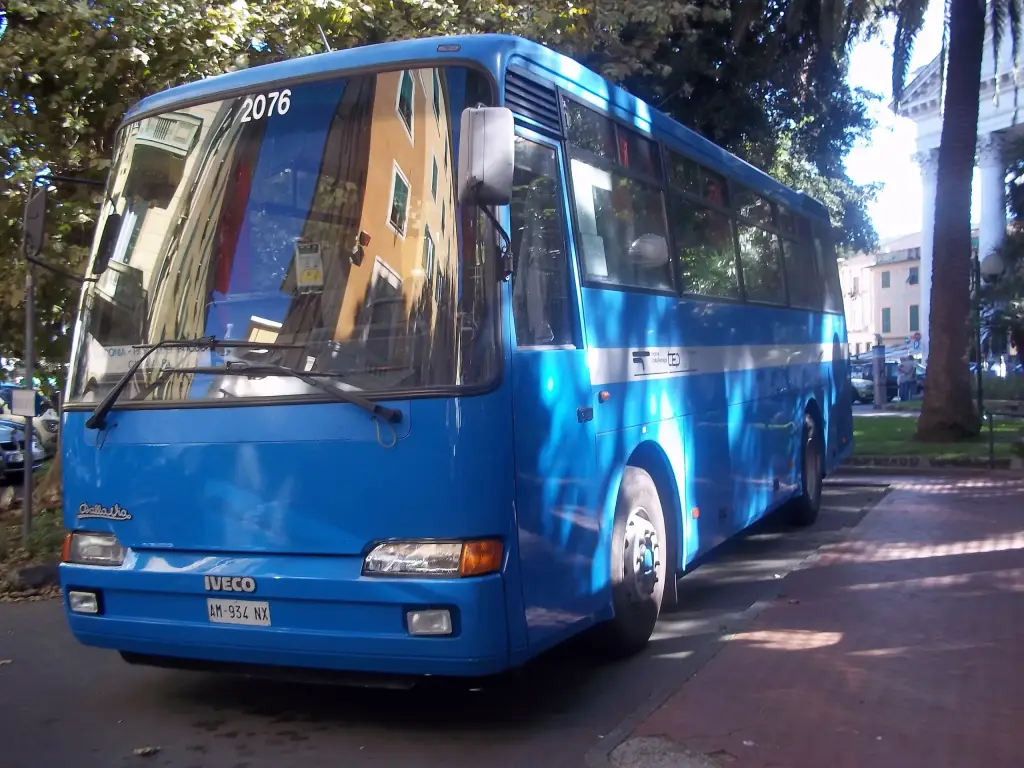
At launch there were two versions, a line-service bus and a Gran Turismo coach, both with a 13,798 cc Fiat six of 260 hp. A 10-metre version with a 200 hp engine followed in 1978, an 11-metre version with a new 12,880 cc V6 in 1980, and from 1981 the big 17,174 cc V8 with 352 hp. The range was restyled in 1983 with black plastic bumpers, and in 1984 the 12-metre buses received a turbocharged 13,798 cc engine of 304 hp while the 10-metre versions took a 9,572 cc unit of 240 hp.
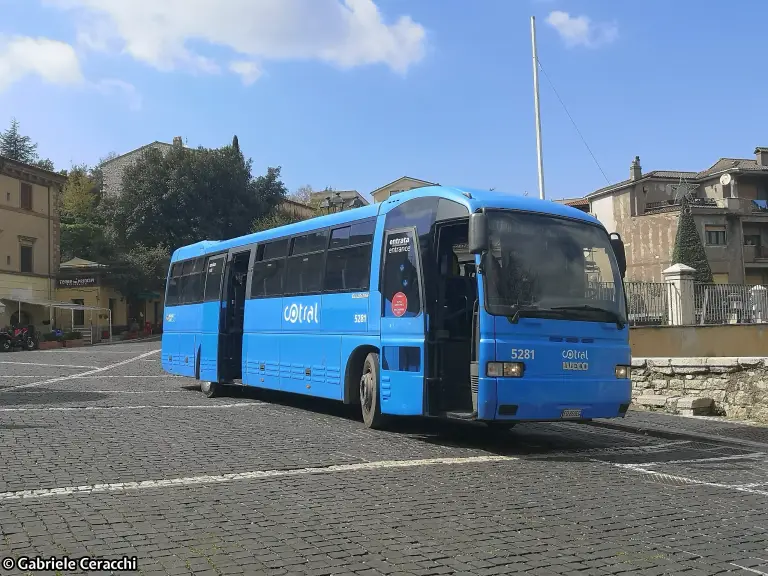
The 370S appeared in 1987 and became extremely common in Italy. The last series, the 370SE of 1994, used the 9,498 cc engine of the Iveco EuroClass, the bus that had begun to replace the 370 in 1993. A 9-metre version on a Siccar chassis joined the range in 1994, and production went on until the summer of 2001, long after the factory-bodied versions had been dropped. The 370 was bodied over the years by Orlandi, Menarini, Portesi, Padane, Dalla Via, Barbi, Bianchi, Garbarini and Autodromo, and was also built in France as a Unic.
Design and features
- One model, every job: line service, suburban work and Gran Turismo touring from a single design.
- Eight engine options: from a 200 hp 9,572 cc six to a 352 hp 17,173 cc V8.
- Chassis for coachbuilders: sold as a bare frame, which produced dozens of body styles.
- Long life: 25 years on the market, with the 370S as its most widespread version.
Iveco 370 versions
- 370.26 (1976–1980): 13,798 cc six of 260 hp, the original engine.
- 370.20 (1977–1980): 10-metre version with a 9,572 cc engine of 200 hp.
- 370.25 (1980–1984): 12,880 cc V6 of 260 hp.
- 370.35 (1981–1990): 17,173 cc V8 of 352 hp.
- 370S (from 1987): the most common version in Italy.
- 370SE (1994–2001): 9,498 cc turbo engine of 290 or 345 hp.
The smaller bus of the same years was the Iveco 315, and the 370 was replaced by the EuroClass. More Iveco buses are in the Iveco collection.
Sources
- Iveco 370, English Wikipedia: lengths, engines, replacement
- Fiat 370, Italian Wikipedia: history, versions, coachbuilders, production