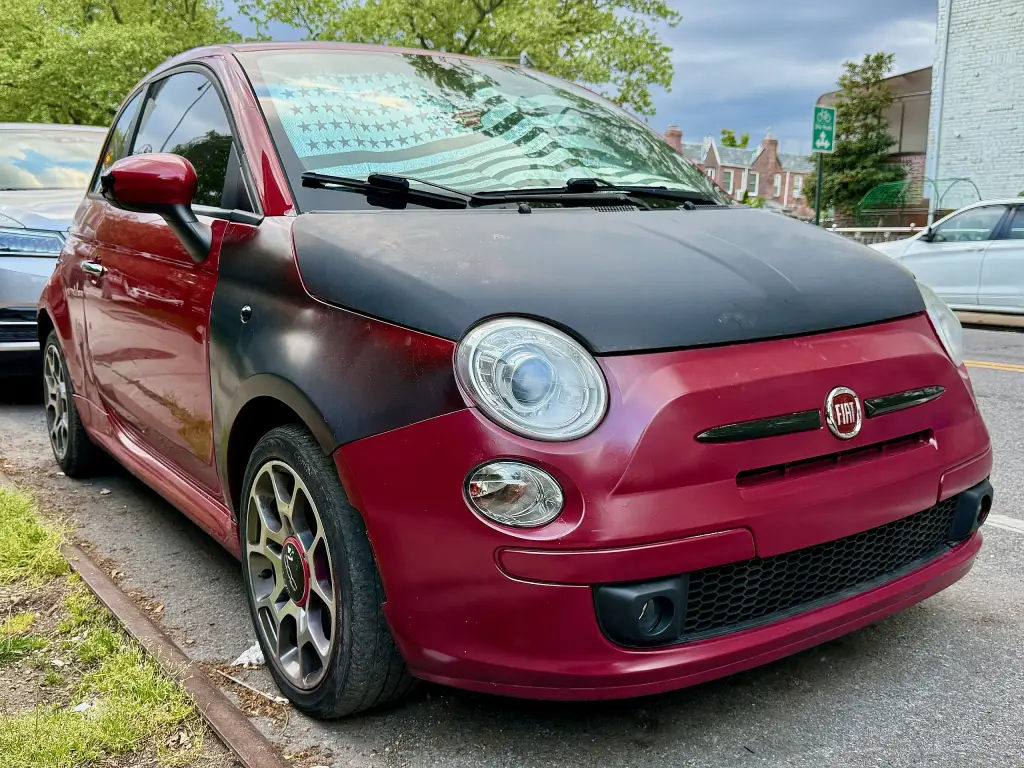
The Fiat 500 is an A-segment city car that Fiat has manufactured and marketed since 2007. It is sold as a three-door hatchback coupé and as the 500C, a fixed-profile convertible, on a single generation that received an intermediate facelift in Europe for the 2016 model year. Internally designated the Type 312, it was developed while Fiat was part of FCA.
Fiat 500 (2007) at a glance
| Production | 2007–present |
|---|---|
| Internal code | Type 312 |
| Class | A-segment city car |
| Bodies | 3-door hatchback, 500C convertible |
| Assembly | Tychy, Poland; Toluca, Mexico |
| Platform | widened Fiat Mini platform |
| Engines | 1.2 petrol, 0.9 TwinAir, 1.0 mild hybrid |
| Drag coefficient | 0.32 with the rear spoiler |
| Milestone | 2.5 million built by March 2021 |
| Awards | European Car of the Year 2008 |
History of the Fiat 500 (2007)
From the Trepiuno concept
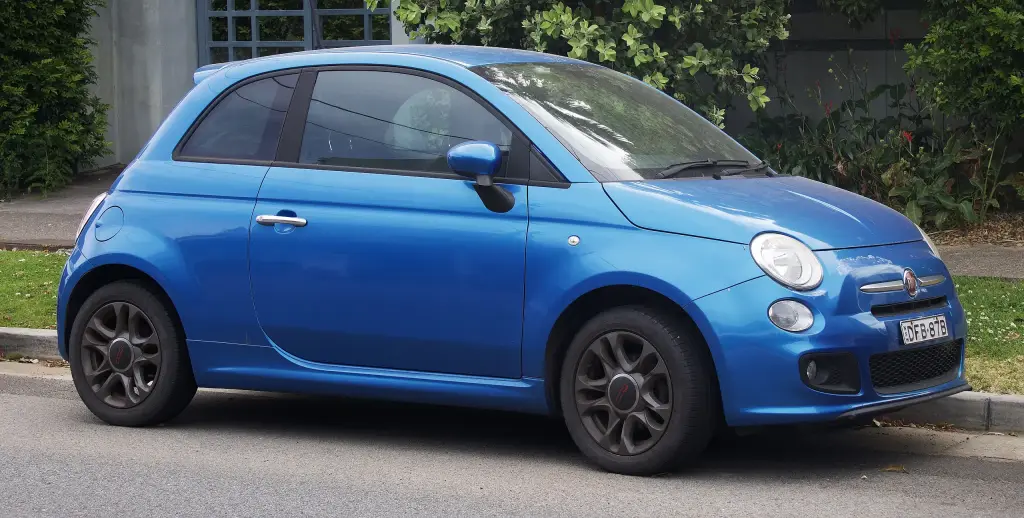
The 500 derives from the Fiat Trepiùno 3+1 concept of 2004, designed at Centro Stile Fiat by Roberto Giolito in a style strongly reminiscent of the original Fiat 500 of 1957, nicknamed the Bambino and engineered by Dante Giacosa. More than four million of that car were sold over its eighteen-year production span from 1957 to 1975. The concept’s name is a contraction of the Italian tre più uno, three plus one: the design seats three adults and one child by reducing the space in front of the front passenger, sliding that seat forward and placing the third adult directly behind the passenger, which leaves room for a fourth, smaller, occasional passenger behind the driver. In 2011 Giolito received the Compasso d’Oro industrial design award for the Fiat 500.
The concept became the production car under the direction of Frank Stephenson. Aerodynamic concerns were paramount: the team preferred the look without a spoiler, as on the original Nuova 500, but the small spoiler at the top of the rear hatch brings the drag coefficient to 0.32, against 0.40 without it. The 500 uses a widened variant of the Fiat Mini platform and follows Giacosa’s 1964 front-wheel-drive layout, which became the industry standard.
Launch
Fiat announced the car on 5 May 2006 and published photographs on 20 March 2007. The official debut came on 4 July 2007, with 250,000 people attending and new models displayed prominently in 30 Italian cities. The 500 uses Fiat’s Multiair hydraulically actuated variable valve timing technology, which won the 2010 International Engine of the Year award.
Since 1998 Fiat’s European entry model had been the Polish-built Seicento, an updated Cinquecento, and both had only ever been sold with three doors. Fiat had answered demand for five-door city cars in 2003 with the Panda, and around that launch it began work on a three-door car to replace the Cinquecento. The success of the Smart Fortwo, especially in Italy, pushed Fiat to study small-car concepts to regain its small-car crown, but it concluded that most customers want more than the Smart’s two seats.
500C
The fixed-profile convertible variant, the 500C, debuted at the Geneva Motor Show in March 2009. The C stands for Cabrio and recalls the fixed-profile convertible of the original 1957 Fiat 500, as well as similar designs such as the Vespa 400, the Citroën 2CV and the Nissan Figaro. The 500C has fully stamped body-side panels and keeps the hatchback layout.
2016 facelift and later developments
For the 2016 model year the 500 and 500C received a redesigned grille and reshaped headlights with LED daytime running lights, revised 15- and 16-inch alloy wheels, new paint colours, a rear bumper chrome strip with fog lights and LED tail lights. The interior gained revised controls and a redesigned steering wheel. Trims were Pop, Pop Star, Lounge and S, and three Euro 6 engines were offered in Europe: a 1.2 petrol and a 0.9 TwinAir in 85 or 105 hp form.
For 2020 Fiat added a Mild Hybrid version with a 1.0 three-cylinder engine and a combined output of 70 hp. All models received a 7-inch screen with Android Auto and Apple CarPlay, and a version called RED was released with proceeds going towards ending AIDS and COVID-19.
Production and sales
The 500 is manufactured in Tychy, Poland, and Toluca, Mexico, and marketed in more than 100 countries, including North America, where it marked Fiat’s return after 27 years. The millionth car was produced in 2012 and the two-millionth in 2017, ten years after launch; the 2.5-millionth was built in Tychy in March 2021. The car has won more than 40 major awards, including Car of the Year 2007 from the British magazine Car and the 2008 European Car of the Year.
Design and features
- Retro styling: a modern interpretation of Giacosa’s 1957 500, designed by Roberto Giolito.
- Two bodies: the hatchback and the 500C with a fixed-profile fabric roof.
- Small engines: 1.2 and 0.9 TwinAir petrol units, later a 1.0 mild hybrid.
- Aerodynamics: the rear spoiler cuts the drag coefficient from 0.40 to 0.32.
- Global reach: built in Poland and Mexico and sold in more than 100 countries.
Fiat 500 (2007) versions
- 500 hatchback: the three-door coupé introduced in 2007.
- 500C: fixed-profile convertible from 2009.
- 500 Sport and Turbo: sportier trims sold in markets such as the United States.
- 500 Mild Hybrid: 1.0 three-cylinder with 70 hp, added for 2020.
- 500e and Abarth: the all-electric and full-sport versions of the range.
The 500 revived the name of the original Fiat 500 of 1957 and sits below the Fiat 600 of 2023 in the range. The rear-engined Fiat 126 was its distant predecessor in concept. More cars are in the Fiat collection.
Sources
- Fiat 500 (2007), English Wikipedia: development, design, 500C, facelift, production and awards