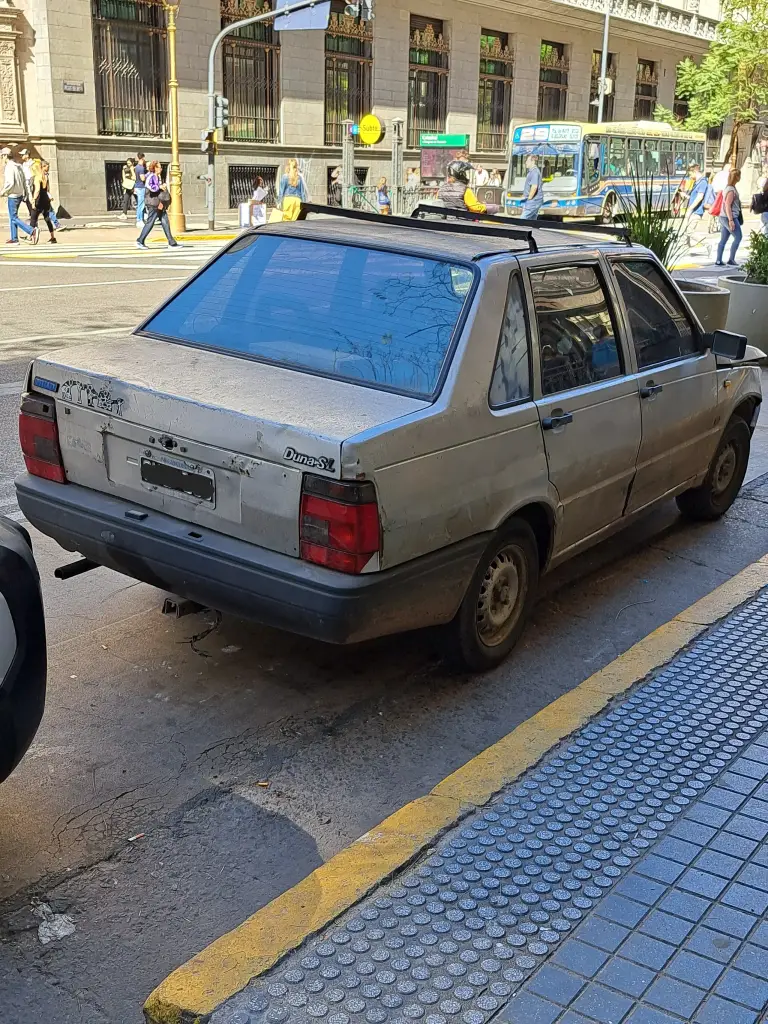
The Fiat Duna, Type 155, was a small family car produced by Fiat in Argentina and Brazil, where it was sold as the Fiat Prêmio. Launched in Brazil in 1985, it was based on the Brazilian Fiat Uno but, unlike the Uno, it was a two-door saloon; the range later grew to include estates and a four-door saloon, and production ended in 2000.
Fiat Duna at a glance
| Production | 1985–2000 |
|---|---|
| Internal type | 155 |
| Built in | Betim, Brazil; El Palomar, Argentina |
| Also called | Fiat Prêmio (Brazil), Innocenti Elba (Italy) |
| Basis | Brazilian Fiat Uno |
| Bodies | two-door saloon, four-door saloon, three- and five-door estate, panel van |
| Engines | 1.5 and 1.6 litre petrol; 1,116 cc in the panel van |
| Argentine production | 257,559 at El Palomar |
| Replaced by | Fiat Siena and Fiat Palio Weekend |
History of the Fiat Duna
Brazil
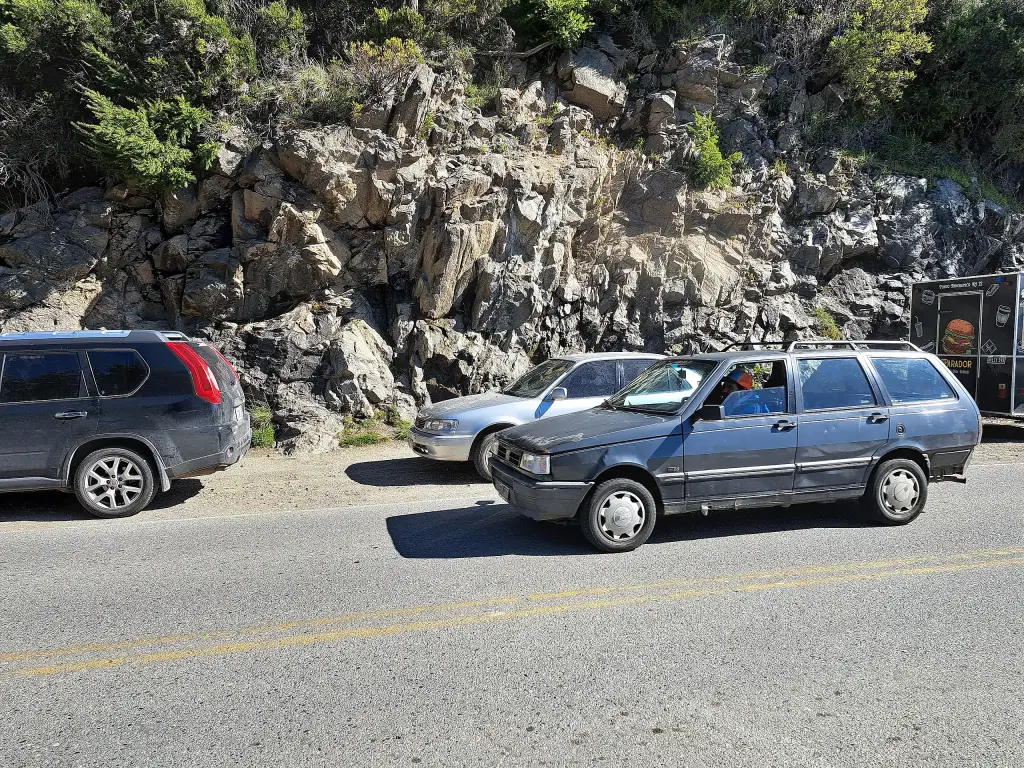
The Prêmio was presented in Brazil in late 1985 and built at the Betim factory from 1985 to 1995. In 1987 the Elba three-door estate was released with a 1.5-litre engine to replace the old Fiat Panorama, which had been based on the Fiat 147; a four-door saloon was added and in 1989 came the Elba estate with five doors. The saloon and estate were sold in Italy as the Duna and Duna Weekend from 1987 to 1991, and continued on the Italian market until 1997 with Innocenti badging.
Argentina
In Argentina the four-door Duna was released in 1987 and from 1990 was the best-selling car on the market for almost six years. It was widely used as a taxi, often converted to compressed natural gas. Fiat built the Duna and Duna Weekend at the Sevel factory in El Palomar until 2000, 257,559 vehicles in total; the car was not sold in the United Kingdom. In July 1989 three Duna SCV cars with a 1.5-litre engine of 82 PS set 17 South American records over 25,000 km at the Rafaela speedway, driving for 170 hours and 44 minutes at an average speed of 148.4 km/h.
Innocenti Elba and the vans
The Innocenti Elba was a rebadged Fiat Elba estate that replaced the Duna Weekend in Italy in 1991 and stayed on sale until 1997; it was the last car sold under the Innocenti marque. Fiat had acquired the remains of Innocenti in 1990 and for a few years imported basic Fiat models from low-cost subsidiaries and badged them as Innocentis to separate them from Italian-built cars. A panel version of the three-door estate was sold as the Fiat Penny, and in the United Kingdom, Ireland and New Zealand a right-hand-drive model was marketed as the Fiat Citivan, usually with a 41 kW, 1,116 cc four. Made only in Brazil, the panel van was never offered on the home market, to avoid competing with the Fiorino, whose pick-up body suited local buyers better. The Duna and Elba were replaced by the Fiat Siena and the Fiat Palio Weekend.
Design and features
- Uno basis: the Brazilian Uno floorpan under a two-door saloon body.
- Several bodies: three- and five-door estates, a four-door saloon and a panel van.
- Record run: three 1.5-litre cars averaged 148.4 km/h over 25,000 km in 1989.
- Innocenti Elba: the estate became the last car sold under the Innocenti name.
Fiat Duna versions
- Fiat Prêmio: the Brazilian two-door saloon from 1985.
- Fiat Duna: four-door saloon, built in Argentina from 1987.
- Fiat Elba / Duna Weekend: three-door estate from 1987 and five-door from 1989.
- Innocenti Elba: Italian-market rebadged estate, 1991–1997.
- Fiat Penny and Fiat Citivan: panel van versions with a 1,116 cc engine.
The Duna was built on the Fiat Uno and replaced by the Fiat Siena. More cars are in the Fiat collection.
Sources
- Fiat Duna, English Wikipedia: Brazilian and Argentine production, estates, record run, Innocenti Elba and vans