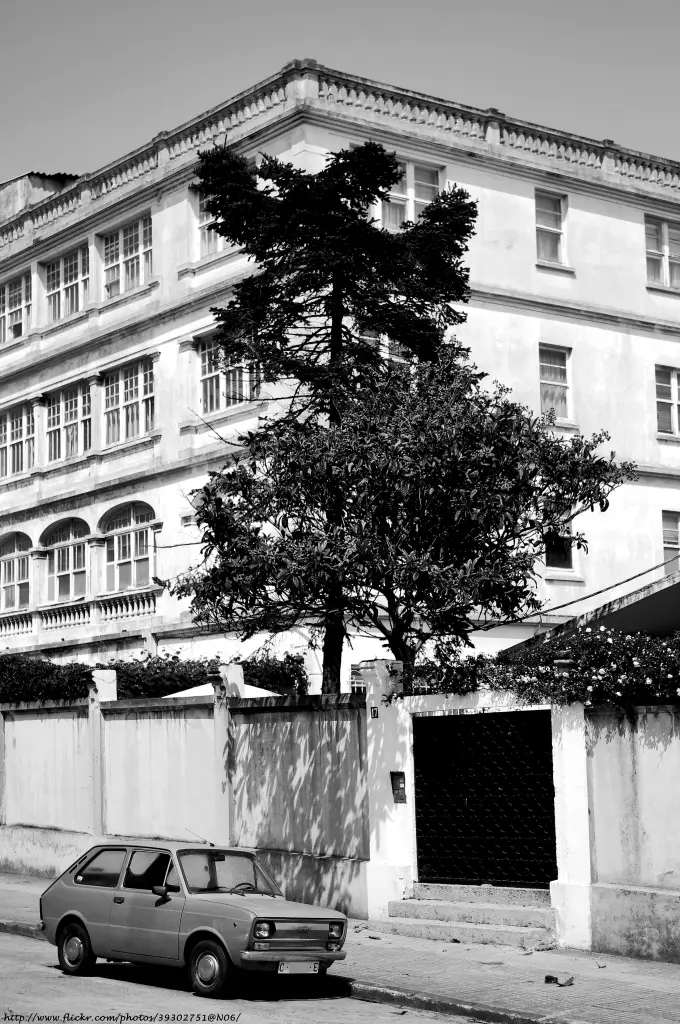
The Fiat 133 was a small rear-engined car sold under the Fiat name in export markets where the SEAT brand was unknown. It was designed and built by SEAT in Spain, first shown at the Barcelona Motor Show in May 1974, and used the chassis and engine of the by then defunct Fiat and SEAT 850 under new bodywork styled after the smaller Fiat 126. Spanish production ran to 1979, with exports continuing until 1982.
Fiat 133 at a glance
| Also called | SEAT 133 |
|---|---|
| Built in Spain | 1974–1979, exports to 1982 |
| Body | two-door saloon |
| Layout | rear engine, rear-wheel drive |
| Running gear | from the Fiat and SEAT 850 |
| Compression ratio | 8:1 |
| Fuel | 85 octane petrol |
| Built in Argentina | 1977–1982, about 15,821 cars |
| Assembled in Egypt | from 1977, CKD kits from Barcelona |
| Spanish output | up to 200,000 by 1979 |
| Exported | about 127,000 cars |
| Export share | 36.7 per cent in 1976 |
The English Wikipedia page covers the SEAT 133, the Spanish-built car that was sold as the Fiat 133 in export markets.
History of the Fiat 133
A cheap car to develop and build
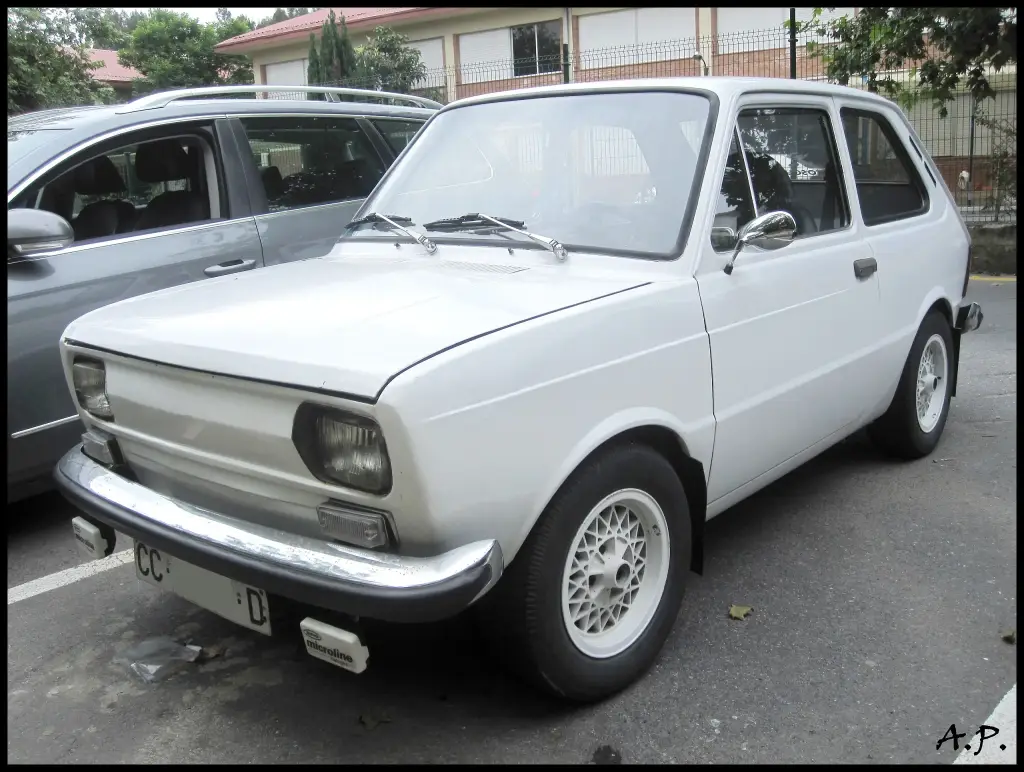
SEAT had signed an agreement of collaboration with Fiat in the 1950s, and the 133 was developed in-house in Spain. The design brief required a car that would be cheap both to develop and to build, so the final product inherited most of its components from the SEAT 850 or the closely related Fiat 850. The new body followed the style of the smaller Fiat 126. The car was first exhibited at the Barcelona Motor Show in May 1974.
The 133 effectively replaced the SEAT 850 and the SEAT 600, both of which had been produced in considerable numbers, with around 800,000 of the 600 built almost exclusively for the domestic market by 1974. Its purpose was also to open new export markets and make up for the loss of Spanish sales expected when restrictions on car imports disappeared during the 1970s.
The Spanish market
At first the car was mainly sold in Spain, where it did not enjoy great success because it suffered from frequent overheating problems. A notable feature of the period was its compression ratio of only 8:1, which allowed it to run on 85 octane petrol. That was still appropriate in Spain, but elsewhere in western Europe even regular grades by then generally guaranteed a higher minimum octane rating.
Like the 850, the 133 was a rear-wheel-drive, rear-engined car, a layout already being supplanted by front-engined, front-wheel-drive hatchbacks such as the Renault 5 and Fiat’s own 127. The rear engine left only a small well for parcels behind the back seats, with more room for luggage in the front boot. Up to 200,000 SEAT 133s had been produced in Spain by 1979.
Export as the Fiat 133
The car was sold as the Fiat 133 in certain export markets where the SEAT brand was unknown, and around 127,000 units were exported, mostly under the Fiat name. It reached Germany from autumn 1974, where it found some success among rear-wheel-drive loyalists in the mid-1970s, and Britain from June 1975. Neither country had a SEAT dealership network at the time, so the cars were branded as Fiat 133s and marketed alongside the Fiat 126 and 127. Export rates rose above those of most of the car’s predecessors and the rest of the SEAT range, reaching 36.7 per cent in 1976.
Argentina and Egypt
From 1977 to 1980 the Fiat Argentine subsidiary built the car, also under the Fiat name, and Sevel Argentina continued from 1981 to 1982. Around 15,821 Fiat 133s were made at the Fiat and Sevel plant at Córdoba between 1977 and 1982. A sporty version called the Fiat 133 T was developed by Industria Argentina de Vehículos de Avanzada, or IAVA, and built between 1979 and 1980.
In April 1977 it was announced that Egypt was about to become the world’s 32nd car-producing country, after an agreement to ship CKD kits from SEAT’s Barcelona plant to the Helwan premises of the Nasr Automotive Manufacturing Company, for assembly to supply the Egyptian market and for export to Iraq. The 133 also became popular in the Finnish low-budget motorsport called jokamiesluokka, a local folk racing series, where at one point more than 30 per cent of the drivers chose to drive Fiat 133s.
Design and features
- Fiat 850 running gear: a proven chassis and engine kept development and build costs low.
- Fiat 126 styling: new bodywork in the manner of the smaller model.
- Low-octane engine: an 8:1 compression ratio allowed 85 octane petrol.
- Rear engine layout: a small parcel well behind the rear seats and luggage space in the front boot.
- Export identity: sold as a Fiat wherever SEAT had no dealer network.
Fiat 133 versions
- SEAT 133: the Spanish-market car, built from 1974 to 1979.
- Fiat 133: export version for Germany, Britain and other markets without SEAT dealers.
- Fiat 133 T: sporty Argentine version by IAVA, built in 1979–1980.
- Argentine Fiat 133: assembled at Córdoba from 1977 to 1982.
- Egyptian assembly: CKD kits assembled at Helwan from 1977.
The 133 was a successor to the rear-engined Fiat 850 and was sold alongside the Fiat 126 and Fiat 127. More cars are in the Fiat collection.
Sources
- SEAT 133, English Wikipedia: design, Spanish production, export markets, Argentina and Egypt, motorsport