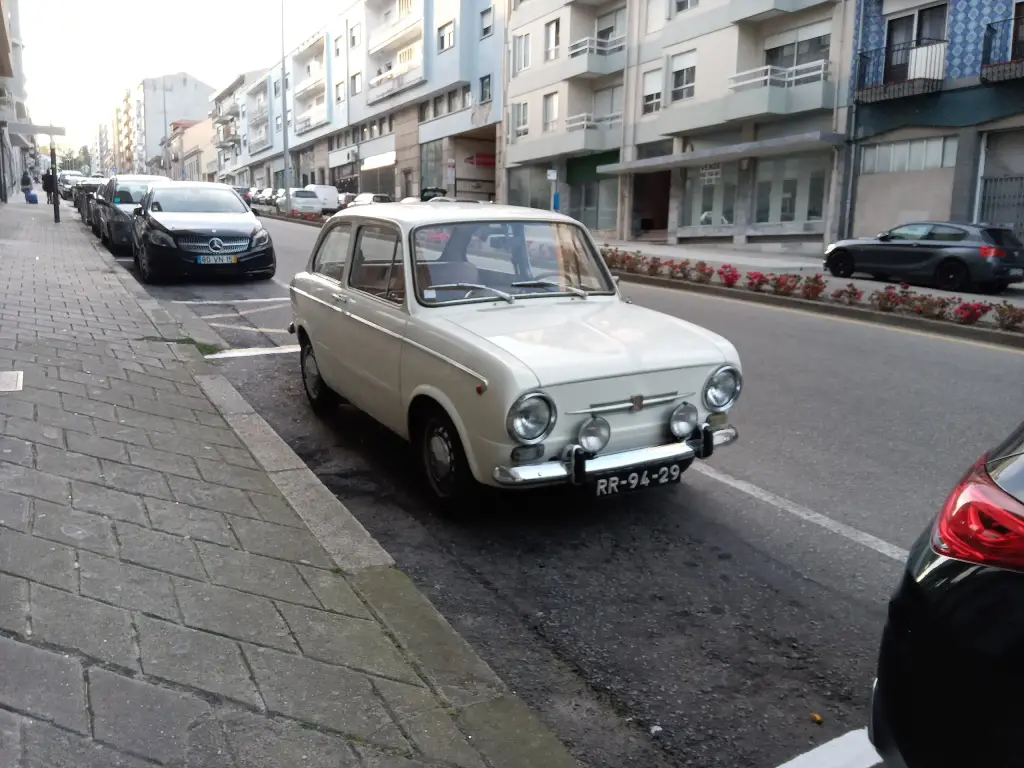
The Fiat 850, internally the Tipo 100G, was a small rear-engined, rear-wheel-drive car built by Fiat from 1964 to 1973. Its design evolved from the Fiat 600, which it was originally meant to replace, and it grew into a family of saloons, coupés, spiders and estates of which nearly 2.3 million were sold worldwide.
Fiat 850 at a glance
| Production | 1964–1973 |
|---|---|
| Internal name | Tipo 100G |
| Layout | rear engine, rear-wheel drive |
| Engine | 843 cc four-cylinder |
| Power | 34 hp (normale), 37 hp (super), 47 hp (Special and Coupé) |
| Top speed | about 125 km/h (saloon) |
| Body | saloon, coupé, spider, estate, van |
| US engine | 817 cc high-compression |
| Units sold | nearly 2.3 million, 140,000 of them Spiders |
| Replaced by | Fiat 127 |
History of the Fiat 850
An evolution of the 600
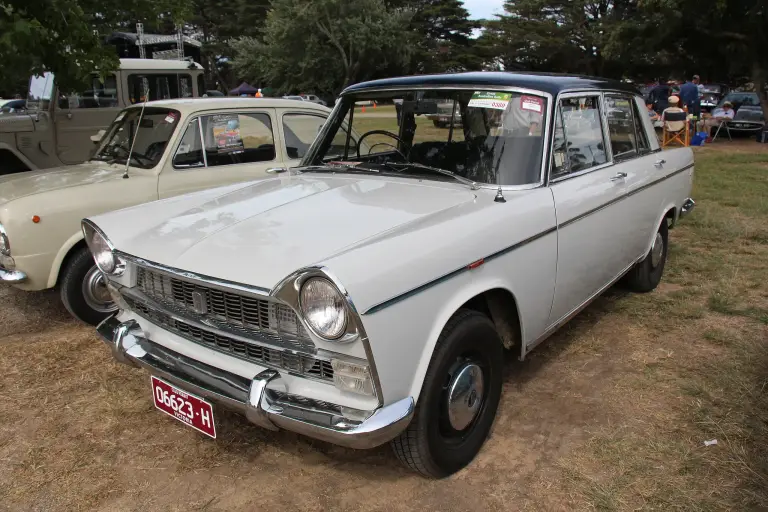
The 850 was conceived as the successor to the Fiat 600, whose development project had been Project 100, but the 600 stayed in production for almost the whole life of the 850, which was larger and more expensive. The engine was based on the 600 unit with capacity raised to 843 cc. Two versions were offered: the normale with 34 hp and engine code 100G.000, and the super with 37 hp and code 100G.002. Maximum speed was approximately 125 km/h. The car was not a great technical step forward, but it had a certain charm with its large round headlamps and short tail, under which the engine sat.
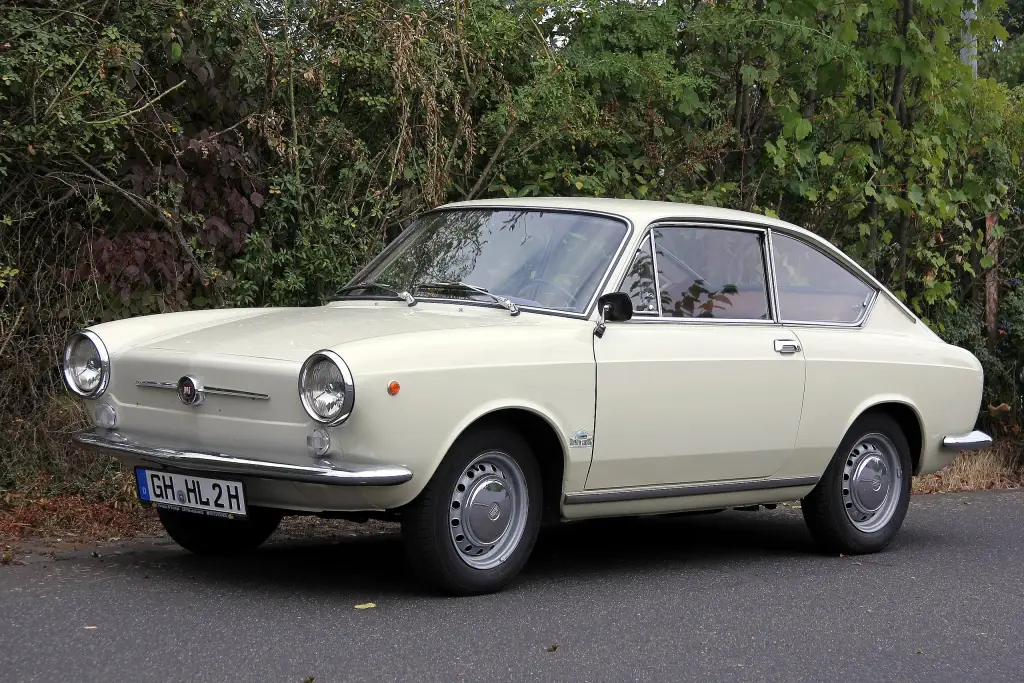
The 850 Special
Launched in 1968, the Special was a revised saloon that shared the 47 hp engine of the 850 Coupé, with front disc brakes, a sports steering wheel and improved trim. With 25 per cent more power and discs behind 13-inch wheels it was a small-scale sports saloon. Its engine code was 100GB.000.
Coupé and Spider
The Coupé appeared at the 1965 Geneva Motor Show with the 843 cc engine and 47 hp, reaching 135 km/h. At the same time Fiat introduced the two-seat Spider, with the same engine tuned to 49 hp and a top speed of 145 km/h; its body was designed and built by Bertone at Grugliasco, near Turin, with a folding fabric roof that stowed under a rear metal panel, recessed headlamps behind plexiglass covers angled to match the wings, and dihedral side panels recalling Bertone’s 1963 Chevrolet Testudo. Both sporting models received sports seats, a sports steering wheel, a round speedometer, disc front brakes and drums at the rear. In the United States the saloon, Coupé and Spider were sold with a reduced 817 cc engine to stay under emission rules that applied only to engines of 50 cubic inches and above, with compression raised from 8.8 to 9.2 to 1 and premium fuel required. In 1968 both were revised with a 903 cc engine of 52 hp as the Sport Coupé and Sport Spider; the Spider kept its body but gained a restyled front with the lamps moved forward and the glass covers removed, which gave it a frog-eye look.
Familiare, Adria and the end
The Familiare was a boxier and slightly larger successor to the Fiat 600 Multipla, with a squared-off rear and a hatch, seating seven in three rows. It stayed in production until 1976, long after the saloon had been replaced by the 127, and in 1976 the Fiat 900T took over most of its body panels with the 903 cc engine of the 127, still behind the rear axle; the 900 series continued, renamed 900E in 1980 and badged as the Fiat Amigo for camper vans in Britain, until 1985. The 850 Super was also built under licence by NSU-Fiat in Heilbronn and sold as the Neckar Adria; 6,619 were assembled between June 1965 and September 1969, until falling tariffs inside the European Economic Community removed the reason to assemble Fiats in Germany. Saloon and Coupé production ended in 1971 and Spider production in 1973; SEAT continued to build the 850 in Spain, also as a four-door. The Fiat 127 replaced it in 1971.
Design and features
- Rear engine: an 843 cc four derived from the Fiat 600 unit.
- Several bodies: saloon, Special, Coupé, Bertone Spider, Familiare and a van.
- Bertone Spider: recessed headlamps with plexiglass covers and a hidden folding roof.
- US 817 cc engine: a smaller, higher-compression unit to meet American emissions rules.
- Long-lived Familiare: a seven-seat estate built until 1976, then developed into the 900T.
Fiat 850 versions
- 850 normale and super: 34 and 37 hp saloons.
- 850 Special (1968): 47 hp, front disc brakes and sports trim.
- 850 Coupé (1965): 47 hp and 135 km/h.
- 850 Spider: Bertone two-seater, 49 hp and 145 km/h.
- 850 Familiare: seven-seat estate, later developed into the 900T.
- Sport Coupé and Sport Spider (1968): 903 cc and 52 hp.
The 850 grew out of the Fiat 600 and was replaced by the Fiat 127; its estate line continued as the Fiat 900T. More cars are in the Fiat collection.
Sources
- Fiat 850, English Wikipedia: versions, engines, coupé and Spider, Familiare, Adria and production figures