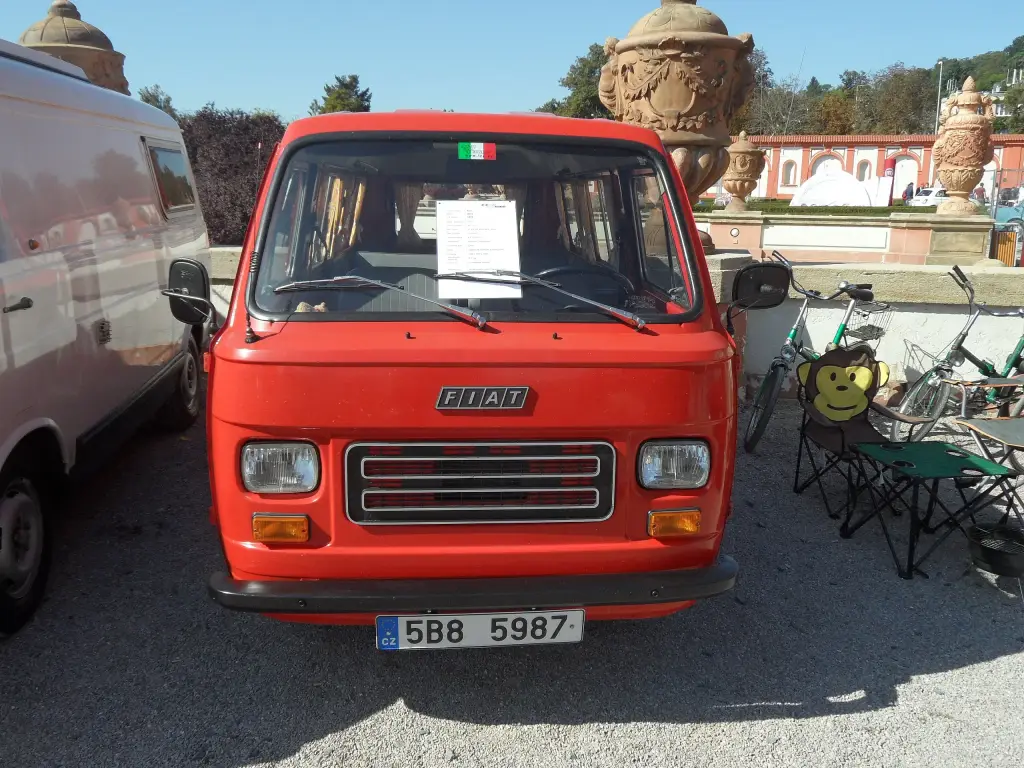
The Fiat 900T was a small van produced by Fiat between 1976 and 1985, replacing the similar Fiat 850T. It was first shown in November 1976 at the Turin show, and in the UK it was sold as the Fiat Citivan. While it used many of the 850T’s body panels, the roof was taller and the front was redesigned.
Fiat 900T at a glance
| Production | 1976–1985 |
|---|---|
| Predecessor | Fiat 850T |
| Also called | Fiat Citivan (UK) |
| Layout | rear-mounted engine, rear-wheel drive |
| Engine | 903 cc four-cylinder petrol |
| Power | 35 bhp (26 kW) at 4,500 rpm |
| Torque | 61 N·m at 3,300 rpm |
| Load volume | 2,650 litres in the standard van |
| Turning circle | 9 metres |
| Electric version | 900T elettrico, from October 1979 |
| Updated model | 900E from 1980 |
History of the Fiat 900T
Design
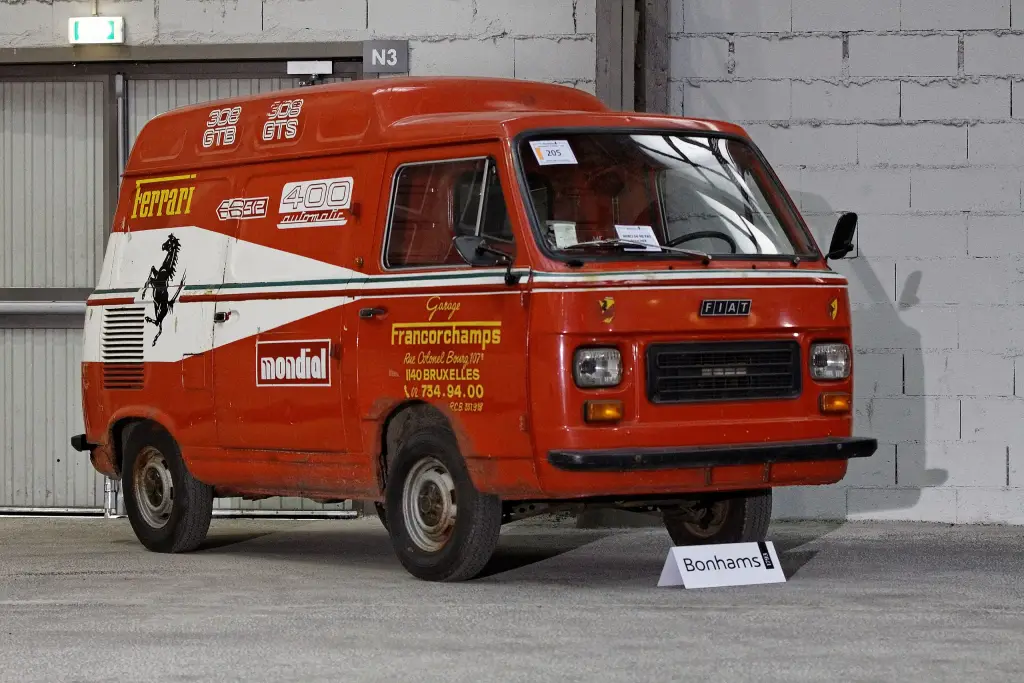
The 900T kept many body panels of the 850T but had a taller roof, which also allowed a front windscreen 6 cm taller, and a new front with rectangular headlamps and a new grille. It rode on 12-inch wheels borrowed from the Fiat 126 with wider rims, and the bumpers and interior were redesigned, the cabin taking the steering wheel of the contemporary Fiat 127 Special. The van came in several forms: panel van, high-roof panel van, promiscuo (a glazed van with rear seating) and a seven-seat minibus, the Pulmino in Italy. Camper conversions included the Shango, and British buyers could choose the Amigo or the Pandora. The van and the promiscuo could be ordered with a sliding side door or an extra rear door on the driver’s side.
Mechanical details
Power came from a rear-mounted 903 cc four-cylinder petrol engine shared with the Fiat 127, producing 35 bhp at 4,500 rpm and 61 N·m at 3,300 rpm. The 850T’s dynamo gave way to an alternator. The van had a small turning circle of 9 metres, drum brakes on all four wheels when new, and a luggage compartment of 2,650 litres.
900T elettrico
In October 1979 Fiat introduced an electric version, developed with ENEL, with a 135 Ah battery. The batteries sat under the floor between the axles and could be pulled out easily for charging. With its 14 kW motor the electric 900T reached 60 km/h, with a range of 55 km in city use or 80 km at a steady 50 km/h. Cargo volume matched the petrol van, but the load floor was completely flat, and the fully laden weight was 1,857 kg. A year later an improved version appeared with, among other changes, an onboard charging unit.
900E and the end
In 1980 the 900T was updated and renamed the 900E: wheels came from the Fiat 128, the black bumpers were larger and squarer, the tail lights were rectangular units from the Fiat 238 and 242, front disc brakes were fitted and the interior was revised with parts from the second-series Fiat 127. The 900E minibus was dropped without a direct successor in 1981, and the cargo versions stayed in production until 1986, by which time Japanese microvans had taken over the segment. Fiat did not build pickups at the time, so coachbuilders such as Coriasco and Fissore bought vans and converted them into pickups and campers, cutting away the rear body and adding panels before respraying the car in its original colour.
Zastava 435, 850A and 900A
In 1977 Zastava redesigned the Zastava 430 on the basis of the 900T, fitting an IPM 30 MGV carburettor that raised the 767 cc engine from 25 to 30 hp, and renamed it the Zastava 435. Bodies included the 435K minivan, 435F panel van, 435FP panel van with windows, 435T pickup, 435FM police vehicle and 435S ambulance. In 1980 the 435 received a coolant temperature gauge and new tail lights, and took the 847 cc 32 hp engine of the new Zastava 850, becoming the Zastava 850A; in 1985 it gained the 903 cc 45 hp unit of the Yugo 45 and the name Zastava 900A, joined by a better-equipped 900AL. Production of all variants ended in 1990.
Design and features
- Taller roof: more headroom and a windscreen 6 cm taller than the 850T’s.
- Shared engine: the 903 cc unit of the Fiat 127, with an alternator instead of a dynamo.
- Many bodies: panel van, high-roof van, promiscuo and the seven-seat Pulmino.
- Electric option: the 1979 900T elettrico with 55 to 80 km of range.
- Coachbuilt pickups: Coriasco and Fissore converted vans into pickups and campers.
Fiat 900T versions
- 900T panel van: the basic cargo version with 2,650 litres of load space.
- 900T Pulmino: seven-seat minibus.
- Promiscuo: glazed van with rear seating.
- 900T elettrico: electric van of 1979 with a 14 kW motor.
- 900E: 1980 update with front disc brakes and 128 wheels.
- Zastava 435, 850A and 900A: Yugoslav derivatives built until 1990.
The 900T replaced the Fiat 850 family and used the engine of the Fiat 127. The larger van of the range was the Fiat 238, and more vehicles are in the Fiat collection.
Sources
- Fiat 900T, English Wikipedia: design, engine, body styles, electric version, 900E and Zastava derivatives