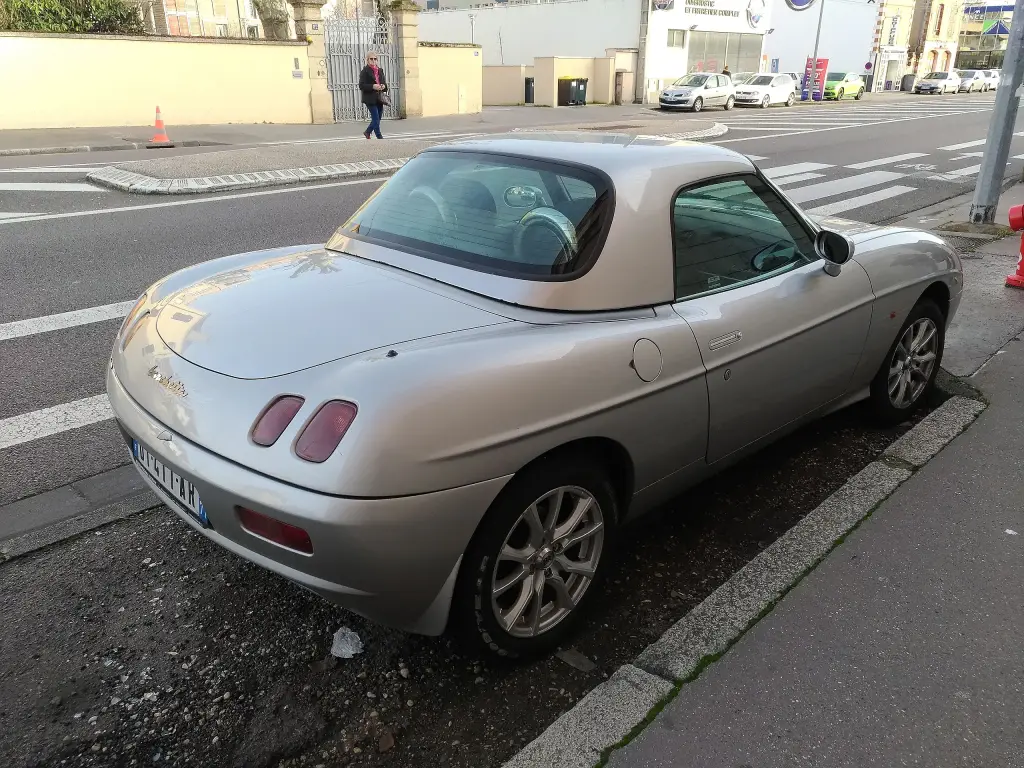
The Fiat Barchetta, Type 183, was a two-seat roadster produced by Fiat from 1995 to 2005. The name means little boat in Italian and also describes an open sports body style; the car was based on the chassis of the Mark 1 Fiat Punto with a shortened wheelbase.
Fiat Barchetta at a glance
| Production | 1995–2005 |
|---|---|
| Internal type | 183 |
| Project name | Tipo B Spider 176 |
| Body | two-seat roadster |
| Chassis | Fiat Punto Mark 1, shortened wheelbase |
| Engine | 1,747 cc DOHC four with variable valve timing |
| Power | 131 PS at 6,300 rpm |
| Torque | 164 Nm at 4,300 rpm |
| Acceleration | 0–100 km/h in 8.9 s |
| Top speed | 200 km/h |
| Kerb weight | 1,056 kg without air conditioning |
| Units built | about 57,800 |
History of the Fiat Barchetta
Design and development
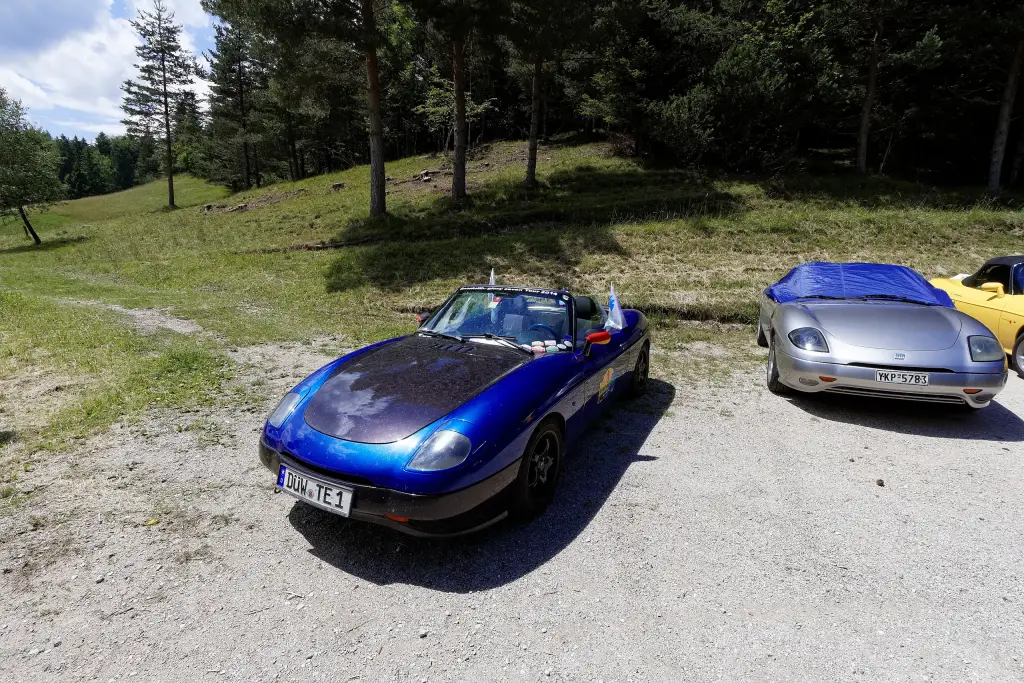
The Barchetta was developed between 1990 and 1994 under the project name Tipo B Spider 176. It was designed by Andreas Zapatinas and Alessandro Cavazza under the supervision of Peter Barrett Davis and other designers at the Centro Stile Fiat, and the prototyping was carried out by Stola. Series production began in January 1995.
Mechanical layout
The car used the chassis of the Mark 1 Fiat Punto, shortened for the two-seat body. Its engine was a 1,747 cc double-overhead-camshaft four with variable valve timing, producing 131 PS at 6,300 rpm and 164 Nm of torque at 4,300 rpm. Without air conditioning the car weighed 1,056 kg, reached 100 km/h in 8.9 seconds and had a top speed of 200 km/h.
Trim and the 2003 revision
The Barchetta came in several trim levels offering different features: diamond cross-stitch trim, patterned red leather instead of the standard black leather or fabric seats, alloy wheels instead of steel wheels, or fog lamps as an option. One of the biggest visible changes came with the addition of a third brake light, first used by Fiat on the Lido and Riviera in 2000 and then across the range. In August 2003, ahead of a relaunch the following year, the car was revised inside and out, most notably with a new front spoiler and rear bumper, while engine revisions reduced torque to 158 Nm.
Production
Bodies were welded at ILCAS in Sparone Canavese and final assembly was carried out in Chivasso by the coachbuilder Maggiora. After Maggiora went bankrupt in May 2002, Fiat moved Barchetta production to its Mirafiori plant and restarted it two years later. Production stopped in June 2005 after about 57,800 cars. The Barchetta was built in left-hand drive only, even though it was marketed and sold in two right-hand-drive markets, the United Kingdom and Japan.
Design and features
- Punto underpinnings: the Mark 1 chassis with a shortened wheelbase.
- Variable valve timing: a 1,747 cc twin-cam four of 131 PS.
- Light weight: 1,056 kg without air conditioning, with 200 km/h available.
- Left-hand drive only: sold in Britain and Japan despite the layout.
Fiat Barchetta versions
- Barchetta (1995): the original roadster with 131 PS and 164 Nm.
- Trim levels: leather or fabric interiors, alloy wheels and optional fog lamps.
- 2003 revision: new spoiler and bumper, torque reduced to 158 Nm.
The Barchetta shared its floorpan with the Fiat Punto and was sold alongside the Fiat Coupé. More cars are in the Fiat collection.
Sources
- Fiat Barchetta, English Wikipedia: development, engine, performance, trim and production