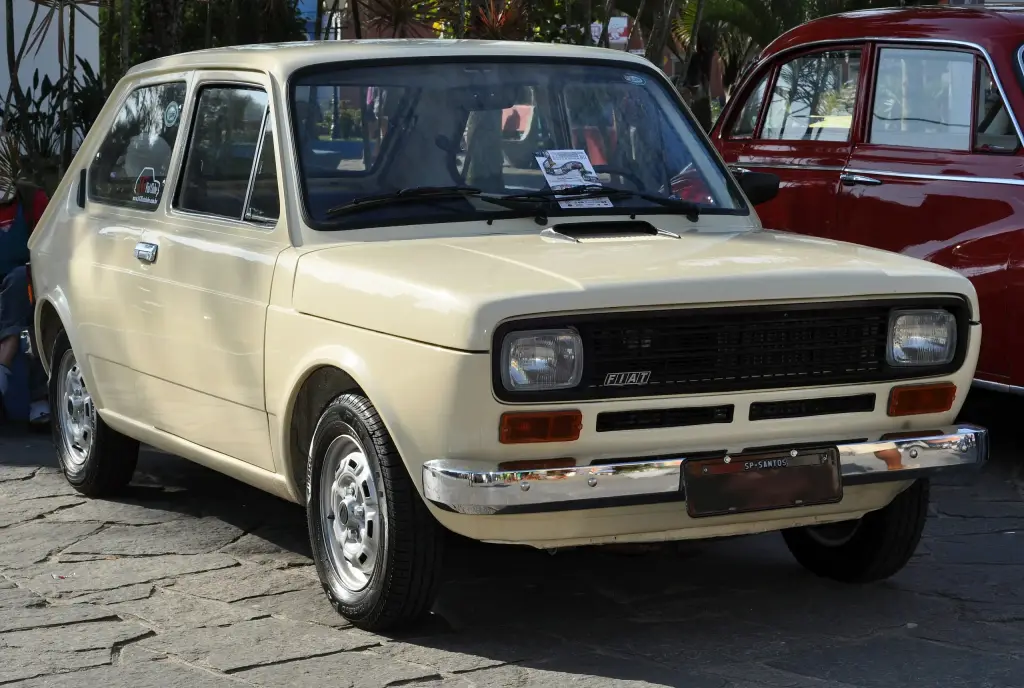
The Fiat 147 was a three-door hatchback built by Fiat in the Brazilian state of Minas Gerais from the autumn of 1976 until 1987, when the Fiat Uno replaced it. It was the Brazilian variant of the Fiat 127, also assembled in Argentina until 1996 and in Colombia, Uruguay and Venezuela, and it was the first modern car to run on ethanol instead of petrol.
Fiat 147 at a glance
| Production | 1976–1987 (Brazil) |
|---|---|
| Also built in | Argentina, Colombia, Uruguay, Venezuela |
| Class | subcompact hatchback |
| Body | three-door hatchback, van, pick-up, estate |
| Engine | 1,049 cc Fiasa four-cylinder |
| Other engines | 1.3-litre petrol or ethanol, 1,301 cc diesel |
| Power | 45 to 72 PS depending on version |
| Fuel | petrol and ethanol (E100) |
| Compression ratio | 7.2 to 1 |
| Replaced by | Fiat Uno |
History of the Fiat 147
Why Brazil needed a larger engine
After the Second World War European fuels had progressively higher octane ratings and European compression ratios rose with them. The cheaper yellow-grade petrol sold widely in Brazil in 1976 had an octane rating of just 73, so the Brazilian car needed a low compression ratio of 7.2 to 1. To keep adequate power, Fiat launched the 147 with a 1,049 cc engine with a five-bearing crankshaft instead of the 903 cc three-bearing unit still standard in the 127 from Turin. Press reports of the time found the larger engine smoother, quieter and stronger in torque. The first 147 was offered in a single model, the 147 L. The 1.05-litre Fiasa engine and some revised bodyshell elements, most notably the rear three-quarter panels, later went to the Series 2 of the 127 itself when it was released in Europe a year later.
Ethanol and a wider range
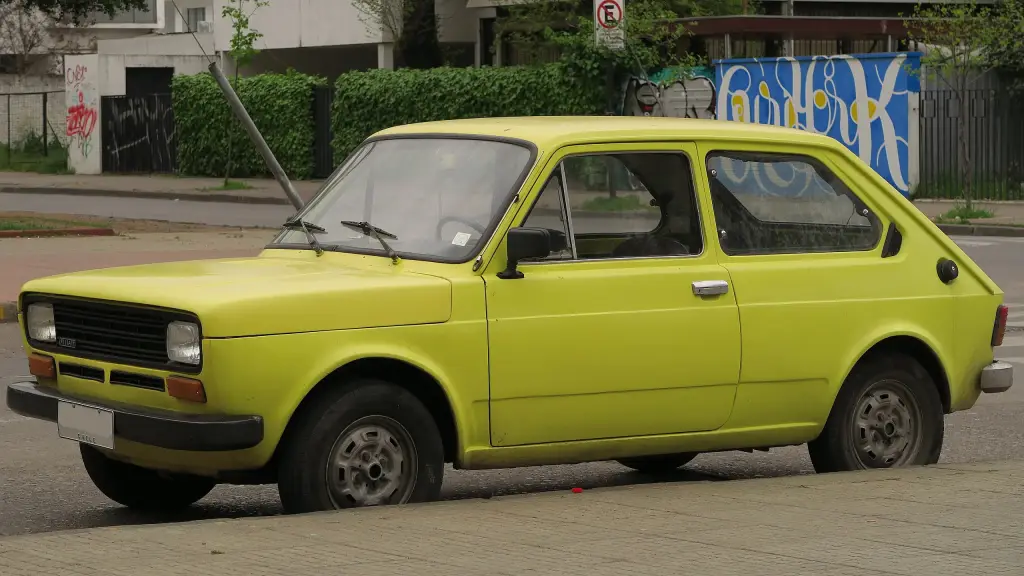
In November 1977 the line was divided into the 147, 147 L and 147 GL, since Fiat do Brasil introduced its changes at the Salão do Automóvel each November. In 1978 came the Furgoneta van, with a solid division behind the front seats and all rear windows panelled, at first with the 1050 engine and later with a 1.3-litre alcohol unit. The 147 was the first modern car to use ethanol (E100) instead of petrol: performance rose slightly and consumption was 30 per cent higher, but alcohol cost a quarter of the price of petrol after the 1973 oil crisis. The version was nicknamed cachacinha, little cachaça, for the smell of the drink. In November 1978 Fiat added the luxurious GLS with a 63 PS 1.3-litre engine, which also went into the Rallye with 72 PS. The GLS gave way to the Top for 1982, the Rallye to the Racing and later the TR, and the lower-tuned 1.3 was used in the 147 CLS, Oggi CS and Panorama CL.
Panorama, diesel and facelifts
The Panorama estate arrived in April 1980 with 1.05 or 1.3-litre petrol engines. A 45 PS 1,301 cc diesel derived from the 1,049 cc unit was announced in August 1980 and entered production in early 1981, but it was marketed only abroad because private owners in Brazil could not register diesel cars; with Brazilian bodywork it was exported to Europe as a 127 from 1981 and was added to the Panorama in 1982. The earliest cars had a front end like the European 127, later replaced by the reverse-rake Europa front and then, in 1983, by a front that matched the new Uno. Newer versions took the extra Spazio label, which in Argentina later replaced the 147 badge, and engine outputs rose a few horsepower with the facelift. In Venezuela the Spazio was sold only with the 72 PS engine of the Brazilian TR. Production of the 147 C continued into 1987 after the Uno had effectively replaced it, though only 256 cars were built that year.
Derivatives and Argentina
The 147 spawned a saloon, the Fiat Oggi, which appeared in the spring of 1983 just after the second facelift, and the Panorama estate, plus the Fiorino van and pick-up. The original 147 Pickup of late 1978 used the regular 147 floorpan, but in 1981 it moved to the longer Panorama chassis. The Panorama with diesel was mostly for Europe, and it was also assembled in Uruguay as the Fiat 148. Argentine production began in January 1982 under Sevel, which had announced the car half a year earlier, with the 903 cc overhead-valve engine of the earlier Fiat 133 or the Brazilian 1,049 cc unit. The first line consisted of the 147 C with the smaller engine and the 147 CL with the larger; later Argentine cars were named Spazio, Brío and Vivace and were built until 1996.
Design and features
- Low-compression 1,049 cc engine: a five-bearing crankshaft and 7.2 to 1 compression suited to Brazilian fuel.
- Ethanol from the factory: the first modern car sold running on E100.
- Fiasa engine: the 1.05-litre unit later appeared in the European 127 Series 2.
- Several body styles: hatchback, van, pick-up and the Panorama estate.
- Export-only diesel: a 1,301 cc diesel never sold to private buyers in Brazil.
Fiat 147 versions
- 147 L: the first and only model at launch in 1976.
- 147 GL and GLS: the better equipped versions, the GLS with a 63 PS 1.3.
- 147 Rallye and Racing: sporting versions with 72 PS, later replaced by the TR.
- Panorama: the estate from 1980, with petrol or diesel engines.
- Furgoneta: a van with panelled rear windows from 1978.
- Oggi: the saloon derivative of 1983.
The 147 was the Brazilian form of the Fiat 127, and it was replaced by the Fiat Uno. Its saloon derivative is the Fiat Oggi. More cars are in the Fiat collection.
Sources
- Fiat 147, English Wikipedia: Brazilian engine choice, ethanol versions, facelifts, derivatives and Argentine production