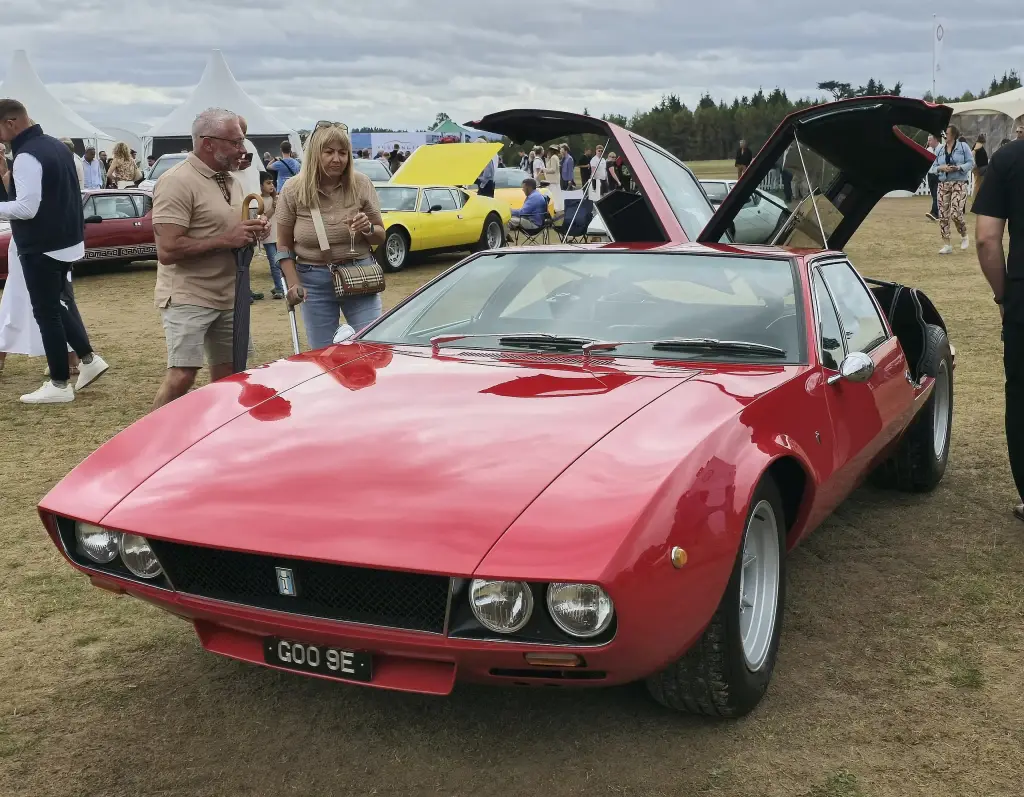
The De Tomaso Mangusta was a mid-engined sports car produced by De Tomaso from 1967 to 1971. It replaced the Vallelunga, was styled by Giorgetto Giugiaro at Ghia and was named after the mongoose, an animal that kills cobras; 401 cars were built before the Pantera took its place.
De Tomaso Mangusta at a glance
| Maker | De Tomaso, Modena |
|---|---|
| Production | 1967–1971 |
| Designer | Giorgetto Giugiaro at Ghia |
| Replaced | De Tomaso Vallelunga |
| Succeeded by | De Tomaso Pantera |
| Engine | Ford 289 or 302 V8, mid-mounted |
| Power | 306 hp (228 kW) in early European cars |
| Gearbox | five-speed ZF transaxle |
| Suspension | independent, all round |
| Brakes | Girling discs |
| Weight distribution | 44/56 front/rear |
| Built | 401 |
Based on one source, the English Wikipedia article on the Mangusta.
History of the De Tomaso Mangusta
From the P70 project
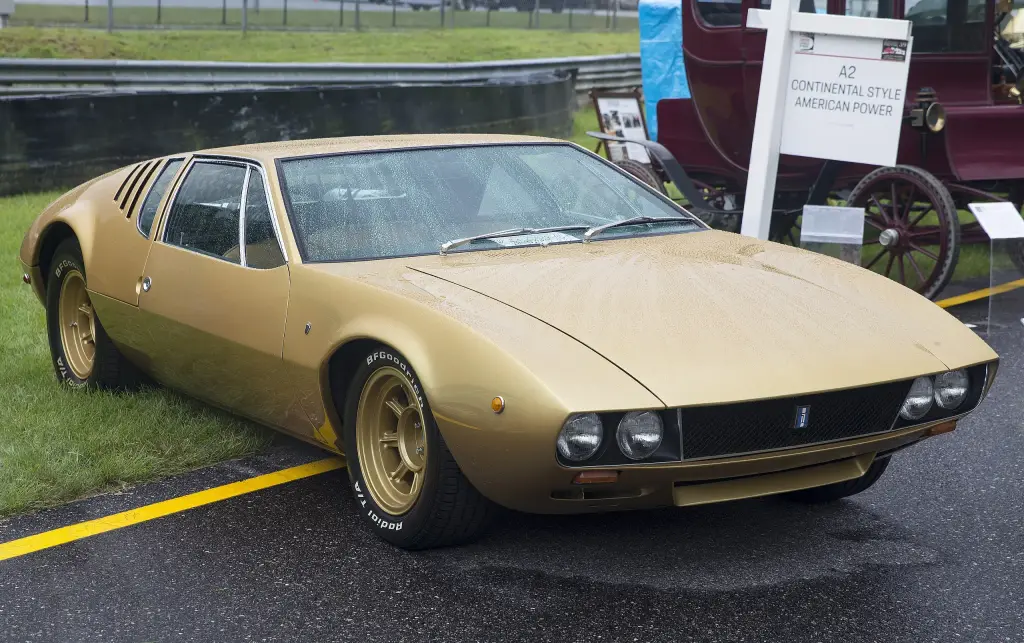
The Mangusta replaced the Vallelunga, on which its chassis was based. Its name is Italian for mongoose, an animal that can kill cobras, and it was rumoured that the car was named in retaliation for a failed deal between Alejandro de Tomaso and Carroll Shelby. At the end of 1964 De Tomaso had offered to help Shelby build a new Can-Am race car, planning a new 7.0-litre racing V8, and Shelby sent a design team headed by Pete Brock to Italy. De Tomaso missed the deadline for five race cars for the 1965 Can-Am season and the project collapsed; Brock’s team finished the car on its own, under the project name P70. The single completed car was shown at the 1965 Turin Motor Show as the Ghia De Tomaso Sport 5000.
Giugiaro’s design
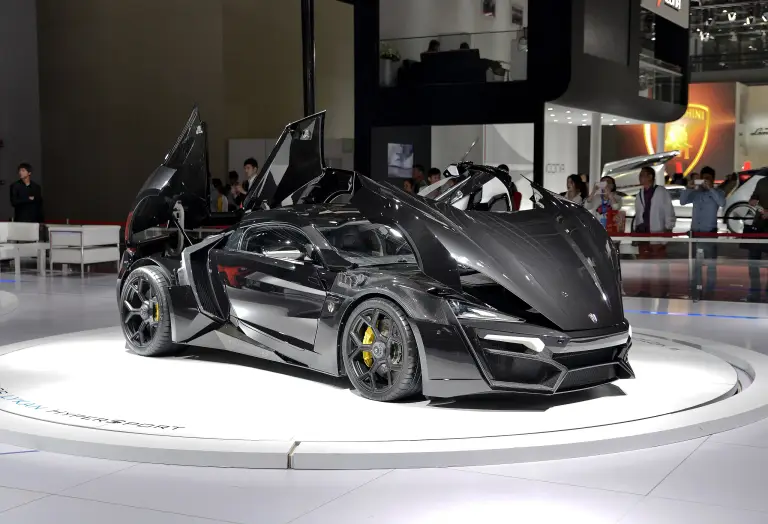
De Tomaso modified the steel backbone chassis of the P70 and used it as the basis of the Mangusta, which was designed by Giorgetto Giugiaro at Ghia. One notable feature is the centre-hinged, two-section bonnet, which opens like gull-wing doors to give access from either side. Production began in 1967, the year De Tomaso bought Ghia. A total of 401 cars was built, about 150 for Europe and the rest for North America.
The American market
The Mangusta was imported into the United States under a federal waiver granted because of its small production numbers, which exempted it from the safety rules then in force. The car had no seat belts, and its headlights sat far lower than federal regulations allowed. When the waiver expired, the front of North American cars was redesigned to take two pop-up headlamps instead of the four round headlamps, operated by a crude lever-and-cable arrangement that reached into the cabin. About 50 cars were built in this form from 1969, but European cars kept the original quad headlamp grille. One car was built as a roadster, and one received a high-performance Chevrolet 327 engine for the General Motors vice-president Bill Mitchell.
Engineering
Early European versions used a mid-mounted 306 hp (228 kW) Ford 289 V8 through a five-speed ZF transaxle, but almost all Mangustas for both Europe and North America used an unmodified 230 hp (170 kW) Ford 302 V8. The car had Girling disc brakes all round, independent suspension, rack-and-pinion steering, air conditioning and power windows at a time when such equipment was unusual. The journalist Paul Frère claimed a top speed of 250 km/h (155 mph). With a 44/56 front/rear weight distribution the Mangusta reportedly suffered from stability problems and poor handling; its cabin was cramped and ground clearance extremely low.
Design and features
- Centre-hinged bonnet: a two-section lid that opens like gull-wing doors.
- Giugiaro styling: a low, mid-engined shape from the Ghia studio.
- Ford V8 power: 289 or 302 cubic inch engines, the latter in most cars.
- Early luxury equipment: air conditioning and power windows as standard.
- American pop-up lights: later US cars with lever-operated headlamps.
De Tomaso Mangusta versions
- Early European cars: 306 hp Ford 289 and quad round headlamps.
- Standard cars: 230 hp Ford 302 for Europe and North America.
- US pop-up headlamp cars (1969): about 50 built after the safety waiver expired.
- Roadster: a single open car.
- Chevrolet-engined car: one built for Bill Mitchell with a 327 V8.
The Mangusta was replaced by the Pantera, and its name returned later on the Biguà project. More De Tomasos are in the De Tomaso collection.
Video: De Tomaso Mangusta: One of a Kind Story
Video on YouTube.
Sources
- De Tomaso Mangusta, English Wikipedia: history, design, engines, US market, specifications, revival