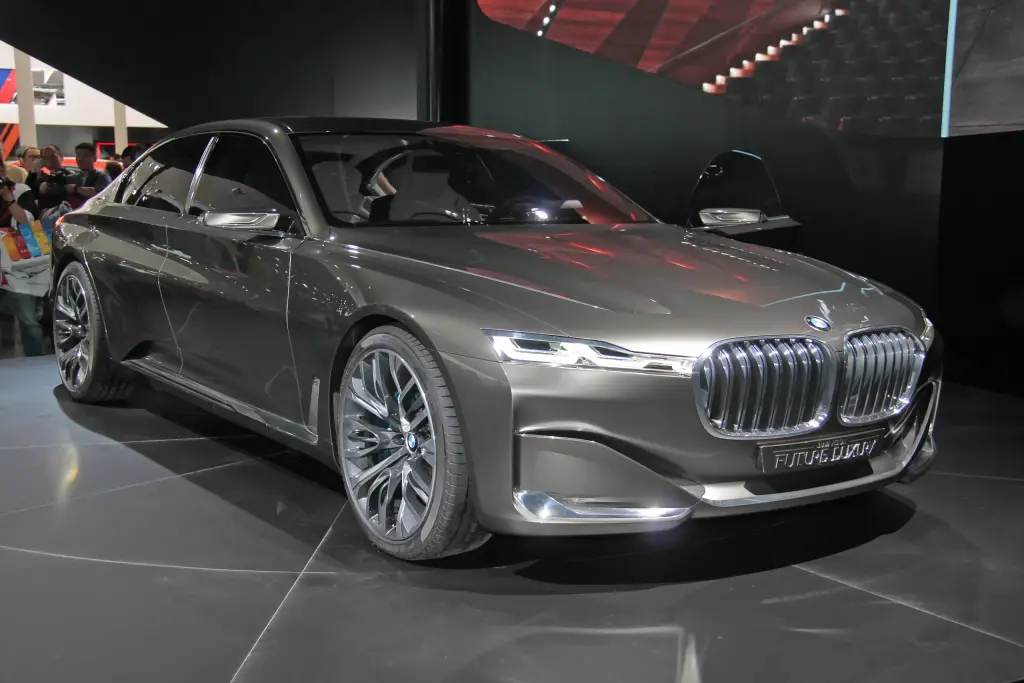
The BMW Vision Future Luxury is a four-seat luxury saloon concept that BMW showed at Auto China 2014 in Beijing. It was a design study, with no powertrain details released, but it carried new lighting technology, a carbon-fibre structure and a head-up display that BMW said would feed into its future models. Autocar India reported that BMW officials confirmed it as a pointer to the next 7 Series, rather than to a larger flagship above it.
BMW Vision Future Luxury at a glance
| Type | Four-seat luxury saloon concept, a design study |
|---|---|
| Shown | Auto China 2014, Beijing (April 2014) |
| Design | Led by Karim Habib, BMW’s head of design |
| Paint | Liquid Platinum Bronze |
| Structure | Carbon-fibre inner structure with aluminium and wood-and-leather layers |
| Lighting | Laserlight headlamps; OLED rear lights, a first for BMW |
| Doors | Pillarless; conventional front doors, rear-hinged coach doors at the back |
| Powertrain | Not disclosed; an eDrive badge hints at a hybrid |
| Previewed | The sixth-generation 7 Series (G11/G12), unveiled on 10 June 2015 |
The design
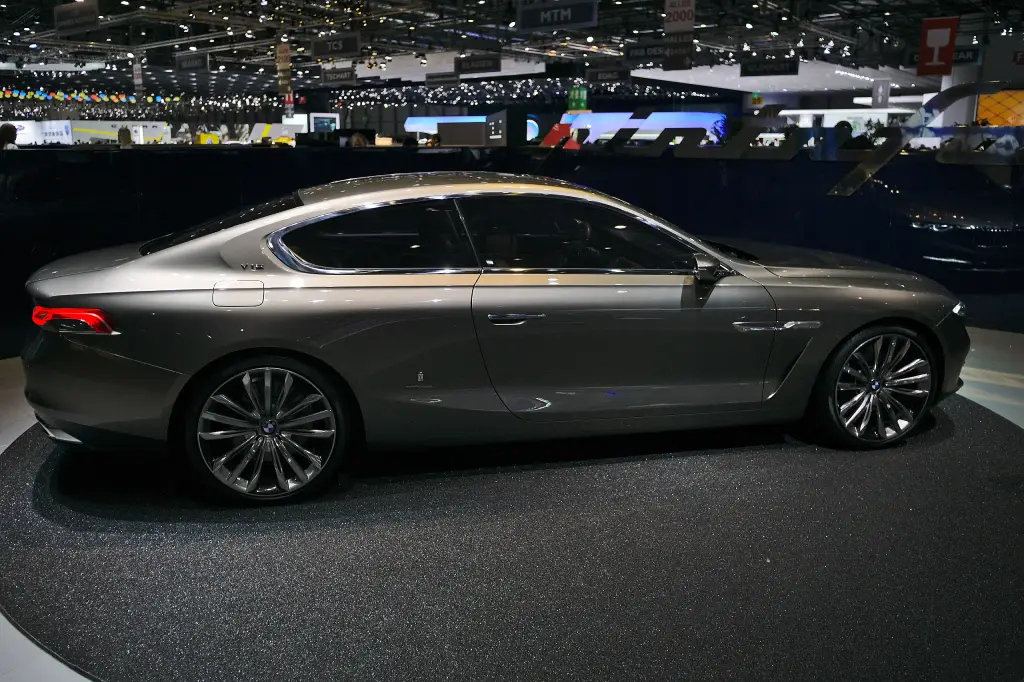
The Vision Future Luxury has a long wheelbase, short overhangs and a hand-sculpted body with a coupé-style roofline and a sloping boot lid. At the front sit an oversized kidney grille and slim headlamps; behind the front wheel arches is BMW’s Air Breather aperture, and the rear side windows keep the Hofmeister kink. Autocar India saw hints of the earlier Gran Lusso Coupé in the shape, but with a more formal look in keeping with the 7 Series’ position. New Atlas described a long, slender silhouette and a narrow “gaze” from the headlamps, but took issue with the aerodynamic slashes in the front bumper and rear vents, which it thought would suit a supercar better than a luxury saloon.
Inside: three screens and a head-up display
Most of the design effort went into the cabin. The inner shell is pared down to its basic functional form, and the structure builds up in layers: a base of carbon fibre, a functional layer of electronics, a load-bearing layer of aluminium and a top layer of wood and leather. GTspirit describes this as the principle of subtractive modelling. The seat frames are integrated into the carbon structure, so a light B-pillar is enough, and the rear is a two-person “comfort zone” with a retractable table, a removable touchscreen tablet and rear-seat displays.
- Driver: a triple display, with instruments in the centre and vehicle and infotainment information on the sides, controlled by voice or by physical controls.
- Vision Head Up Display: overlays information on the real view of the road ahead, highlighting hazards, buildings and traffic signs, a form of augmented reality.
- Passengers: a separate display for the front passenger and one for each rear passenger, all connected to BMW’s online services.
- Materials: Batavia brown and Silk aniline leather, Silk nubuck leather and lime wood, with LED light strands in the trim.
Technology it introduced
The concept was a showcase for lighting as much as for design. Its front used BMW’s new Laserlight technology, and its L-shaped tail lamps, built from many small L-shaped OLEDs, were the first use of OLED lighting on a BMW. Autocar India said BMW hinted that laser headlamps and OLED tail lamps would reach the next 7 Series, with the lasers appearing first on the upcoming i8. The carbon-fibre body sides were read as a hint that the new 7 Series would use lightweight carbon construction like BMW’s i models.
What it became
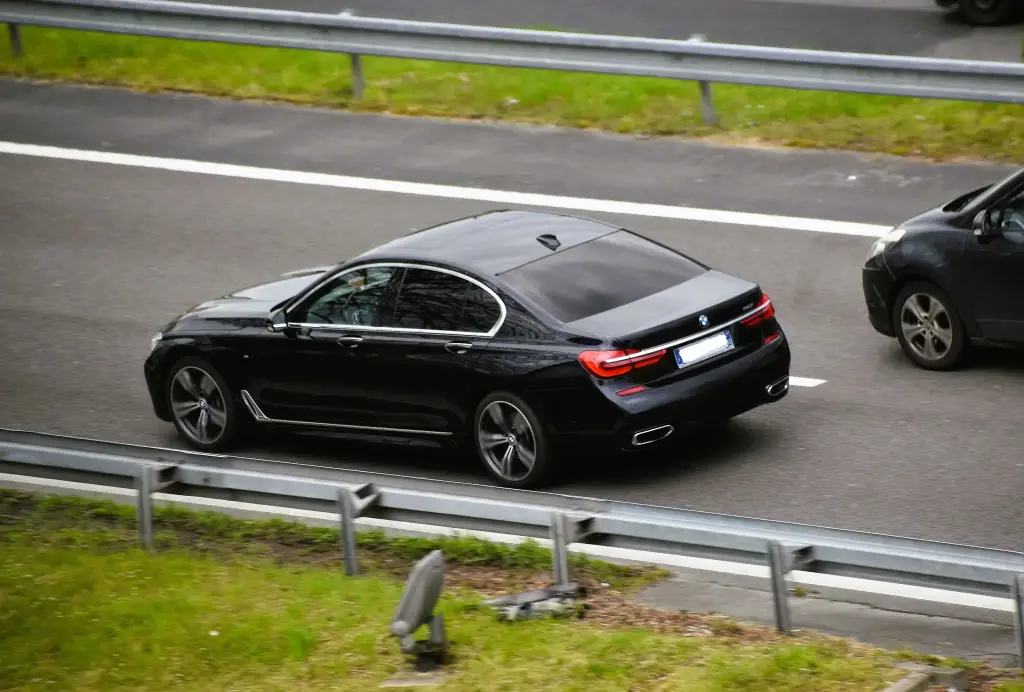
When the concept appeared, some reports speculated that it might preview a 9 Series flagship to rival Bentley and Rolls-Royce. BMW did not use suggestive language in its release, and Autocar India reported that the company confirmed the car as a pointer to the next 7 Series. That car, the G11, was unveiled on 10 June 2015 at BMW’s Munich headquarters and was the first BMW built on the CLAR platform, with a passenger cell of carbon-fibre-reinforced polymer, steel and aluminium. The grille’s history is told in The anatomy of a grille, and more of the marque is in our BMW archive and the Concept Cars collection.
Vision Future Luxury questions and answers
Was the BMW Vision Future Luxury ever built for sale?
No, it was a concept. BMW presented it as a design study and gave no powertrain details, though an eDrive badge suggested a hybrid.
Did it preview the 7 Series?
Yes. Autocar India reported that BMW confirmed it was a pointer to the next 7 Series, the G11 generation that was unveiled in June 2015.
What was new about its lighting?
It used BMW’s new Laserlight at the front and OLED lights at the rear, the first use of OLED lighting on a BMW.
Based on Autocar India, New Atlas, GTspirit and English Wikipedia. The concept’s own performance and powertrain were never published.
Sources
- Beijing 2014: BMW Vision Future Luxury concept revealed, Autocar India (April 2014): design, 7 Series link, lighting
- BMW predicts intriguing future with Vision Future Luxury concept, New Atlas (April 2014): interior, head-up display, eDrive badge
- Auto China 2014: BMW Vision Future Luxury Concept, GTspirit: Laserlight, OLED, paint, layered construction
- BMW 7 Series (G11), English Wikipedia: unveiling date, CLAR platform