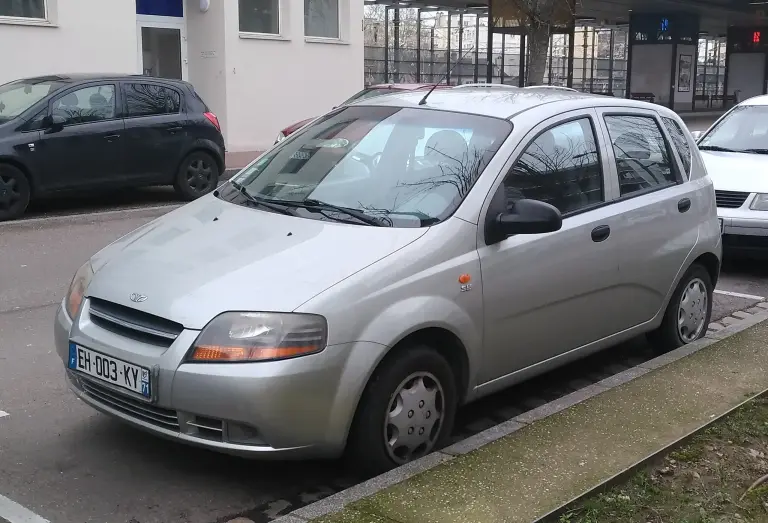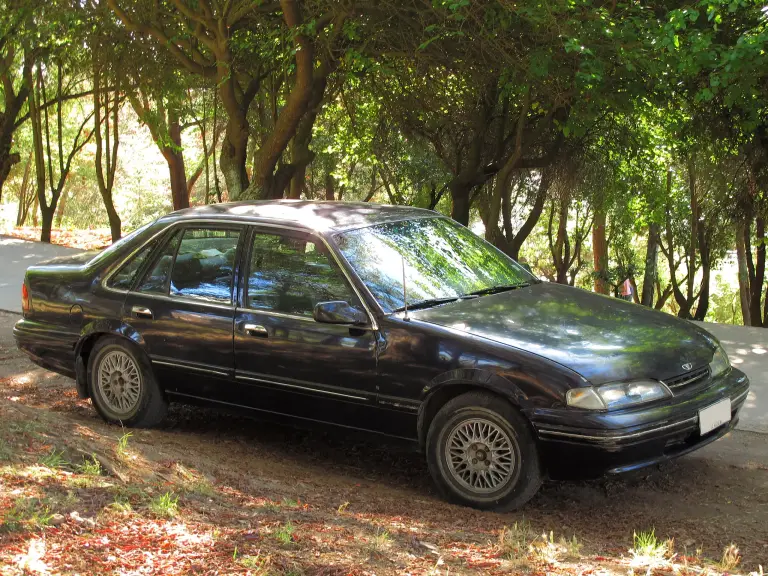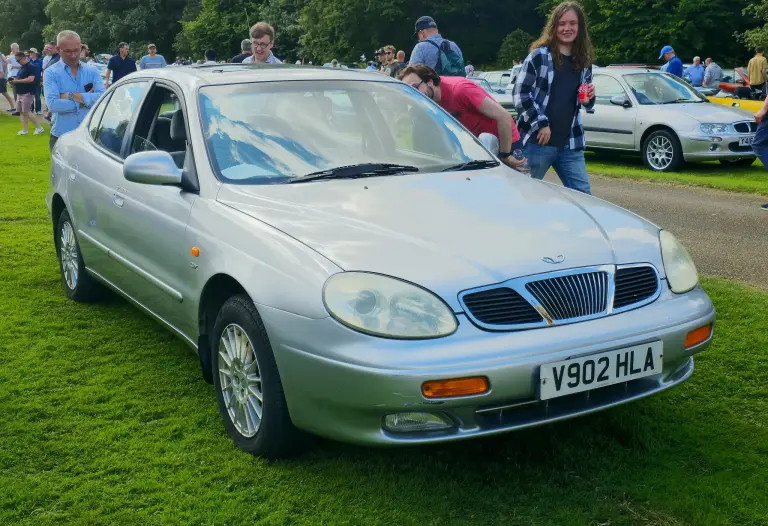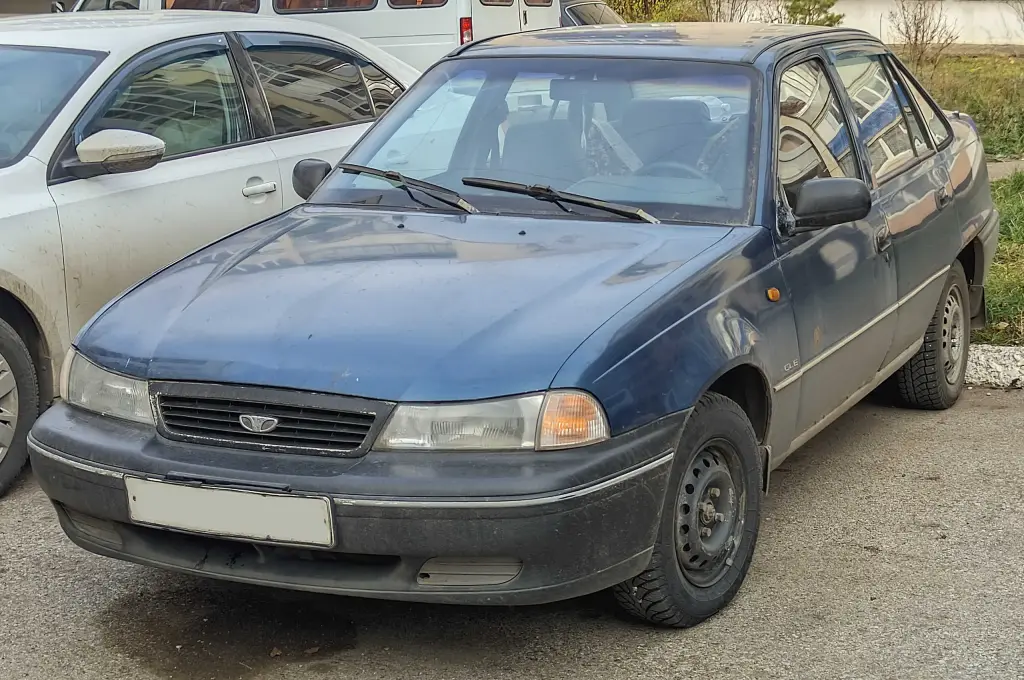
The Daewoo LeMans was Daewoo’s version of the Opel Kadett E, built in Korea from 1986 and sold around the world as the Pontiac LeMans, Passport Optima, Asüna SE and GT, Daewoo Racer, Daewoo 1.5i and Daewoo Fantasy. After two facelifts it became the Daewoo Cielo and then the Daewoo Nexia, and the last Nexias were built in Uzbekistan in 2016.
Daewoo LeMans at a glance
| Maker | Daewoo, South Korea |
|---|---|
| Production | 1986–1994 as LeMans, 1994–1997 as Cielo |
| Base car | Opel Kadett E on the GM T platform |
| Bodies | three-door and five-door hatchback, four-door saloon |
| Korean names | Racer (three-door), Penta5 (five-door), LeMans (saloon) |
| First facelift | October 1991 |
| Second generation | Cielo, 1994 |
| Korean engines | 1.5-litre, 89 PS, because of a tax penalty on larger engines |
| Later engines | 1.5 eight-valve and 16-valve, from 70 to 90 PS |
| Built in Korea | over one million |
| Last production | Uzbekistan, until the end of 2016 |
History of the Daewoo LeMans
A Kadett in Korean clothes
Like every Daewoo before it, the LeMans took its underpinnings from a European Opel, in this case the Opel Kadett E on the GM T platform, and was essentially a badge-engineered version of it. The first series went on sale in Korea in July 1986 as a three-door hatchback and a four-door saloon. It was one of the first aerodynamically shaped cars sold in Korea and the first with a digital dashboard. The hatchbacks differed in small ways from the German cars: the three-door had swing-out rear windows, except on the cheapest versions, and the five-door used the saloon’s rear doors and sloping C-pillars. In Korea the five-door was the LeMans Penta5, the three-door the Daewoo Racer and only the saloon carried the LeMans name.

Around the world
North American sales began in mid-1987 with the car badged as the Pontiac LeMans, Pontiac’s smallest model, and in Canada it was sold through the Passport division as the Optima and later as the Asüna SE and GT. In Australia it was the Daewoo 1.5i, and in New Zealand the Pontiac LeMans from 1989. Other markets knew it as the Daewoo Fantasy, Daewoo Pointer, Daewoo Racer and Daewoo Heaven; the LeMans name itself was not used for the facelifted car. In Czechoslovakia the state dealer Mototechna imported the Racer for 1988 and 1989. In October 1991 the car received a facelift with a reworked front and lightly changed tail lights. Korean production of the original LeMans ended in February 1997 with more than a million built, and the Pontiac and Asüna versions stopped after 1993.
Cielo and Nexia
The second generation arrived in 1994 as the Cielo, still on the Kadett E platform, with three- and five-door hatchback and four-door saloon bodies and 1.5-litre eight- and sixteen-valve engines. Trim levels varied by market: some European countries had a Lifestyle trim, Spain and Portugal called their GLi and GLXi equivalents Chess, the Benelux kept GLi and GLXi, and some markets added ETi and STi. The GLi made 80 PS and took 12.5 seconds to 100 km/h, a single-point injection version made 70 PS and the sixteen-valve GLXi 90 PS at only 4,800 rpm, cutting the time to 12.2 seconds. There was never an estate. Exported five-doors were badged Daewoo Nexia, and in Britain the Nexia and Espero formed the two-car range from January 1995, sold direct to customers instead of through a dealer network. The Cielo was replaced by the Lanos and Nubira in 1997, but production continued in Russia from 1996 to 1998 and in Uzbekistan from 1996 to the end of 2016, where the second generation was built as the Daewoo Nexia.
Design and features
- Opel roots: the Kadett E platform and much of its engineering under a Korean body.
- Digital dashboard: the first car sold in Korea with one.
- Many badges: Pontiac LeMans, Passport Optima, Asüna, Racer, Cielo and Nexia.
- Endless life: the Nexia was still being built in Uzbekistan twenty years after Korea dropped it.
Daewoo LeMans versions
- LeMans (1986): the original three-door, five-door and saloon.
- Racer and Penta5: the Korean names for the three-door and five-door hatchbacks.
- Cielo (1994): the second generation with 1.5-litre eight- and sixteen-valve engines.
- Nexia: the export name used for the facelifted five-door and later for the whole Uzbek-built car.
The LeMans was replaced by the Lanos and the Nubira; its platform also served the Espero. More cars are in the Daewoo collection.
Sources
- Daewoo LeMans, English Wikipedia: generations, names, engines, production