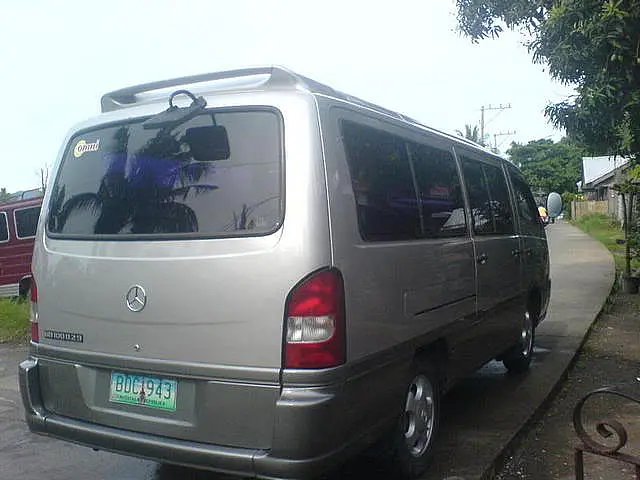
The Daewoo Istana was the Daewoo-badged version of the SsangYong Istana, a minivan and minibus built in Korea on the mechanical basis of the Mercedes-Benz MB100 bus. It was offered with two, nine, twelve or fifteen seats and carried over most of the options of the Mercedes it was derived from.
Daewoo Istana at a glance
| Original model | SsangYong Istana |
|---|---|
| Based on | Mercedes-Benz MB100, bus variant |
| Type | minivan and minibus |
| Seating | 2, 9, 12 or 15 seats |
| Equipment | most of the options of the MB100 |
| Name meaning | istana is Malay for palace or castle |
The material available is very short, so this article is shorter than usual. Based on one source.
History of the Daewoo Istana
A Mercedes under a Korean badge
The Istana was SsangYong’s version of the Mercedes-Benz MB100 bus, a large van that Mercedes sold in many markets. SsangYong built it with most of the German car’s equipment and offered it in a wide spread of seating layouts, from a two-seat load carrier to a fifteen-seat minibus.
The name
“Istana” is the Malay word for palace or castle, and it is the name of the presidential residences in both Singapore and Indonesia. In some markets the same van was sold by Daewoo with its own badges.
Design and features
- Mercedes basis: built on the MB100 bus, with most of its options available.
- Many layouts: two, nine, twelve or fifteen seats from the same body.
- Dual role: sold as a minivan for families and as a minibus for fleets.
Daewoo Istana versions
- Two-seat van: the load-carrying version.
- Nine-seat minivan: the passenger version.
- Twelve and fifteen-seat minibus: the largest layouts.
The Istana was the largest Daewoo van of its era, above the Lublin and the Damas. More cars are in the Daewoo collection.
Sources
- SsangYong Istana, English Wikipedia: basis, seating, name