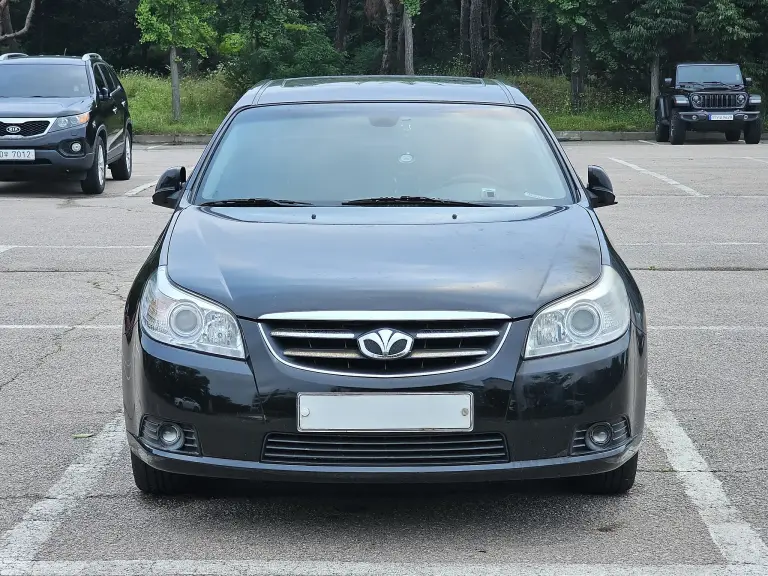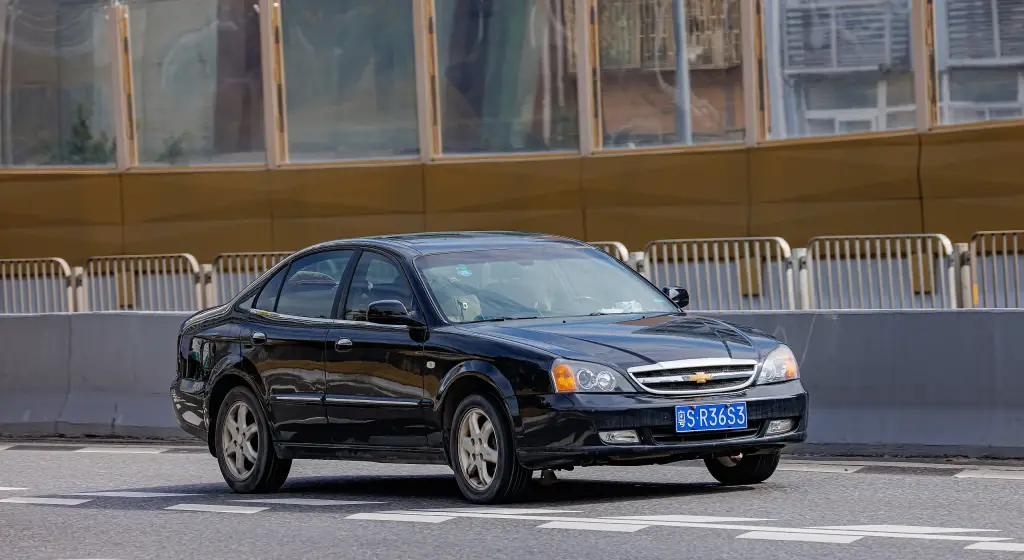
The Daewoo Magnus was a mid-size saloon built for the 2000 to 2006 model years and known in Western Europe as the Daewoo Evanda. It replaced the Leganza with a larger chassis and could be had with a Daewoo-designed 2.5-litre straight-six; the same car was sold in other markets as the Chevrolet Epica, Suzuki Verona and Formosa Magnus.
Daewoo Magnus at a glance
| Maker | Daewoo, later GM Daewoo, South Korea |
|---|---|
| Model years | 2000–2006 |
| Internal code | V200 |
| European name | Daewoo Evanda, 2000–2004 |
| Predecessor | Daewoo Leganza (V100) |
| Successor | Daewoo Tosca (V250), 2006 |
| Engines | 2.0 L D-TEC four, 2.5 L XK6 straight-six |
| Six-cylinder output | 155 hp (116 kW) at 5,800 rpm, 240 N·m |
| Gearbox | electronically controlled four-speed automatic |
| Design | Italdesign |
| Other names | Chevrolet Epica, Suzuki Verona, Formosa Magnus |
History of the Daewoo Magnus
A bigger Leganza
The Magnus was developed under the internal code V200 and replaced the Daewoo Leganza of 1997: it used the same platform but a larger chassis. It was launched on 23 November 2000 and sold alongside the Leganza in Korea until Korean production of the older car ended in 2002, after which it also took over from it in export markets. Styling came from Italdesign, which had also designed the Leganza, while the later V250 facelift was styled in Korea by GM Daewoo.
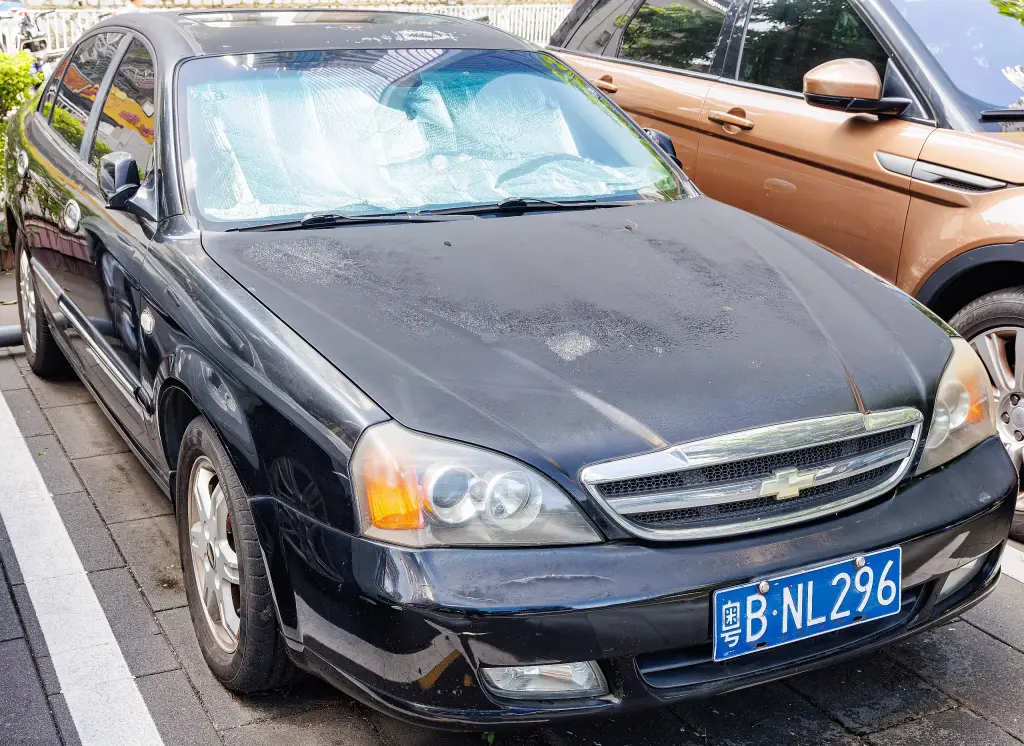
Engines
Buyers could choose a Holden-built 2.0-litre D-TEC four-cylinder carried over from the Leganza, or the Daewoo-developed XK6 straight-six of 2.5 litres, a double-overhead-camshaft 24-valve unit producing 155 hp at 5,800 rpm and 240 N·m of torque at 4,000 rpm in Canadian specification. The Canadian and American cars came only with the six and an electronically controlled four-speed automatic driving the front wheels.
Evanda and Epica
From 2000 to 2004 the car was sold in Western Europe as the Daewoo Evanda and in many Eastern European countries as the Chevrolet Evanda, where GM did not use the Daewoo brand because locally built versions of older Daewoo models were still on sale under it. The Evanda replaced the Leganza and also the Chevrolet Alero; in 2004 the Daewoo brand was replaced by Chevrolet across Europe. In Canada the Chevrolet Epica arrived in 2004 in LS and LT trims and replaced the Oldsmobile Alero, at 24,710 and 27,400 Canadian dollars, positioned between the Malibu and Impala in price but between the Cobalt and Malibu in size; sales were slow and the car left Canada in September 2006. The Epica was also sold in Chile, China, the Middle East and, briefly, in Guam and the Northern Mariana Islands. In the United States the same car was the Suzuki Verona, dropped after the 2006 model year and succeeded by the Suzuki Kizashi in 2010, and in Taiwan it was the Formosa Magnus. The V250 facelift of 2006, the Daewoo Tosca in Korea, replaced every version of the V200 during that year, and the Epica name later moved to the Tosca itself.
Design and features
- Straight-six option: the Daewoo-designed 2.5-litre XK6, unusual in a mid-size saloon.
- Italian styling: Italdesign carried its Leganza themes over to the larger V200.
- Many badges: Evanda, Epica, Verona and Formosa Magnus in different markets.
- Short European life: the Daewoo name disappeared from Europe in 2004, four years after launch.
Daewoo Magnus versions
- Magnus (Korea): the home-market car, also sold alongside the Leganza until 2002.
- Evanda (Europe): the 2000–2004 Daewoo and Chevrolet version.
- Chevrolet Epica: the Canadian, Chinese, Chilean and Middle Eastern name.
- Suzuki Verona: the American version, sold to 2006.
The Magnus succeeded the Leganza and was replaced by the Tosca, while the Lacetti sat below it. More cars are in the Daewoo collection.
Sources
- Daewoo Magnus, English Wikipedia: models, engines, export names