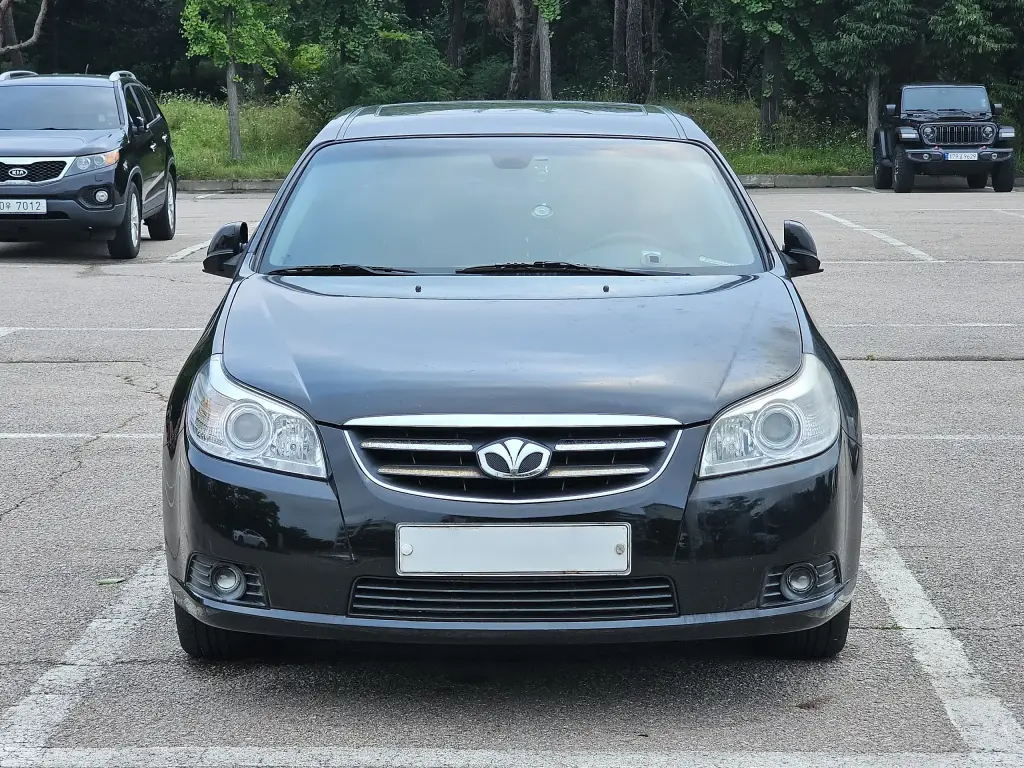
The Daewoo Tosca was a mid-size saloon introduced in 2006 as the replacement for the Daewoo Magnus. Codenamed V250 and designed entirely in house, unlike its Giugiaro-styled predecessors, it stood out for its transversely mounted straight-six engines, and it was sold abroad as the Chevrolet Epica and the Holden Epica.
Daewoo Tosca at a glance
| Maker | GM Daewoo, South Korea |
|---|---|
| Model code | V250 |
| Produced | 2006–2011 in Korea, 2007–2014 in China |
| Predecessor | Daewoo Magnus (V200) |
| Design | in house, not by Italdesign |
| Petrol engines | 1.8 D-TEC four, 2.0 and 2.5 straight-sixes |
| Straight-six | XK, designed by Porsche, mounted transversely |
| Diesel | 2.0 RA 420 common rail, 150 hp and 320 N·m |
| Gearboxes | five-speed manual, four-speed automatic, six-speed automatic from 2008 |
| Other names | Chevrolet Epica, Holden Epica, Chevrolet Tosca |
History of the Daewoo Tosca
A new, in-house Daewoo
The Tosca replaced the Daewoo Magnus and its derivatives under the V250 code. Contrary to the Leganza and Magnus, both styled by Giugiaro, the V250 was designed entirely in house in Korea. It was marketed by Chevrolet as the Chevrolet Epica and Chevrolet Tosca and by Holden as the Holden Epica, the last of which replaced the Opel-sourced Holden Vectra in Australia and New Zealand from April 2007. The Chevrolet Epica was launched in Europe at the 2006 Geneva motor show, and the car was also built and sold in Kazakhstan as the Chevrolet Epica from June 2007. In Iceland it was badged Chevrolet Tosca. GM Daewoo said the name stands for “Tomorrow Should Come Always”, though Tosca is also the title of Puccini’s opera.
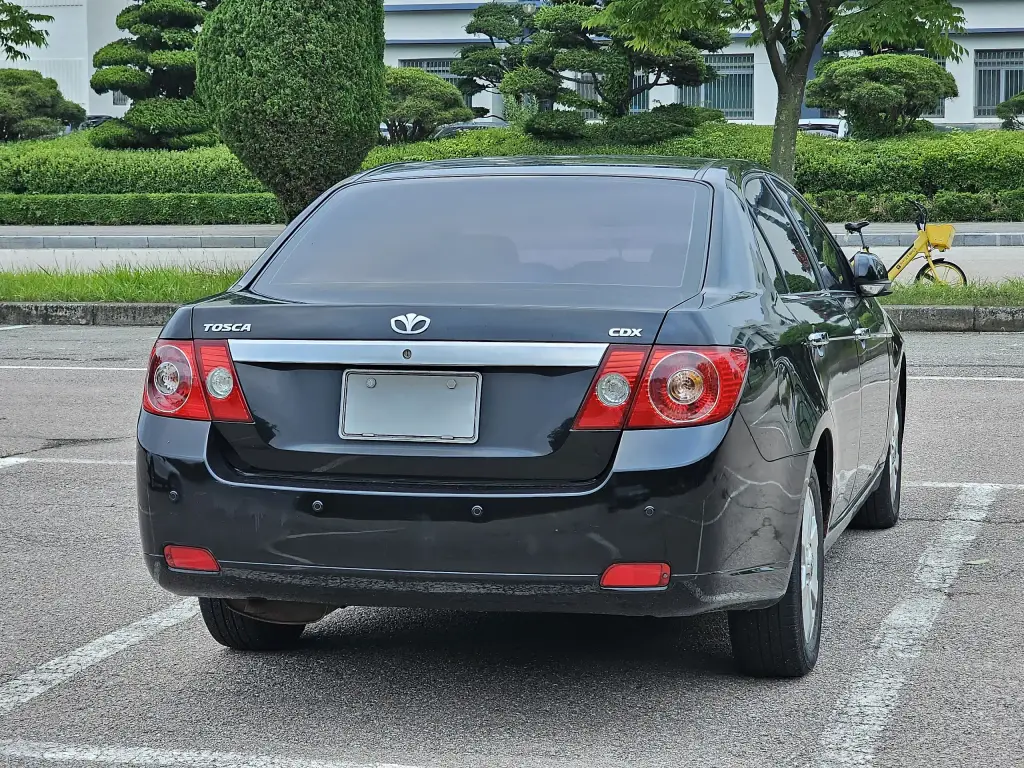
The straight-six
What set the Tosca apart was its engines. Daewoo’s XK straight-sixes were designed by Porsche, and in the front-wheel-drive V250 they were mounted transversely, a layout that demanded a very compact and tightly packed engine. The car was launched with two versions, a 2.5-litre carried over from the Magnus and a new 2.0-litre that replaced the Holden-sourced 2.0 D-TEC of the previous model. From 2006 a 1.8-litre D-TEC was also available in Korea, with a five-speed manual or a four-speed automatic.
Diesel and the six-speed
In early 2007 the petrol engines were joined by a 2.0-litre RA 420 single-cam common-rail turbodiesel producing 112 kW (150 hp) and 320 N·m. It was developed by GM Powertrain, GM Daewoo and VM Motori, made its debut in the Daewoo Winstorm and was the first diesel engine used in a Daewoo car. In early 2008 Daewoo added a six-speed automatic — the GM 6T40 for the 2.0 and 2.5 petrol engines and the 6T45 for the diesel — and revised the rear of the car with new tail lights and a new bumper. Korean production ended in early 2011 when the Daewoo brand was renamed Chevrolet in Korea, and production in China, which began in March 2007, finished in 2014. The Tosca was replaced by the Chevrolet Malibu.
Design and features
- Transverse straight-six: a Porsche-designed XK engine squeezed across a front-wheel-drive layout.
- In-house design: the first V-series Daewoo saloon not drawn by Italdesign.
- First Daewoo diesel: the 2.0 RA 420 common-rail unit debuted in the Winstorm and came to the Tosca.
- Six-speed automatic: added in 2008 with a revised rear end.
Daewoo Tosca versions
- 1.8 D-TEC: the Korean entry model from 2006.
- 2.0 and 2.5 straight-six: the Porsche-designed XK engines.
- 2.0 diesel: 150 hp and 320 N·m from early 2007.
- Holden Epica: the Australian and New Zealand version from April 2007.
The Tosca replaced the Magnus and shared its diesel engine with the Winstorm. More cars are in the Daewoo collection.
Sources
- Daewoo Tosca, English Wikipedia: engines, markets, updates