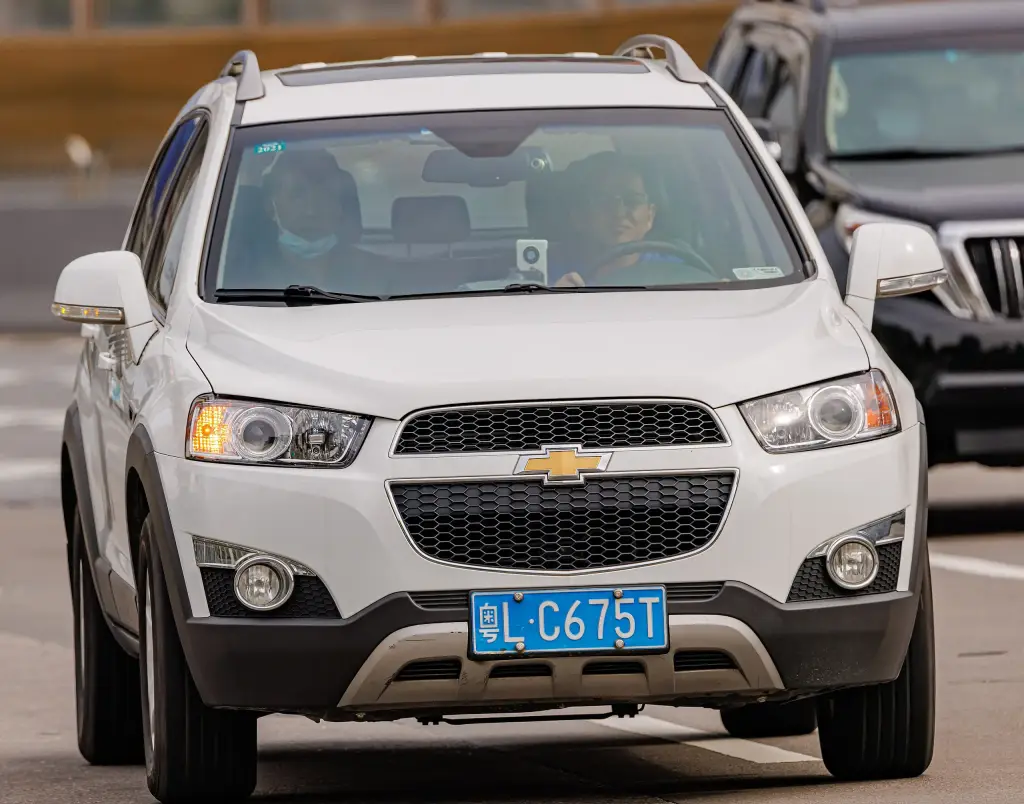
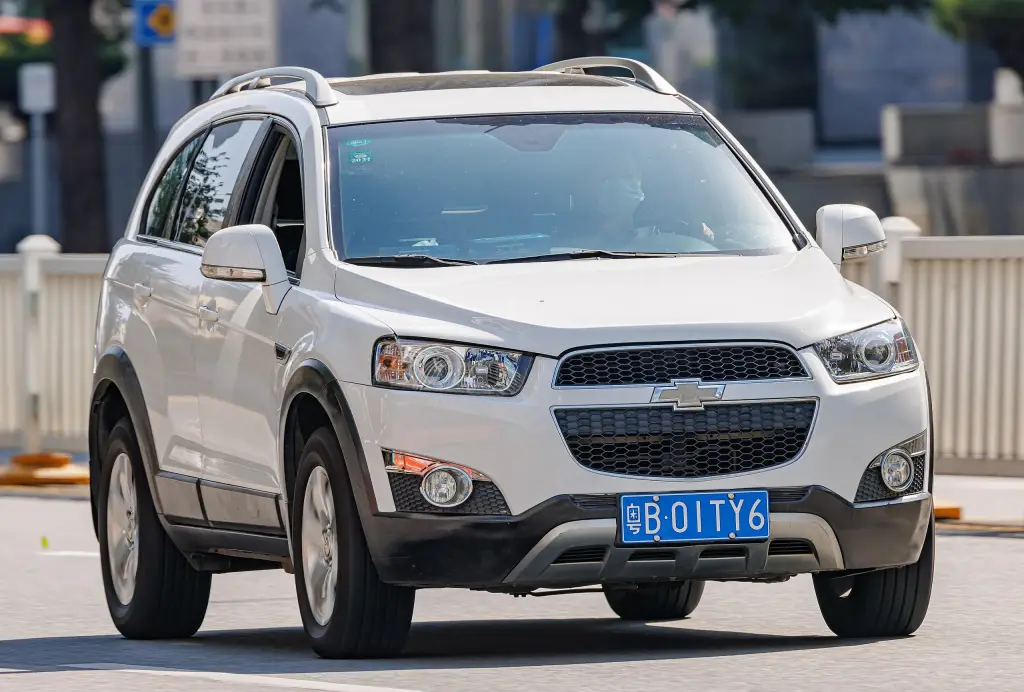
The Daewoo Winstorm was the South Korean name of the first-generation Chevrolet Captiva, a compact crossover SUV developed by GM Korea on the GM Theta platform. It was sold as a Daewoo from 2006 until early 2011, when the Daewoo brand gave way to Chevrolet in Korea.
Daewoo Winstorm at a glance
| Maker | GM Daewoo, later GM Korea |
|---|---|
| Model codes | C100 at Daewoo, CG at Holden |
| Sold as | Daewoo Winstorm in Korea, Chevrolet Captiva elsewhere |
| Produced | 2006–2018 as the Captiva |
| Platform | GM Theta |
| Concept | Chevrolet S3X, Paris 2004 |
| Seats | five or seven |
| Petrol engines | Holden Family II fours and the 3.2-litre Alloytec V6 |
| Diesel engines | VM Motori 2.0 and 2.2 VCDi, 163 and 184 PS |
| Drive | front-wheel drive or active all-wheel drive |
| Euro NCAP | four stars out of five |
The English Wikipedia article describes the Chevrolet Captiva, the car sold in Korea as the Daewoo Winstorm.
History of the Daewoo Winstorm
From Seoul to the world
The Captiva was developed by GM Korea on the GM Theta platform and derived from the Chevrolet S3X concept car shown at the 2004 Paris motor show. It was released in 2006 and sold internationally as the Chevrolet Captiva, in Australia and New Zealand as the Holden Captiva, and in South Korea as the Daewoo Winstorm until the Daewoo name was dropped in 2011. The car shares much of its underpinnings with the Opel and Vauxhall Antara and the second-generation Saturn Vue, and it offers optional third-row seating. A second Daewoo concept, the Chevrolet T2X of the 2005 Seoul motor show, was a shortened sport utility coupe version, but production never followed.
Engines and safety
The Captiva came with front-wheel drive or an active all-wheel-drive system that worked with the stability control and anti-lock brakes, sending power to the rear wheels only when traction was lost. Engines were supplied by Holden in Australia — the naturally aspirated Family II four-cylinder and the 3.2-litre Alloytec V6 with a five-speed automatic — and later by VM Motori in South Korea, whose 2.0 and 2.2-litre common-rail turbodiesels produced 163 and 184 PS. Standard safety equipment included anti-lock brakes, electronic stability control, seatbelt pretensioners with force limiters and front airbags, with side-curtain airbags on higher trims; Euro NCAP gave the car four stars out of five.
The MaXX and the end of the name
From 2006 until early 2011 the Opel Antara was sold in Korea within the Winstorm range as the Daewoo Winstorm MaXX. As GM phased out the Daewoo brand worldwide, the car was marketed in Korea under the Chevrolet Captiva name from early 2011, after GM Daewoo was renamed GM Korea in March 2011; the Winstorm MaXX disappeared at the same time without a Chevrolet equivalent in Korea. A revised Captiva came in the second quarter of 2011 with a new front end, LED indicators in the door mirrors, redesigned wheels and a new Holden-built SIDI V6, and a further facelift followed in 2016 with LED headlamps, a new grille, bumper and dashboard. Chevrolet ended production of the first-generation Captiva in 2018 and replaced it with the Equinox.
Design and features
- Theta platform: the same basis as the Opel Antara and the Saturn Vue.
- Five or seven seats: the Captiva was one of the few crossovers in its class with a third row.
- Active all-wheel drive: front-wheel drive in normal use, all four wheels when traction is lost.
- Four Euro NCAP stars: helped by high-strength steel and a body designed to spread crash forces.
Daewoo Winstorm versions
- Winstorm: the Korean-market car from 2006.
- Winstorm MaXX: the Opel Antara sold within the range in Korea from 2006 to 2011.
- 2.0 and 2.2 VCDi: the VM Motori turbodiesels, with 163 and 184 PS.
- 3.2 Alloytec V6: the Holden-built petrol six with a five-speed automatic.
The Winstorm shared its diesel engine with the Tosca and sat below the Rexton in size. More cars are in the Daewoo collection.
Sources
- Chevrolet Captiva, English Wikipedia: development, engines, Korean market, facelifts