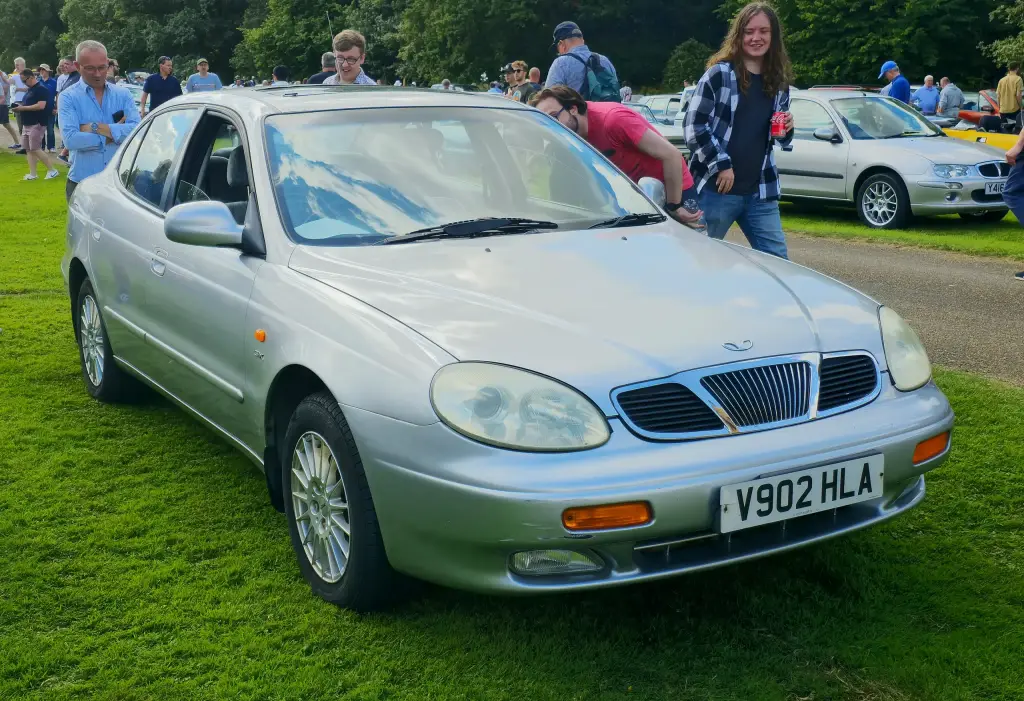
The Daewoo Leganza was a front-wheel-drive, four-door executive saloon that Daewoo built from 1997 to 2002. Styled by Giorgetto Giugiaro and developed under the former Porsche and BMW engineering chief Ulrich Bez, it replaced the Prince at the top of the Daewoo range and was the largest of the three cars with which Daewoo replaced its old GM-based line-up.
Daewoo Leganza at a glance
| Maker | Daewoo, South Korea |
|---|---|
| Production | 1997–2002 |
| Internal code | V100 |
| Class | executive saloon, E-segment |
| Body | four-door, five-seat saloon, front-wheel drive |
| Design | Giorgetto Giugiaro, Italdesign |
| Development | under Dr. Ulrich Bez, in 30 months |
| Engines | Holden-sourced, 2.0 L and later 2.2 L |
| Transmissions | ZF, five-speed manual or four-speed automatic |
| Drag coefficient | 0.32 |
| Replaced | Daewoo Prince |
| Succeeded by | Daewoo Magnus (V200) |
History of the Daewoo Leganza
Three new Daewoos
The Leganza, the Lanos and the Nubira were the core of Daewoo’s effort to build its own range and stop relying on cars licensed from General Motors. Development began at the end of 1993, after work on the Lanos and the Nubira had started, which delayed the Leganza in some markets. Daewoo used outside consultants and suppliers and put the programme under Dr. Ulrich Bez, formerly of Porsche and BMW, drawing on its own research centres in Korea, Worthing and Munich. Transmissions came from ZF and engines from GM Australia.
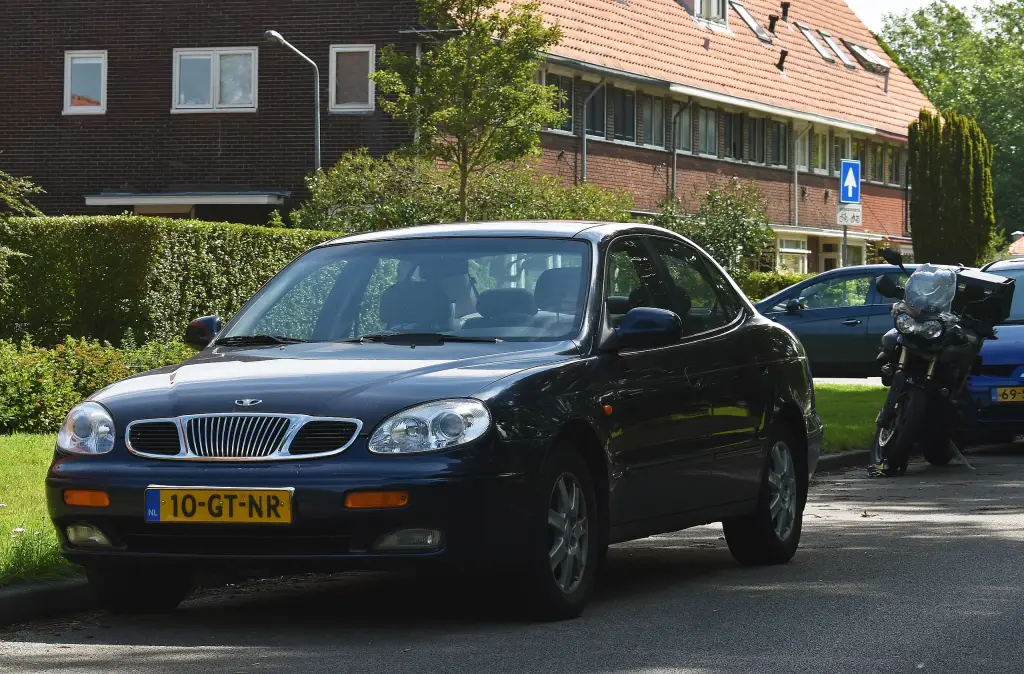
Giugiaro styling
The body was styled by Giorgetto Giugiaro of Italdesign, using the themes of his 1990 Jaguar Kensington concept, which also influenced the 1991 Toyota Aristo. The work took three months in the summer of 1994, helped by Italdesign’s offices in Kensington, and road testing ran from May 1995 to May 1996. The car was ready for production in February 1997 and achieved a drag coefficient of 0.32. The name is a portmanteau of the Italian words elegante and forza, elegant and power.
Equipment and updates
In many markets the base car had a 2.0-litre four-cylinder engine, a five-speed manual gearbox, hubcaps and cloth trim, with a four-speed hydraulic automatic as an option. Ride quality and cabin noise were weak points. In 1999 Daewoo replaced the automatic with an electronically controlled unit, added a 2.2-litre engine that raised power from 98 to 99 kW, fitted 15-inch alloy wheels, an alarm and remote central locking as standard and revised the suspension. A Limited Edition with leather, faux woodgrain and a power driver’s seat appeared in 2001 and again in 2002. In Britain the car arrived in autumn 1997 with the Lanos and Nubira, in SX and CDX trims from £13,795 and £14,995, the CDX adding alloy wheels, traction control, climate control and a full leather option; a CDX-E with satellite navigation and a ten-disc CD changer followed in May 1998 at £17,520. In Russia a stripped version was assembled as the Doninvest Kondor, without even optional airbags.
Design and features
- Italdesign body: Giugiaro themes from the Jaguar Kensington concept, with a 0.32 drag figure.
- Ulrich Bez development: the ex-Porsche and BMW engineer ran a 30-month programme.
- Holden engines: 2.0 and later 2.2-litre four-cylinders from GM Australia.
- Strong British package: SX and CDX trims with a three-year warranty and free servicing.
Daewoo Leganza versions
- SX: anti-lock brakes, twin airbags, air conditioning and an electric sunroof.
- CDX: alloy wheels, traction control, climate control, fog lamps and wood trim.
- CDX-E (1998): satellite navigation, ten-disc CD changer and leather.
- Limited Edition (2001–2002): leather, faux woodgrain and a power driver’s seat.
- Doninvest Kondor: the Russian assembled version with minimal equipment.
The Leganza replaced the Prince and preceded the Magnus, with the Espero below it. More cars are in the Daewoo collection.
Sources
- Daewoo Leganza, English Wikipedia: development, styling, equipment, updates