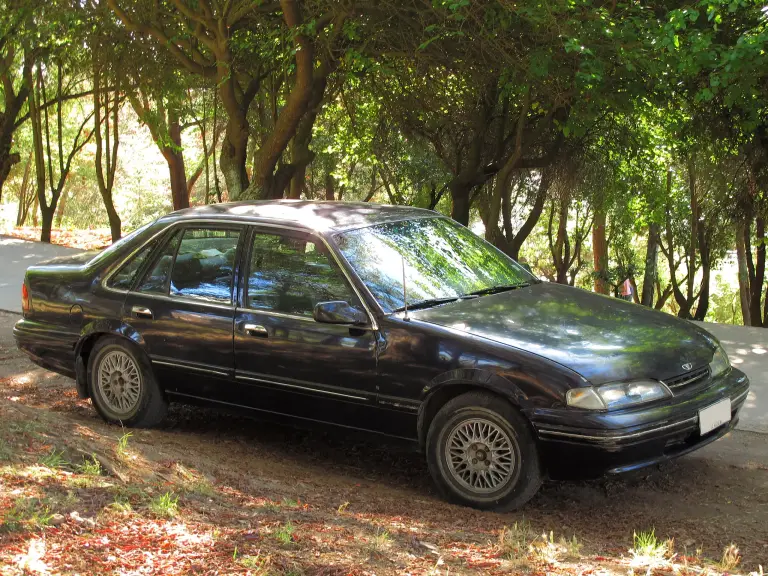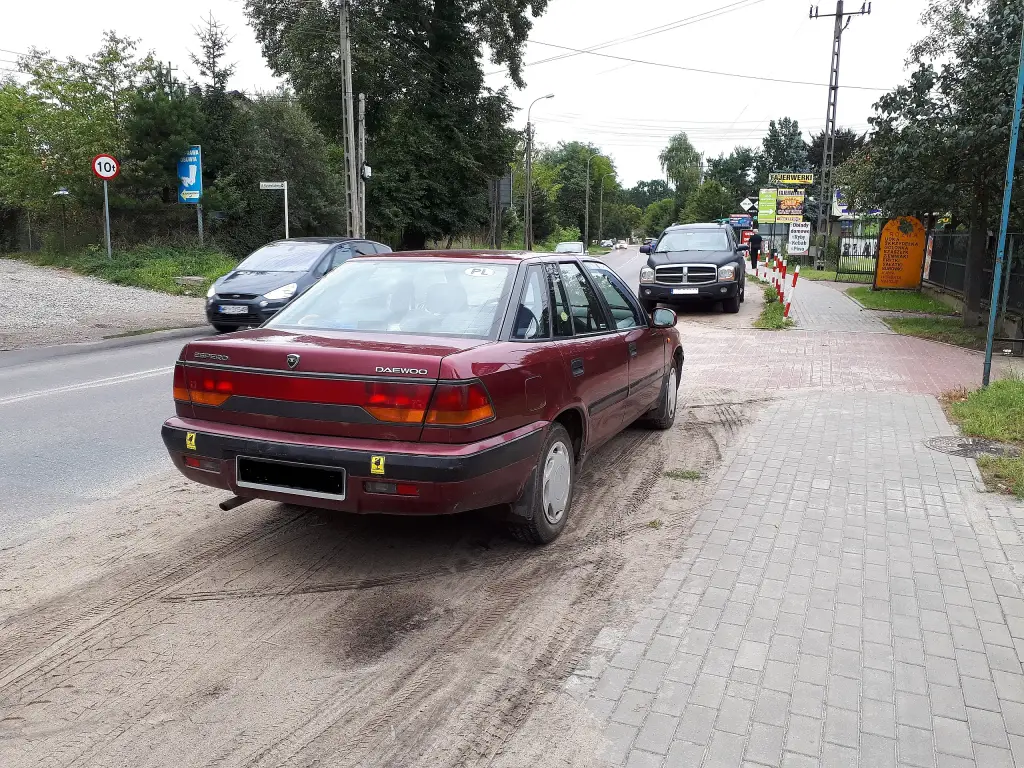
The Daewoo Espero was a four-door, five-seat mid-size saloon that Daewoo built from September 1990 to 1997. It was the first car the company developed entirely on its own — until then Daewoo had only built Opel designs under licence — and its body came from Bertone, bought as a design Citroën had discarded.
Daewoo Espero at a glance
| Maker | Daewoo Motors, South Korea |
|---|---|
| Production | September 1990–1997 |
| Body | four-door, five-seat saloon by Bertone |
| Other name | Daewoo Aranos in Spain |
| Platform | Daewoo LeMans, lengthened between the B-pillar and the rear seat |
| Engines | Holden-built GM Family 1 1.5 L and Family II 2.0 L |
| Drag coefficient | 0.29 |
| Development code | J-Car |
| Korean launch | August 1990 |
| European launch | January 1995, with the Nexia |
| Replaced by | Daewoo Nubira, 1997 |
| Built until | 2002 in Eastern Europe |
History of the Daewoo Espero
A design bought from Bertone
In the mid-1980s Daewoo wanted a mid-size saloon to answer the Hyundai Sonata and began work in 1986 under the code J-Car. Contractual limits on its access to General Motors technology pushed the company to reuse as much of the LeMans as possible, so the steering, suspension, brakes and powertrain were carried over and the platform was lengthened between the B-pillar and the rear seat. The body itself was a Bertone design that had been turned down by Citroën, which had intended it for the successor of the BX. With its smooth shape the Espero recorded a drag coefficient of 0.29, a good figure for a family saloon of the time.
On the market in Korea
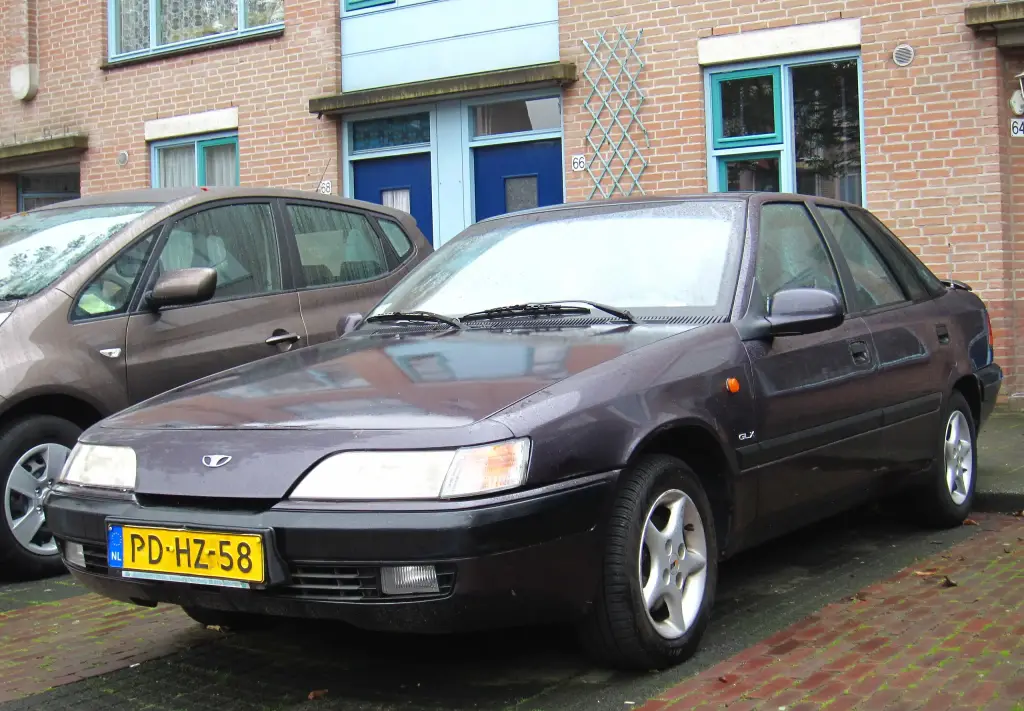
The Espero went on sale in Korea in August 1990, a few months after its debut, and the Korean car differed from the European one in its badging: no badge at the front, a black badge with three white waves and the name ESPERO at the rear and on the steering wheel. The pre-facelift range had two models, the 1.5 DOHC and the 2.0 SOHC, the latter also available with a package of extras as the top of the range. The cabin used a different steering wheel from European cars and an electronic dash with orange lettering, and no airbag was offered.
Facelifts and the European launch
A facelift in late 1991 brought new hubcaps, redesigned rear lights and a revised boot lid with a swivelling badge over the keyhole, and renamed the range 1.5 MPFi and 2.0 MPFi. A second facelift in 1994 replaced the black badge with a separate oval emblem and added a 1.8 MPFi model on alloy wheels. European sales began in January 1995, when the Espero and the Nexia formed the first Daewoo range sold in Europe; its low price, spacious cabin and long equipment list made it popular with cost-conscious buyers, even though the interior looked dated and the body was prone to corrosion. Production in Korea ended in 1997, when the Nubira replaced the car, but the Espero was built on in Eastern Europe until 2002. In Spain it was sold as the Aranos, and in Thailand it arrived in 1994, imported from Korea.
Design and features
- First own Daewoo: the first car the company developed without an Opel base.
- Bertone body: a design originally offered to Citroën, with a drag coefficient of 0.29.
- Holden engines: 1.5 and 2.0-litre GM Family units, later joined by a 1.8.
- Long equipment list: the car sold in Europe on price and standard kit rather than driving appeal.
Daewoo Espero versions
- 1.5 DOHC and 2.0 SOHC: the original Korean range, the 2.0 also with a package.
- 1.5 MPFi and 2.0 MPFi: the range after the 1991 facelift.
- 1.8 MPFi: added in 1994 with alloy wheels.
- Aranos: the Spanish-market name.
- DEV 2: a one-off electric prototype shown at the 1995 Seoul motor show.
The Espero was replaced by the Nubira and sat above the LeMans whose platform it used. More cars are in the Daewoo collection.
Sources
- Daewoo Espero, English Wikipedia: development, Korean and European history, facelifts