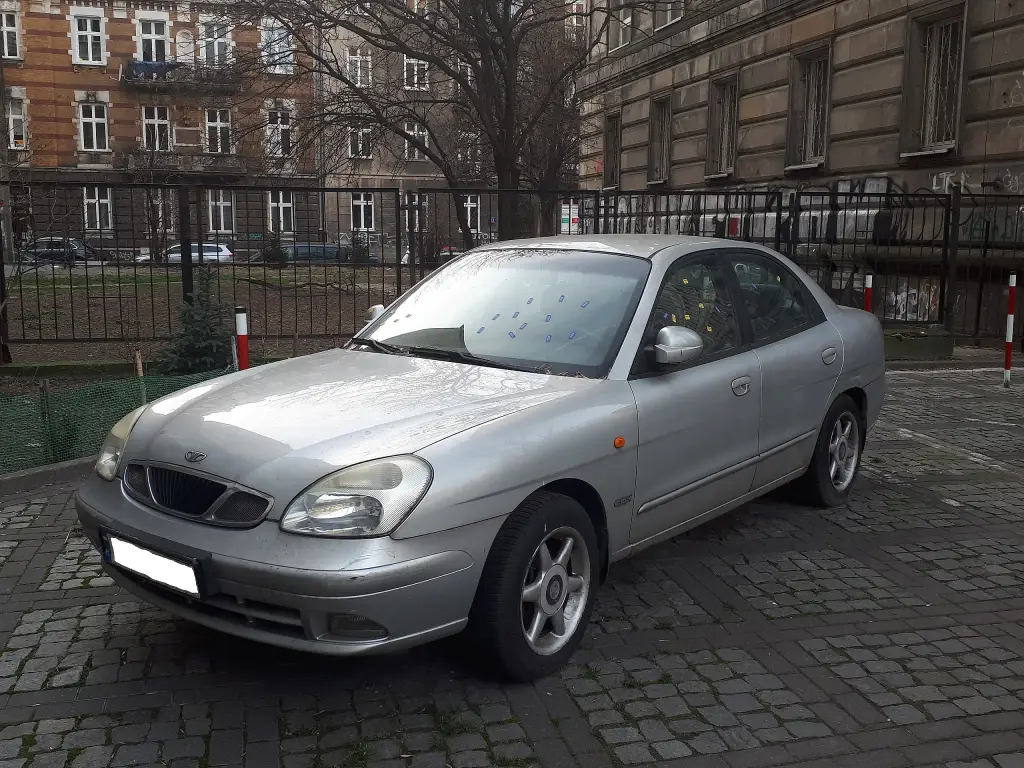
The Daewoo Nubira was a compact car produced by Daewoo from 1997 to 2002 as a four-door saloon, a five-door hatchback and a five-door estate. It was developed in under 30 months under the former Porsche and BMW engineer Ulrich Bez, and its name comes from a Korean verb meaning to crisscross.
Daewoo Nubira at a glance
| Maker | Daewoo, South Korea |
|---|---|
| Production | 1997–2002, later under licence abroad |
| Platform | J100 |
| Bodies | four-door saloon, five-door hatchback, five-door estate |
| Development | under 30 months, led by Dr. Ulrich Bez |
| Styling | I.DE.A Institute, Italy |
| Engines | Daewoo E-Tec 1.3 and 1.6, Holden 1.8 and 2.0 |
| Diesel | none offered |
| Facelift | Nubira II (J150), 2000 model year |
| Built in | Kunsan, South Korea |
History of the Daewoo Nubira
Under 30 months
The Nubira was released in 1997 and reflected Daewoo’s new design and manufacturing process. Production took under 30 months, led by Dr. Ulrich Bez, later of Aston Martin, with Daewoo’s research network in Korea, Worthing and Munich working alongside outside engineering consultancies. Styling was done by the I.DE.A Institute in Italy, and Ricardo and GM Holden took part in the programme. The car was built in Kunsan in a factory equipped with laser-guided robots. Daewoo said it replaced not only the lower and medium specifications of the Espero but also the upper end of the Nexia range. The name is the command form of the Korean verb nubida, to crisscross, chosen to express the hope that the car would be seen in every corner of the world.
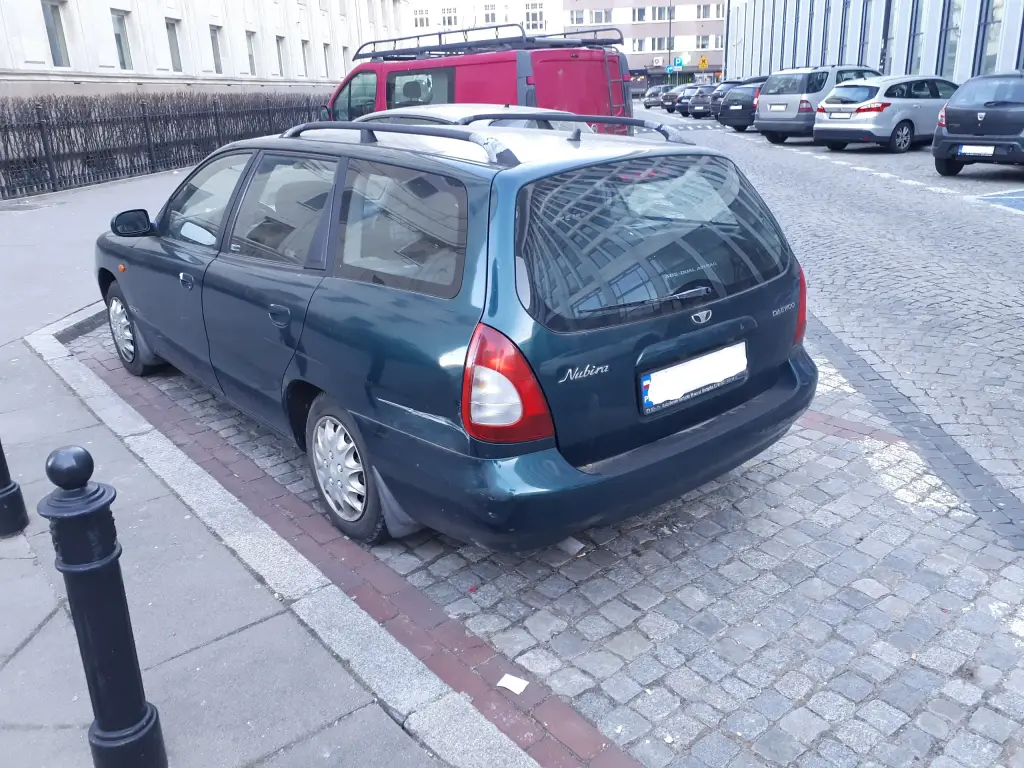
Nubira II
The facelifted Nubira II, the J150, arrived for the 2000 model year with more than 90 improvements made by Daewoo’s Worthing Technical Centre, among them more passenger space and less noise and vibration through a fourth engine mount and retuned intake resonators. Offset crash performance improved, as Australian ANCAP tests showed, though it still fell short of the best. The exterior was reworked with a new front, a more angular rear and new door mirrors. International cars could have the Daewoo E-Tec 1.3 and 1.6 or Holden 1.8 and 2.0-litre petrol engines; no diesel was ever offered, although Worthing fitted Renault’s 1.9-litre F8 to a few test cars under the J151 programme.
In Britain and abroad
In Britain the Nubira went on sale on 11 September 1997 with the Lanos and Leganza, in two equipment levels, SE and CDX, and two body styles, saloon and estate; the hatchback was not offered there. All cars had air conditioning, anti-lock brakes, two airbags, an alarm, power steering, electric front windows and a radio-cassette as standard, with the CDX adding alloy wheels, body-coloured trim and rear electric windows. The AA called it sensibly competent rather than trendsetting, with a lot of motoring for the money and an outstanding aftersales package. The car was also assembled from kits at Taganrog in Russia as the Doninvest Orion, and built under licence in Romania until 2008 and in Egypt in 2008. It was replaced in 2004 by the J200 Daewoo Lacetti.
Design and features
- Fast development: under 30 months from approval to production, led by Ulrich Bez.
- Italian styling: the body came from the I.DE.A Institute.
- Three bodies: saloon, hatchback and estate, though Britain took only two.
- 90 improvements: the Nubira II facelift of 2000 was done at Worthing.
Daewoo Nubira versions
- SE: the British entry level with hubcaps and a radio-cassette.
- CDX: alloy wheels, body-coloured trim and rear electric windows.
- Nubira II (J150): the 2000 facelift with revised engines and a new front.
- Doninvest Orion: the Russian kit-assembled version.
The Nubira replaced the upper Nexia and part of the Espero range, and was replaced by the Lacetti. More cars are in the Daewoo collection.
Sources
- Daewoo Nubira, English Wikipedia: development, facelift, engines, British market