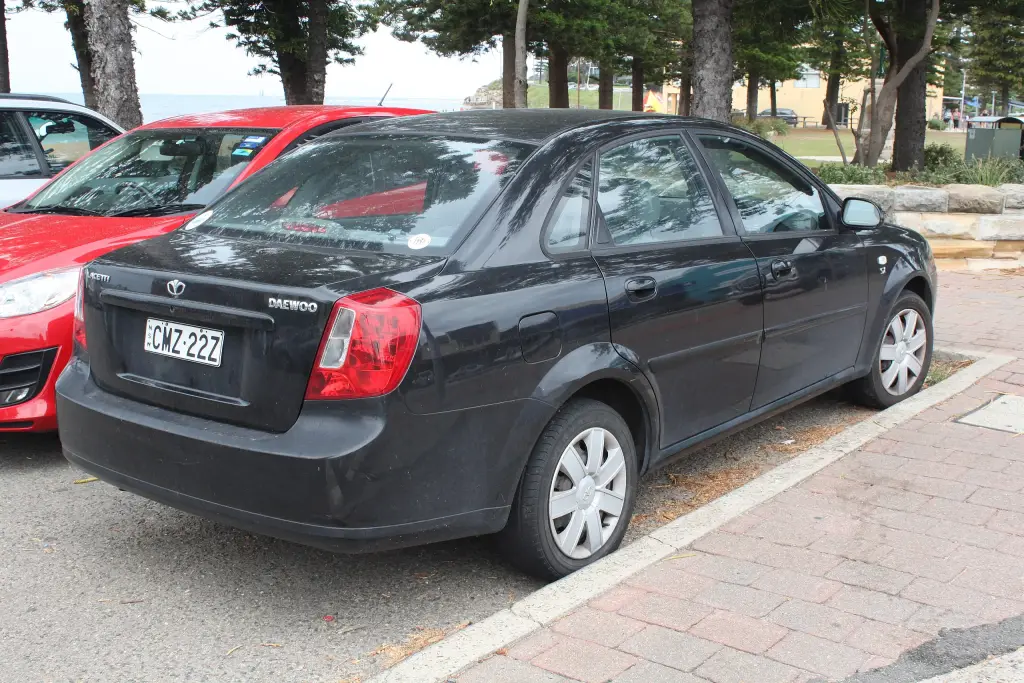
The Daewoo Lacetti was a compact car introduced in 2002 and developed from the Nubira while Daewoo was still independent. Its four-door saloon and estate were styled by Pininfarina, its five-door hatchback by Giorgetto Giugiaro, and the same cars were sold on five continents under a long list of names.
Daewoo Lacetti at a glance
| Maker | Daewoo, later GM Daewoo, South Korea |
|---|---|
| First generation | J200, from 2002 |
| Saloon and estate | styled by Pininfarina |
| Hatchback | styled by Giorgetto Giugiaro |
| Saloon launch | South Korea, 25 November 2002 |
| Hatchback | shown at Frankfurt in September 2003, built from December |
| Estate | shown at Geneva in March 2004 |
| Other names | Chevrolet Optra, Suzuki Forenza and Reno, Holden Viva, Daewoo Nubira |
| Second generation | Lacetti Premiere, 2008, a rebadged Chevrolet Cruze |
| Name origin | Latin lacertus, meaning youthful |
History of the Daewoo Lacetti
Two Italian houses
The first-generation Lacetti, known internally as the J200, was developed from its Nubira predecessor under Daewoo before the General Motors takeover. The four-door saloon, designed by Pininfarina, went on sale in South Korea on 25 November 2002 after a development period of two years and six months. The five-door hatchback was styled by Giorgetto Giugiaro: a pre-production prototype was shown at the Frankfurt motor show in September 2003 and production began in December, with a different exterior and interior from the saloon.
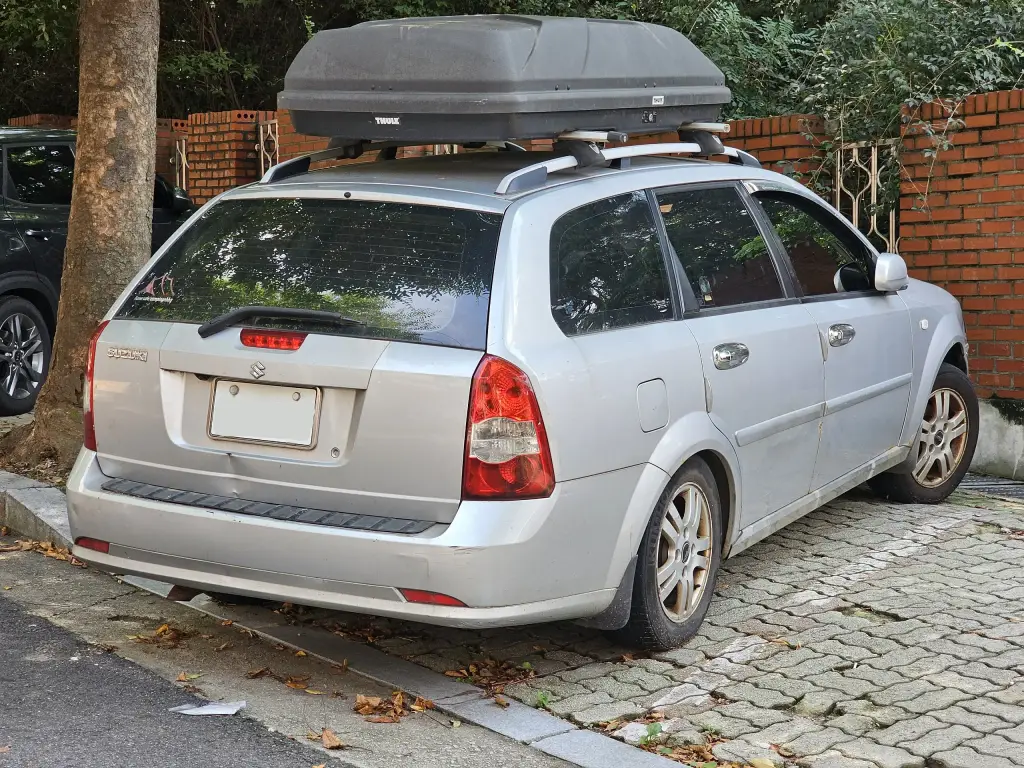
The estate and the facelift
At Geneva in March 2004 Daewoo showed a station wagon penned by Pininfarina, using the hatchback’s updated interior and a facelifted version of the saloon’s nose. That facelift replaced the three-slot corporate grille with a single full-length item carrying a bold horizontal bar capped by the company logo, and it brought pull-out door handles instead of the lift-up type. The saloon received the same front end, door handles and interior changes on 25 March, and the hatchback got the new handles at about the same time. A further saloon facelift from 2007, with the hatchback’s front end, was built only for emerging markets such as Colombia, India and Thailand, and in Uzbekistan between 2013 and 2016 as the Daewoo Gentra.
One car, many names
In Korea the hatchback was the Lacetti5, with its own front, rear and dashboard, and a wagon arrived in late 2007 together with VM Motori diesel engines. The Lacetti Premiere of November 2008, a rebadged Chevrolet Cruze, ended saloon and estate sales and left only the hatchback, renamed Lacetti EX, which lasted until October 2009. Export names were many: the saloon and wagon were the Daewoo Nubira in some European markets and the Suzuki Forenza in North America, the hatchback the Suzuki Reno, and after 2004 the range was sold as the Chevrolet Nubira and Lacetti in Europe, the Chevrolet Optra in Canada, Latin America, Africa, the Middle East, India, Pakistan, Japan and South-East Asia, and the Holden Viva in Australia and New Zealand. In Australia the Daewoo Lacetti was sold only from September 2003 to December 2004, as a 1.8-litre saloon with 90 kW and a five-speed manual or four-speed automatic, in a single SX trim.
Design and features
- Pininfarina body: the saloon and estate came from the Turin studio, the hatchback from Giugiaro.
- Single-bar grille: the 2004 facelift replaced Daewoo’s three-slot grille with one full-width bar.
- Well equipped SX: the Australian car had twin airbags, air conditioning, keyless entry and a CD player as standard.
- Diesel option: VM Motori diesels joined the Korean range with the wagon in 2007.
Daewoo Lacetti versions
- Saloon (2002): the Pininfarina four-door, also sold as the Nubira and Forenza.
- Hatchback (2003): the Giugiaro five-door, the Lacetti5 in Korea and Suzuki Reno in America.
- Estate (2004): the Pininfarina wagon with the hatchback interior.
- Lacetti Premiere (2008): the second generation, a rebadged Chevrolet Cruze.
The Lacetti followed the Nubira and was later built in Uzbekistan as the Gentra. More cars are in the Daewoo collection.
Sources
- Daewoo Lacetti, English Wikipedia: design, launch, facelifts, export names