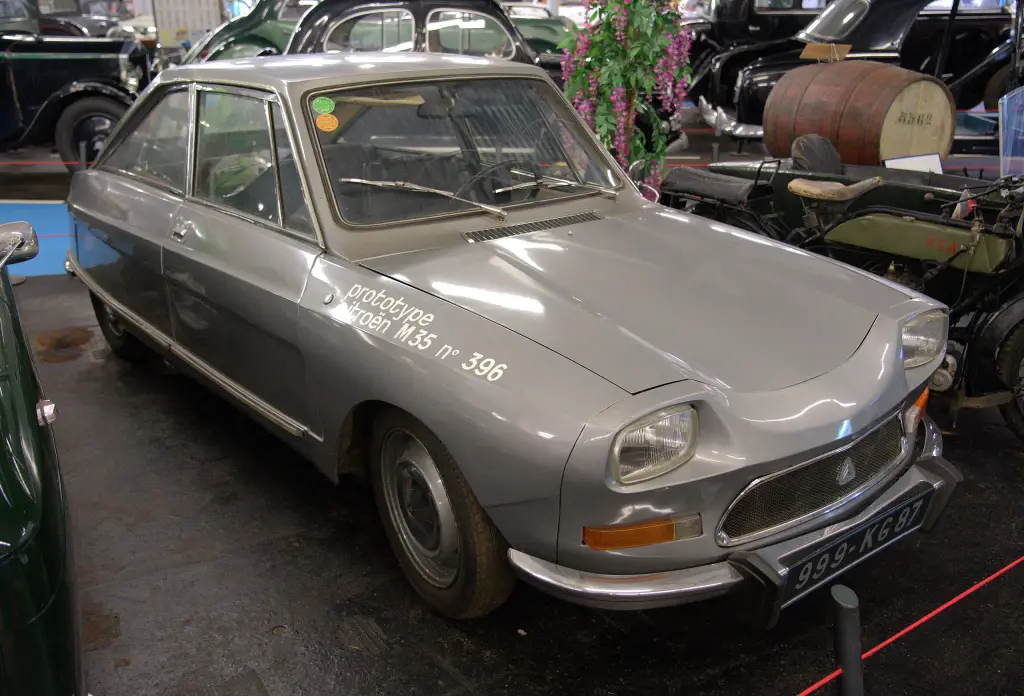
The Citroën M35 is a coupé derived from the Ami 8, fitted with a Wankel engine and hydropneumatic suspension. Heuliez built the bodies between 1969 and 1971, and the car was an experimental vehicle that was never officially sold.
Citroën M35 at a glance
| Maker | Citroën, with bodies by Heuliez |
|---|---|
| Built | 1969–1971 |
| Base | Citroën Ami 8 |
| Engine | Comotor rotary, 498 cc nominal, 49 bhp |
| Torque | 50 lb·ft (68 N·m) |
| Suspension | hydropneumatic |
| 0–100 km/h | 19 seconds, ten faster than an Ami 8 |
| Top speed | about 90 mph (140 km/h) |
| Fuel tank | 11 gallons (43 litres) |
| Redline | 7,000 rpm, with an audible warning |
| Status | experimental, not sold to the public |
Based on one source (English Wikipedia).
History of the Citroën M35
A test bed for the rotary engine
The M35 was built to try out the Wankel engine in real use. Its longitudinally mounted rotary had a nominal capacity of 498 cc and produced 49 bhp (37 kW) and 50 lb·ft (68 N·m) of torque, and according to factory figures the car performed roughly like a Morris 1300. It reached 100 km/h in 19 seconds, ten seconds faster than an Ami 8, and about 140 km/h flat out. Because the rotary was so smooth, Citroën fitted an audible alarm that sounded as the engine approached its 7,000 rpm redline. A larger 43-litre fuel tank replaced the Ami 8’s, which was judged too small. The engine came from Comotor, the company formed by NSU and Citroën in 1967.
Lent, not sold
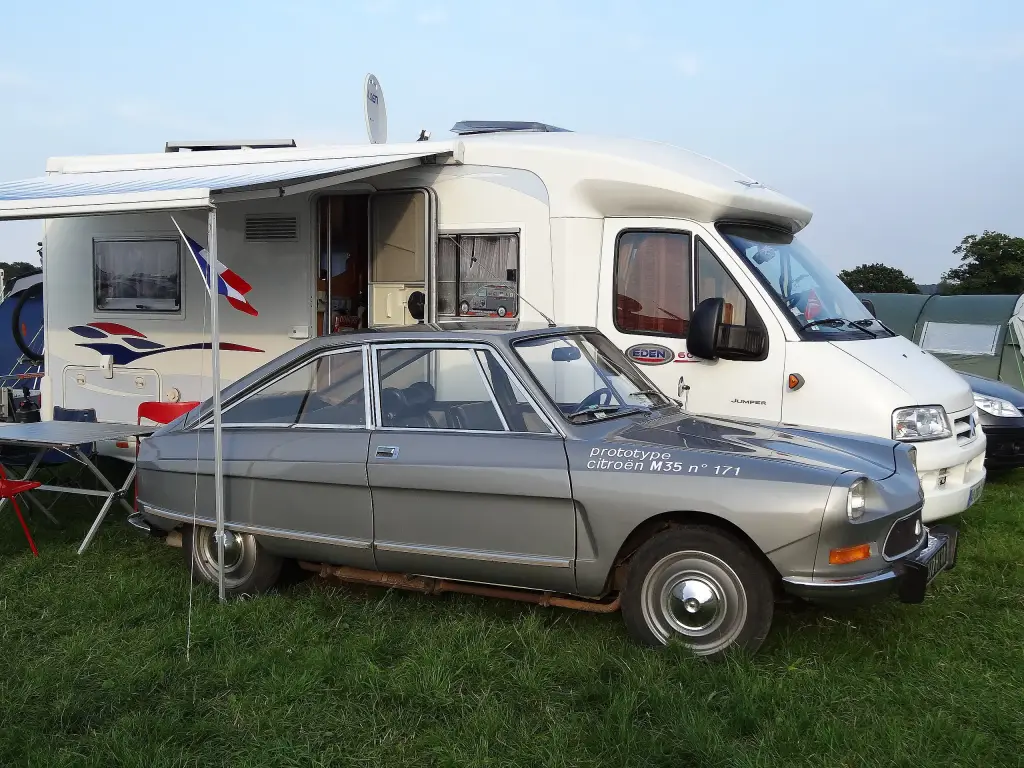
The M35 was experimental and was never officially sold; instead it was supplied to loyal Citroën customers so the company could gather their comments on the design. Each car carried a banner at the bottom of the rear window saying, in French, that this Citroën M35 prototype with a rotary piston engine was undergoing long-term testing in the hands of a Citroën customer.
What survived
Many aspects of the M35 reached production. The rotary engine was judged satisfactory and a twin-rotor version went into the GS Birotor in 1974; the gearbox was the GS 1015’s, with a normal shift pattern; some suspension parts appeared in the GS line when it was launched in 1970; and the seats that reclined just above the waist were used in the SM.
Design and features
- Comotor rotary: 498 cc nominal, 49 bhp, and smooth enough to need a rev alarm.
- Hydropneumatic suspension: several of its parts later went into the GS.
- Ami 8 base: a small coupé body built by Heuliez.
- Customer testing: cars were lent out with a notice in the rear window.
- Lasting legacy: the engine led to the GS Birotor, the seats to the SM.
Citroën M35 versions
- M35 (1969–1971): the only version, a numbered experimental prototype.
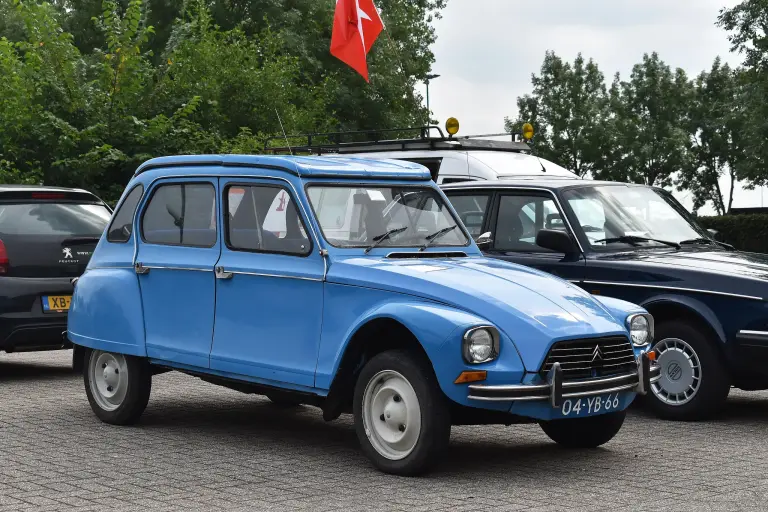
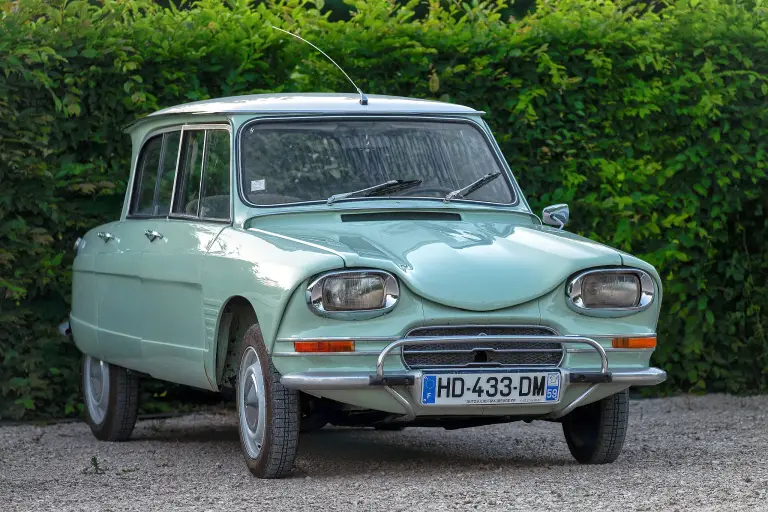
The M35 was based on the Ami, and its engine led to the rotary GS Birotor; its seats were used in the SM. More cars are in the Citroën collection.
Video: Citroën M35 : mise en route à froid.
Video by CDCF56 on YouTube.
Sources
- Citroën M35, English Wikipedia: engine, performance, testing programme, legacy