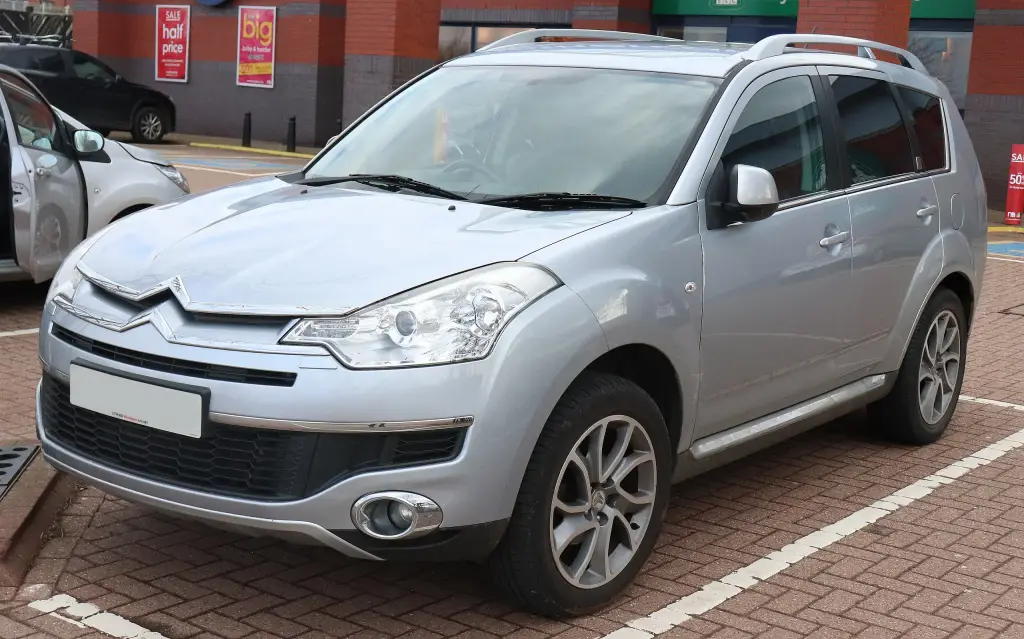
The Citroën C-Crosser is a compact crossover SUV launched in July 2007, designed for Citroën but produced by Mitsubishi on the basis of the Outlander. Its Peugeot equivalent was the 4007.
Citroën C-Crosser at a glance
| Maker | Mitsubishi, for Citroën |
|---|---|
| Production | 2007–March 2012 |
| Launched | July 2007; shown at Geneva in March 2007 |
| Based on | Mitsubishi Outlander |
| Sister model | Peugeot 4007 |
| Seats | up to seven |
| Diesel | 2.2 HDi, 156 PS, 380 N·m |
| Petrol | 2.4 MIVEC, 170 PS |
| Drive | two-wheel drive, four-wheel drive and a lock setting |
| Sold | 2,050 units |
| Replaced by | Citroën C4 Aircross |
Based on one source (English Wikipedia).
History of the Citroën C-Crosser
A Japanese-built French car
The car was expected to be called the C7, but in October 2006 Citroën announced the name C-Crosser, taken from the four-wheel-drive concept car it had shown at Frankfurt in 2001. It was unveiled at the Geneva Motor Show in March 2007 and launched that July. Together with the Peugeot 4007 it was the first Japanese-produced car sold under any French brand. The two were to have been assembled for Europe at Mitsubishi’s Nedcar plant in Born, the Netherlands, a factory built in the 1960s to assemble DAFs, but that plan was postponed indefinitely because of slow sales; from 2011 they were assembled instead at the PSA/Mitsubishi joint venture factory in Kaluga, Russia. Production ended in March 2012 and only 2,050 cars had been sold.
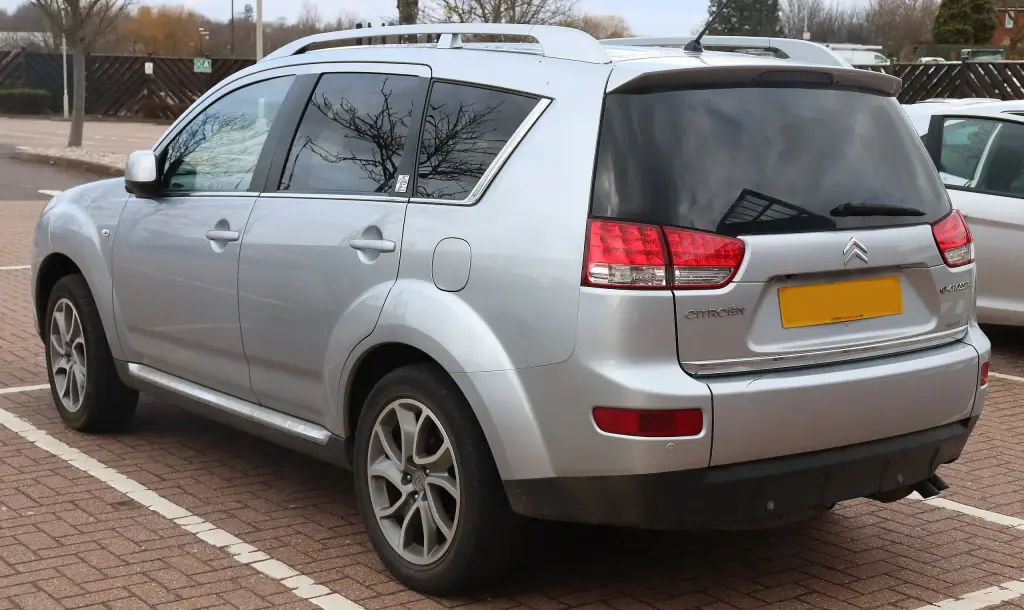
Seven seats and three drive modes
The second and third rows of seats fold away to give a flat floor and a larger boot; the rear two seats disappear completely under the floor, and the second row slides for more leg room or luggage space and splits 60:40, operated by electric controls in the boot. The transmission offers three settings chosen with a control behind the gear lever: two-wheel drive, four-wheel drive, and a lock mode for low-grip conditions. The diesel was PSA’s 2.2-litre DW12 HDi turbodiesel of 156 PS and 380 N·m; the petrol, not available in every market, was Mitsubishi’s 2.4-litre 16-valve MIVEC four of 170 PS, the same engine as the Outlander.
The commercial version
At the 2008 British International Motor Show Citroën presented a panel van version, the C-Crosser Commercial, without rear seats or side windows. It was intended for the United Kingdom only, had a two-piece rear tailgate and a load compartment of 2.3 m³.
Design and features
- Mitsubishi base: the Outlander’s body and mechanicals, with Citroën styling.
- Up to seven seats: the third row folds completely under the floor.
- Three drive modes: two-wheel drive, four-wheel drive and a low-grip lock.
- 2.2 HDi: 156 PS and 380 N·m from the PSA turbodiesel.
- Commercial version: a UK-only panel van with 2.3 m³ of load space.
Citroën C-Crosser versions
- C-Crosser (2007–2012): the standard seven-seat crossover.
- C-Crosser Commercial (2008): a two-seat UK panel van.
- Peugeot 4007: the same car with a Peugeot badge.
The C-Crosser was replaced by the C4 Aircross, and its passenger-car relatives include the C8 and the C5. More cars are in the Citroën collection.
Video: im test: Citroen C-Crosser | motor mobil | DW Deutsch
Video by DW Deutsch on YouTube.
Sources
- Citroën C-Crosser, English Wikipedia: launch, production, seating, engines, commercial version