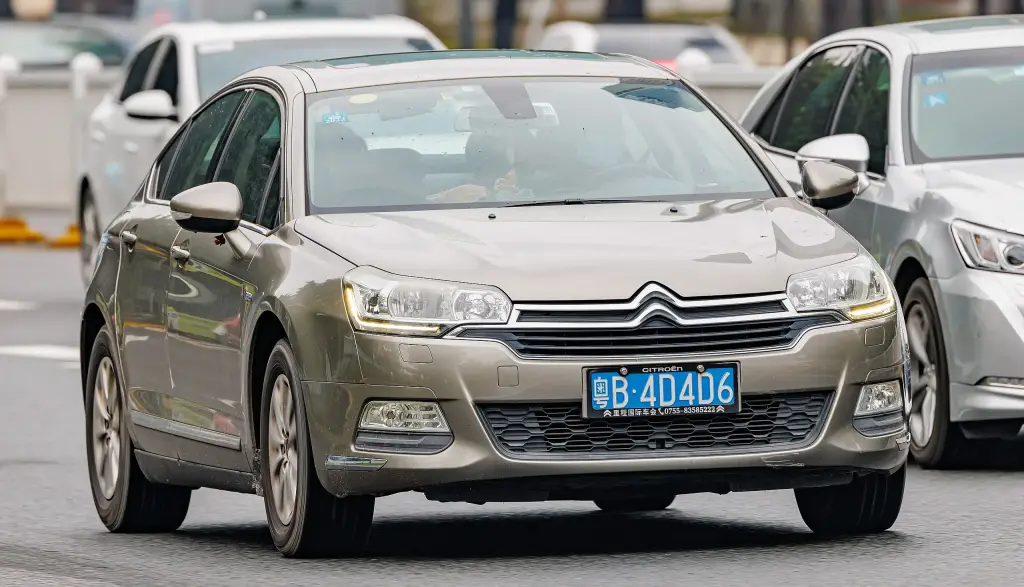
The Citroën C5 is a large family car produced between 2000 and 2018 in France, and between 2008 and 2022 in China, over two generations. It replaced the Citroën Xantia and was the first modern Citroën to use the “Cx” naming of its 1930 ancestors, the C4 and C6.
Citroën C5 at a glance
| Maker | Citroën, France and China |
|---|---|
| Production | 2000–2018 in France, 2008–2022 in China |
| Replaced | Citroën Xantia |
| First generation | DC/DE, production from the end of 2000 |
| First-generation bodies | five-door liftback and five-door estate |
| Suspension | Hydractive 3, with electronic height sensors |
| First-generation engines | 1.8, 2.0 and 3.0 petrol; 1.6, 2.0 and 2.2 diesel |
| First-generation total | 720,000 |
| Second generation | from February 2008, saloon and Tourer |
| Successor | Citroën C5 X, a crossover, in 2021 |
Based on one source (English Wikipedia).
History of the Citroën C5
2000: Hydractive 3
The first generation was offered only as a five-door liftback or a five-door estate, reversing the fastback saloon philosophy of the Robert Opron era. Production began at the end of 2000 and British sales in April 2001. Power came from 1.8 and 2.0 four-cylinder and 3.0 V6 petrol engines and 1.6, 2.0 and 2.2 direct-injection diesels, and the C5 was the last Citroën developed under the chairmanship of Jacques Calvet. Its suspension was a further development of hydropneumatics called Hydractive 3, which replaced the mechanical height correctors of every earlier hydropneumatic Citroën with electronic sensors, so the computer could lower the car at speed to cut drag and raise it on rough roads. Manual height control remained, overridden by the computer at unsuitable speeds, and some cars had Hydractive 3+ with computer-controlled stiffness. In a break with tradition the brakes and steering no longer shared the suspension’s hydraulics, although the power steering kept LDS fluid and its own pump.
2004 facelift and the end of the first generation
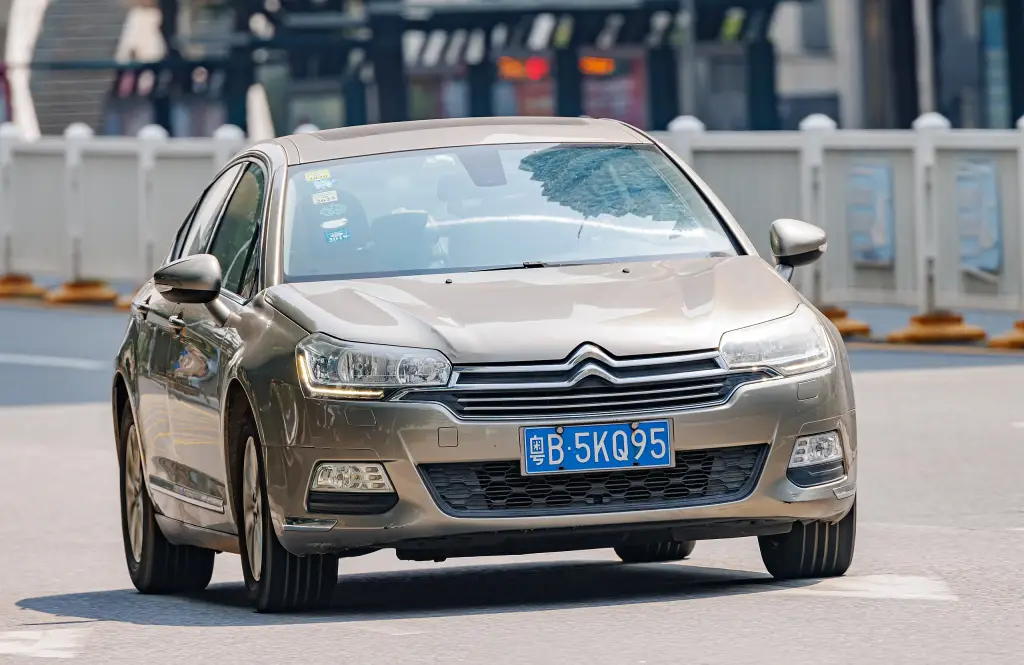
A major facelift in September 2004 brought new front and rear ends while keeping the centre section, to match the new C4. The liftback grew from 4,618 to 4,745 mm and the estate from 4,755 to 4,840 mm, and the car gained swivelling directional headlights. The suspension kept the car level and could even let it run on three wheels with one tyre flat, with height variation of up to 15 mm at the front and 11 mm at the rear. Production ended in December 2007 with 720,000 cars built; in Britain 45,502 were sold between 2001 and 2004.
2008: a conventional saloon
The second generation was unveiled at the start of 2008, previewed by the C5 Airscape concept shown at Frankfurt in September 2007. It dropped the liftback for a three-box aerodynamic saloon, launched in February 2008 with the estate, called Tourer, following in May; it was premiered at the Brussels Motor Show on 15 January 2008 and won the 2009 Semperit Irish Car of the Year and Japan’s 2008–09 Import Car of the Year. It could be ordered with conventional springs as well as hydropneumatics, and used the 2.7-litre V6 diesel from the C6, replaced in 2009 by a 3.0 of more power but better consumption. The 2010 changes brought the 2.0 HDi 160 and a 1.6 THP 155 petrol, and facelifts followed in 2011 and July 2012. In July 2015 the European range was cut to two 2.0 BlueHDi diesels, 150 PS with a manual and 180 PS with an automatic, and the C5 was withdrawn from Britain in May 2016 after 17,105 sales since 2008.
Design and features
- Hydractive 3: electronic height sensors replacing mechanical correctors, lowering the car at speed.
- Hydractive 3+: computer-controlled springing and damping on some cars.
- Separate hydraulics: brakes and steering no longer fed by the suspension system.
- Self-levelling ride: able to run on three wheels with one tyre flat.
- Two characters: the liftback of 2000 and the three-box saloon of 2008.
Citroën C5 versions
- C5 liftback (2000): the first-generation five-door.
- C5 estate (2000): the five-door estate.
- C5 saloon (2008): second generation, three-box body.
- C5 Tourer (2008): the second-generation estate.
- C5 with steel springs: offered as an alternative to hydropneumatics.
- 2.0 BlueHDi (2015): the last European versions, 150 and 180 PS.
The C5 replaced the Xantia and was replaced by the crossover C5 X; its bigger relative is the C6. More cars are in the Citroën collection.
Video: Französischer Komfortlaster — Citroen C5
Video by Handelsblatt on YouTube.
Sources
- Citroën C5, English Wikipedia: generations, Hydractive 3, engines, facelifts, production